




FOREIGN POLICY
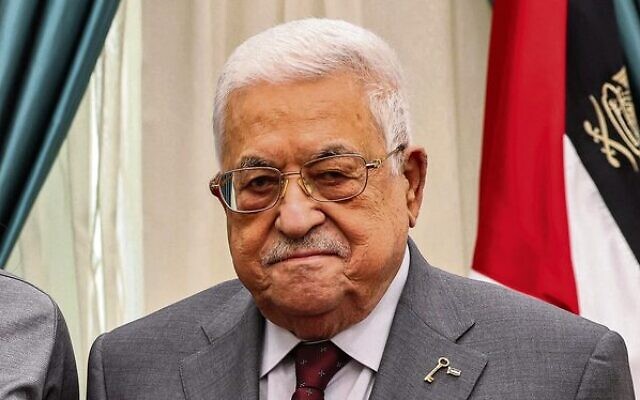
Recognising a Palestinian state
LABOR: A two-state solution is essential to long-term peace and security in the region. The Albanese government will continue working with the international community towards a two-state solution – a Palestinian state and the State of Israel, living side by side in peace and security within internationally recognised borders.
We have made it clear that we will be guided by whether recognition of a Palestinian state will advance the cause of a just and enduring peace. Like many in the international community, Australia has been frustrated by the lack of progress towards a two-state solution. And like Canada, Germany, the UK and other partners, we no longer see recognition as only occurring at the end of the process. It could occur as part of a peace process. But we sees no role for Hamas in any future Palestinian state.
COALITION: No [to recognising an unnegotiated Palestinian state]. The Coalition supports Australia’s longstanding position in support of a two-state solution – but only one that is negotiated between the parties.
Jerusalem
LABOR: In line with the overwhelming majority of the international community and the previous longstanding and bipartisan Australian position for many decades, we believe the status of Jerusalem should be resolved as part of peace negotiations and a two-state solution.
COALITION: We continue to oppose Labor’s decision to change Australia’s recognition of west Jerusalem as Israel’s capital. We support the right of nations to determine their own capital. The Coalition will conduct an orderly and professional consultation process, including discussions with local community groups, our agencies, and Israel’s government.
BDS
LABOR: We oppose the BDS campaign.
COALITION: We reject the BDS movement.
UN General Assembly
LABOR: We would continue to vote in the UN in support of a just and enduring peace and a two-state solution.
COALITION: We would revert to Australia’s previously longstanding positions on UN votes relating to Israel, rejecting Labor’s recent unilateral changes which have been made for purely domestic political reasons.
People-to-people peace-building
LABOR: We are committed to providing effective and transparent aid to the Palestinian people, which we believe can help build the institutions for statehood and address urgent development and humanitarian needs. It is critically important, however, that aid and program delivery goes directly to benefit those who are most in need. That is why Australian funding is only provided under stringent controls and safeguards.
COALITION: We have consistently called for increased humanitarian aid to reach innocent civilians in Gaza, but would cease all Australian funding to UNRWA, and instead direct it to trusted organisations.
Iran
LABOR: Labor governments have long understood the threat the Islamic Revolutionary Guard Corps (IRGC) poses to international security. Under the Criminal Code, listings apply to non-state actors – they do not apply to state actors. The IRGC is a part of the Iranian state. Labor supported the listing of Hezbollah and Hamas as terrorist organisations in their entirety.
COALITION: There is significant evidence the IRGC is engaged in terrorist activity and Australia’s laws should reflect this reality.
Abraham Accords
LABOR: We welcome Israel’s normalisation with its neighbours under the accords and support regional initiatives that contribute to long-term peace and security for Israelis and Palestinians.
COALITION: The Abraham Accords provide a strong basis for Arab states to play a bigger role in securing peace in the wider region. The accords have been tested, and have held since the October 7 attacks and will only be stronger if other nations, like Saudi Arabia, can join.
COUNTERING ANTISEMITISM
LABOR: The government did not respond directly to the ECAJ’s questions on countering antisemitism, but referred it to a March 20 letter sent to the roof body by Prime Minister Anthony Albanese in response to ECAJ’s proposed 15-point plan to combat antisemitism, which the government did not commit to adopting.
More broadly, in a January 14 statement, Albanese summarised the government’s responses to the antisemitism crisis, noting it set up AFP Special Operation Avalite to crack down on antisemitism, threats, violence and hatred towards the Jewish community. At that date, Avalite had received 124 reports, with 102 under investigation.
He also noted the government’s ban on Nazi salutes and hate symbols, appointing a special envoy to combat antisemitism (Jillian Segal), criminalising doxxing, committing $25 million in security funding for Jewish institutions, with an additional $32.5 million for security in schools and synagogues, and $250,000 towards replacement and restoration of Torah scrolls at Adass Israel, introducing legislation to criminalise hate speech and referring antisemitism in universities to the Parliamentary Joint Committee on Human Rights for an inquiry.
In his letter to ECAJ, the PM emphasised the government’s commitment to preserving section 18C of the Racial Discrimination Act.
Albanese also stated in that letter, “I remain focused on listening to the concerns of Jewish Australian communities and to working across government and with community stakeholders to foster greater social cohesion, greater understanding and inclusion of all Australians.”
Coalition: Meanwhile, the Coalition responded to the ECAJ’s survey questions on antisemitism.

National taskforce: We will create a new, dedicated antisemitism taskforce led by the Australian Federal Police (AFP); incorporating the Australian Security Intelligence Organisation (ASIO), the Australian Criminal Intelligence Commission, the Australian Transaction Reports and Analysis Centre, the Australian Border Force and state police.
We will issue a new ministerial direction to the AFP to prioritise addressing antisemitism, including any outstanding complaints and unsolved crimes against the Jewish community since October 7, 2023, including doxxing, public display of terrorist symbols, incitement, harassment and other offences. This would include re-evaluation of any decisions to not proceed with charges for these offences. We will direct the antisemitism taskforce to refer any visa holders involved in acts of antisemitism for immediate cancellation and deportation.
Policing intelligence, law enforcement: We will create a new, dedicated antisemitism taskforce led by the AFP, incorporating key security agencies and state police. We will ensure the taskforce is equipped to identify antisemitism and the symbols of antisemitic terrorist groups. The taskforce will share its expertise with state and territory counterparts.
Legislative reform: We have led the way in passing legislation through Parliament in response to the antisemitism crisis in Australia, with the Albanese government being forced to agree to our measures, despite having a long history of opposition to mandatory minimum sentences. The measures passed by the Coalition are an important step in combating the antisemitism crisis, but the lack of proactive leadership from the Albanese government in addressing the antisemitism crisis remains an ongoing concern. The Coalition has adopted the ECAJ’s 15-point plan to combat antisemitism as part of our approach and will consult with the Jewish community on any further measures.
National system to record hate-motivated crime: We support the National Cabinet’s decision to establish a National Database to track antisemitic crime and other antisemitic incidents and behaviours. The Commonwealth will work with states and territories on developing the database.
Education against antisemitism: The former Coalition government ensured the latest version of the Australian curriculum included compulsory content on the Holocaust. We also invested in the establishment of several Holocaust museums to ensure students across Australia have access to important historical resources and education material. A Dutton government would ensure young Australians are supported by a national curriculum aligned with international best practice to address antisemitism.
Universities: We would establish a commission of inquiry into antisemitism at Australian universities to be led by an eminent jurist.
Hate preachers and charities spreading hate: We have led the way in passing legislation in response to the antisemitism crisis, with the Albanese government forced to agree to our measures for mandatory minimum sentences for terrorism offences and publicly displaying prohibited Nazi or terrorist organisation symbols.

Migration Act and applicants for citizenship and visas: We would overhaul the Department of Home Affairs approach to screening for and acting on antisemitic conduct. We would ensure individuals who engage in antisemitic conduct have their visas rejected or cancelled so they can be deported. We would also ensure organisations affiliated with antisemitic views do not receive taxpayer funding.
Cultural institutions and grant-making bodies: We would develop changes to the Australian Citizen Test to address antisemitism.
Social media: We would seek the advice of national security agencies to address foreign interference.
The Greens: The Liberal Party will not do any deals with the Greens.
POINTS OF DIFFERENCE
ECAJ noted the starkest differences between Labor and the Coalition on foreign policy were over Palestinian statehood, Australia’s UN voting record, UNRWA funding and
the status of west Jerusalem. Additionally, Labor stopped short of declaring Iran’s Revolutionary Guards as terrorist because they are part of the Iranian state, while the Coalition supports classifying them as terrorist.
On antisemitism, differences included
the Coalition’s endorsement of the ECAJ’s 15-point plan, which the government has
not endorsed, and the Coalition’s support for a judicial inquiry into campus antisemitism, while the government last year held a parliamentary inquiry on human rights at universities, which many saw as less effective.
Importantly, the Coalition has unconditionally rejected any negotiations with the Greens to form government. While the government has stated the same position, sceptics believe a deal is still possible if
Labor does not have enough seats to form a majority.

ECAJ SUMS UP
ECAJ co-CEO Peter Wertheim stated, “While there is still some important common ground between the two major parties on the Israel- Palestinian conflict, including their united opposition to the BDS campaign against Israel, there are also some stark differences. The Coalition has promised to restore Australia’s recognition of west Jerusalem as Israel’s capital and only to recognise a Palestinian state as an outcome of a negotiated Israeli-Palestinian peace agreement.
“We also welcome the Coalition’s promise to cease funding UNRWA, which has become tainted by its collaboration with Hamas,
and to direct this funding instead to trusted organisations which deliver support to Palestinian civilians in Gaza.
“On domestic policy, there will be many within and beyond the Jewish community who will support the Coalition’s policy
to ensure that individuals who engage in antisemitic conduct have their visas rejected or cancelled so they can be deported, and that organisations affiliated with antisemitic views do not receive taxpayer funding.”
Please note: The AJN has used topic titles from the survey, rather than the questions themselves, and has condensed responses.
comments