



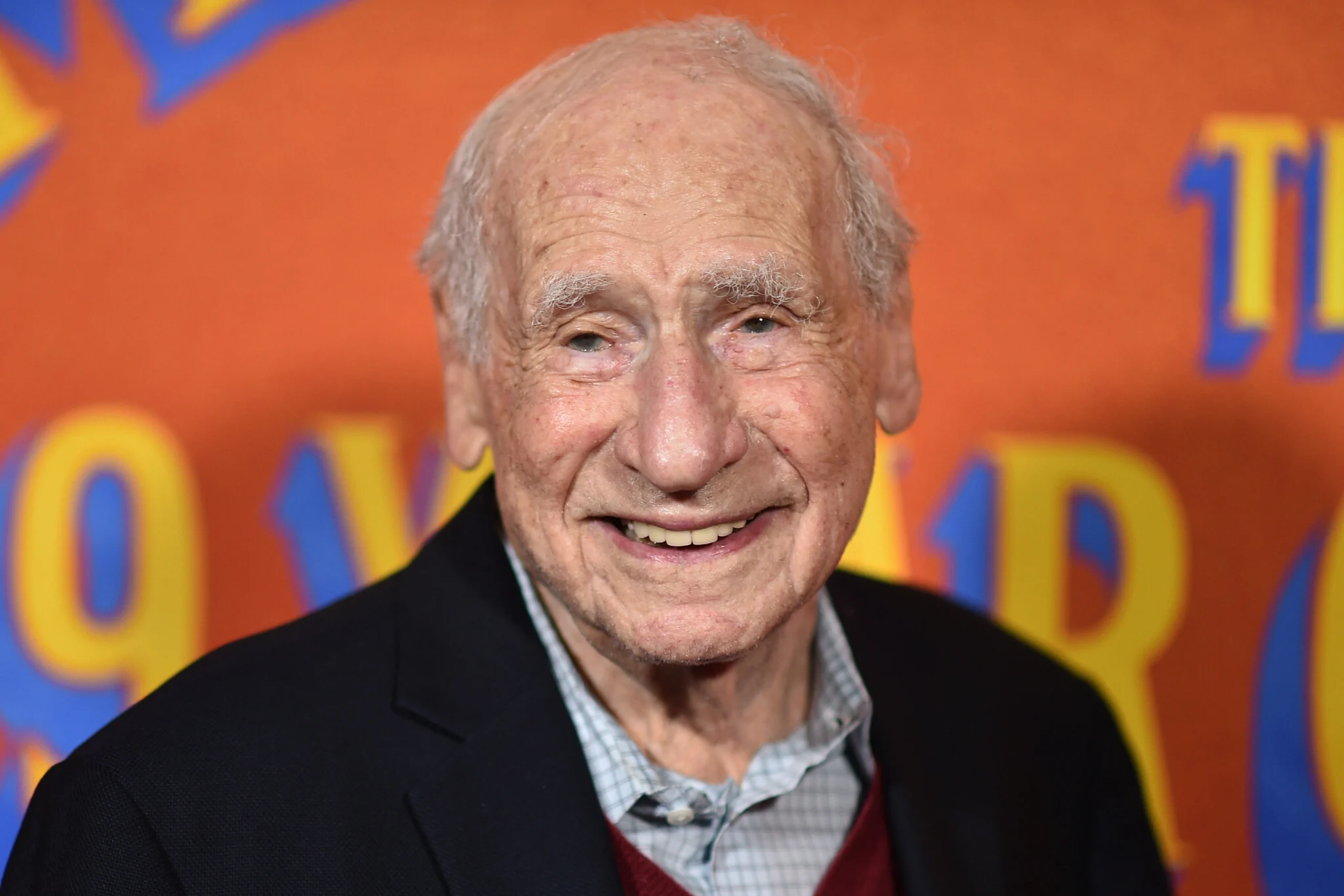
The 2000 Year Old Man isn’t quite there yet, but the real thing is doing pretty well.
On June 28, comedy legend Mel Brooks celebrated his 100th birthday, and the world is still catching up with him.
Born Melvin Kaminsky in a Brooklyn tenement in 1926, Brooks was the youngest of four brothers in a Jewish family shaped by both the Old World and the new.
His father, Max Kaminsky, came from a German Jewish family from Danzig (now Gdansk, Poland). His mother, Kitty Brookman, was a Russian Jewish immigrant from Kyiv. Max died of tuberculosis when Mel was just two, leaving Kitty to raise the boys alone in Williamsburg.
It was a childhood steeped in Yiddishkeit.
Brooks grew up quaffing egg creams, spending summers at Camp Sussex, a New Jersey retreat for underprivileged Jewish kids, and soaking up the Yiddish of his family elders. By his early teens, he was already working as a poolside tummler at a Borscht Belt lodge, honing a comedic instinct that would define an extraordinary career.
When asked about the secret to his longevity, Brooks has kept it characteristically simple. Always find the funny.
At 17, he enlisted in the US Army and served in the Second World War, including combat at the Battle of the Bulge. The savage hilarity of ‘Springtime for Hitler’ in The Producers wasn’t just a gag. It was rooted in having faced down Nazis as a Jewish teenager in uniform.
After the war, Brooks began writing for Sid Caesar’s Your Show of Shows, where he worked alongside Carl Reiner, Neil Simon and Woody Allen.
It was with Reiner that he created the 2000 Year Old Man sketches, a routine so perfectly Jewish in its DNA that it became a touchstone for generations. Reiner would pepper Brooks’ impossibly ancient character with earnest questions. What was Jesus like? “Thin lad,” Brooks would reply.
From there, the hits came in waves. The Producers won him an Academy Award for best original screenplay in 1968. Blazing Saddles and Young Frankenstein, both released in 1974, cemented his status as one of the great comedic directors. Spaceballs, Robin Hood: Men in Tights and History of the World, Part I followed. A Broadway adaptation of The Producers broke Tony Award records in 2001.

Along the way, he became one of just 28 entertainers to achieve EGOT status, winning an Emmy, a Grammy, an Oscar and a Tony.
Throughout it all, Brooks’ Jewish identity was never incidental. His comedy drew on a long tradition of Jewish humour as a survival mechanism, the idea that you can laugh at the things that terrify you and somehow diminish their power. He once said of losing his father, “I’m sure a lot of my comedy is based on anger and hostility. Growing up in Williamsburg, I learned to clothe it in comedy to spare myself problems.”
That approach extended to the Holocaust.
Brooks turned Hitler into a figure of ridicule, not to minimise the horror but to strip the fascist of his mythology. It was a deeply Jewish act of defiance, one that resonated far beyond the comedy audience.
Filmmaker Judd Apatow, who directed the two-part HBO documentary Mel Brooks: The 99-Year-Old Man!, said discovering Brooks as a child gave him “tacit approval to become a funny, emotional, defiantly Jewish adult comfortable being himself”. Comedians Sarah Silverman, Jerry Seinfeld and Adam Sandler have expressed similar sentiments, expressing in their own individual ways that Brooks was the fearless Jewish comic who showed them what they could become.
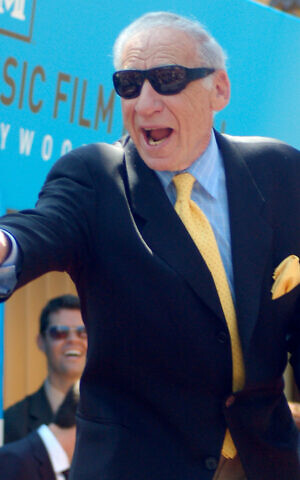
And at 100, Brooks is remarkably far from finished.
Spaceballs: The New One, a long-awaited sequel to the 1987 cult classic, is set for release in April 2027. Brooks will reprise his roles as Yogurt and President Skroob alongside returning cast members Rick Moranis and Bill Pullman, with Josh Gad and Keke Palmer joining as newcomers. The title, Brooks announced at CinemaCon in April, is not Spaceballs 2: The Search for More Money, as the original film prophesied.
“Why not? Because after all these years, I found the money. It was in my basement.”
To mark the centenary, the American Film Institute bumped Blazing Saddles from sixth to first on its 100 Years…100 Laughs list, officially proclaiming it the funniest American film of all time. It replaces Billy Wilder’s Some Like It Hot, a ranking Brooks has long contested.
AFI chief executive Bob Gazzale was direct. “He’s right! We’re happy to right this wrong as Mel celebrates his centennial. It’s good to be the king, and may he live to be a 2000-year-old man.”
When asked about the secret to his longevity, Brooks has kept it characteristically simple. Always find the funny.
It’s advice that has carried him from a Brooklyn tenement to the peak of American comedy and, improbably, to his 100th year.
As he once joked about his own gravestone, “I was Mel Brooks, one of the funniest little Jews to walk the Earth.”
comments