



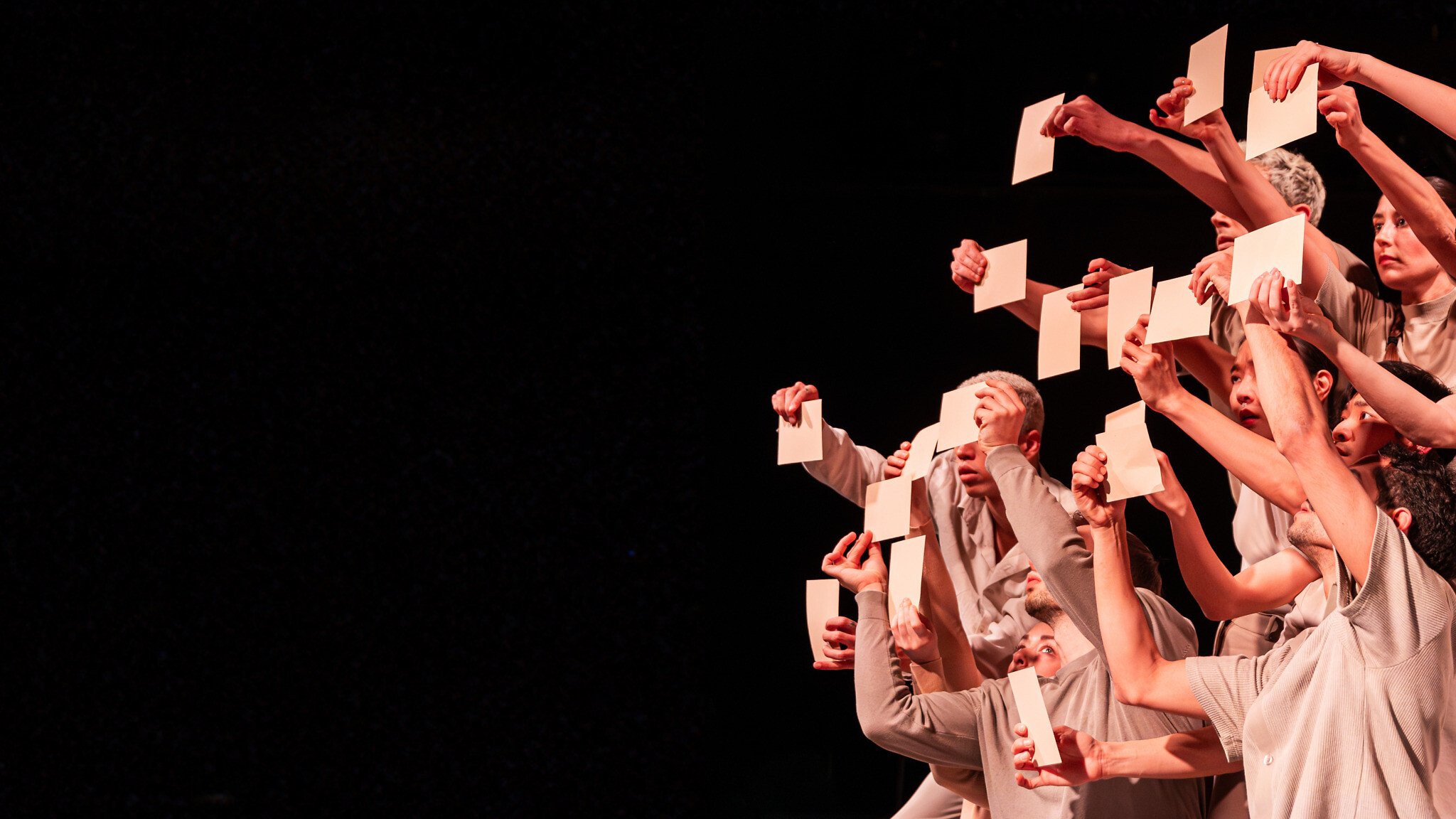
A dancer, teacher, and choreographer, Oded Ronen has fashioned a voice in contemporary dance that is at once intimate and expansive, rooted in his own layered identity, yet reaching far beyond it. He sees dance as magic.
Ronen trained in the UK at The Laban Centre, Bodyworks, and the Rambert School of Ballet and Contemporary Dance, before returning to Israel to develop his own choreographic language. Today he directs Oded Ronen Choreography out of Tel Aviv, weaving together a globetrotting portfolio of works with a founding principle he calls Imagery in Motion.
This practice, Ronen explains, invites dancers into “fantasy-based tasks” drawn from nature, texture, emotional states, speed and density. In its most meditative moments, the body enters a vulnerable sincerity; the audience, too, is invited into the “unknown realms of the subconscious, creating new ways of moving, feeling and connecting.”
One of his most profound works, Glashäuser (Glass Houses), is both an elegy and a reckoning. Created in collaboration with Ballet Plauen-Zwickau in Germany, it draws power from his family’s history: seventeen of Ronen’s maternal relatives once lived in Plauen and were murdered in Auschwitz.
“The content was very hard to digest, but we knew we needed to get to as much as we could to get the clearest picture about who is dead, who is alive, who is injured and who is kidnapped…”
Projections of their faces flicker across the stage, reminding viewers that grief is not distant; it is personal. In interviews, Ronen has spoken of returning to Plauen and “walking the same streets … from there they were sent to Auschwitz.”
For Ronen though, recent global events have reshaped his choreography. In the wake of the October 7 attacks in Israel, he was one of the founders of the Hostages and Missing Families Forum which he described as “by far the most important thing I’ve ever had a chance to do.”
In the aftermath, dozens of people would arrive every day looking to help find those who were missing. There, volunteers would go through endless lists of people who were at the Nova music festival or who lived on the Gaza Envelope to determine what had happened to them.
“The content was very hard to digest, but we knew we needed to get to as much as we could to get the clearest picture about who is dead, who is alive, who is injured and who is kidnapped,” Ronen told The AJN.

His time at the Forum also inspired Whale Dream, which he workshopped with Australians while here to promote the film Rising: Voices of Protest and Hope, in which he features.
Ronen explained that Whale Dream was inspired by a condition that whales have, where they essentially sleep with one eye open.
“When they sleep, only half the brain is asleep with the eyelid closed, showing that it is dreaming, and the other half is completely awake, away from predators, remembering to get up to the surface, to breathe and keep on moving in the water,” he said, explaining that the dual state was fascinating to him, particularly in relation to dancers.
“[It] very much resembles the state of a dancer that is in fantasy, and at the same time rooted in physics. And actually, each of the each of our experience as humans, we want to love, to fly, to have dreams and fulfill them, and at the same time, we need to anchor ourselves in reality,” he said.
Earlier this year, Ronen extended the solo following the release of some of the hostages who shared their harrowing testimonies, about the hostages who were still left behind in the tunnels.
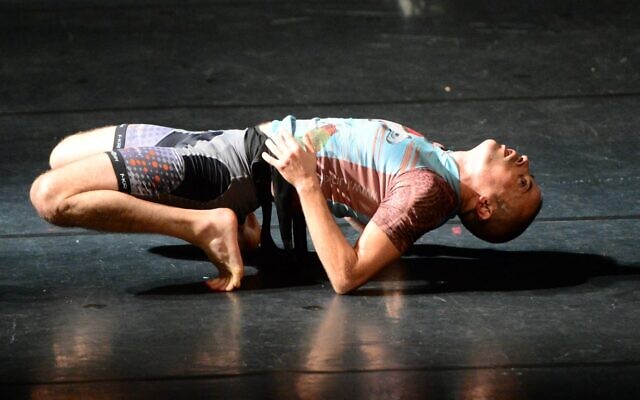
“Hostages that came back in January gave testimonies about the ones that are left behind in terrible conditions in cages of animals, with severe skin problems that are not treated, withdrawing into themselves, not talking, tortured, shown videos and images of people they know getting murdered,” Ronen recalled. “I decided to extend the solo and make the first half about this. It very much relates to their stage in captivity, where they dream of becoming free, and at the same time, they are locked in a tunnel that has no day, no night, no sense of time and no knowledge if they will be released ever.”
Whale Dream has been performed in Colombia and Argentina and now, in Australia as well. It’s the second time Ronen has visited Australia over the past two years. He told The AJN how much he loves the community here.
“I am amazed by the Australian Jewish community. I know of all the initiatives that the Australians have done since the beginning of the war, and every time I come here, I feel like I’m at home. People embrace me in every city I arrive,” he said. “I think Australia has one of the most beautiful Jewish and Israeli communities in the world. And despite us being very far from each other, kilometre wise, I feel your presence constantly.”
comments