



A duty of care
As Prime Minister Kevin Rudd said sorry to the Forgotten Australians, The AJN looked at life for children in Jewish care homes.
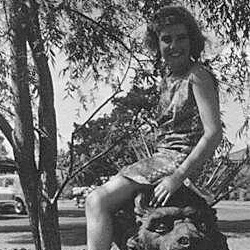
NAOMI LEVIN
‘THE stories, the folklore and the photos would have us believe that all Jewish children live happily with their mother and father in a cheerful environment.
They watch Mum light the candles on Shabbat, Bobba, or grandma, talks to the youngsters about her family history and Dad comes home from work and asks how the children did in their science test.
Unfortunately, this picture is far too idyllic and far from accurate for dozens of Jewish children. These youngsters grew up, or spent time during their childhood, in children’s homes under the care of a matron or of a couple who were not their ¬≠parents.
This month, these people have come into the spotlight thanks to Prime Minister Kevin Rudd’s apology to the “Forgotten Australians”.
According to the Alliance for Forgotten Australians, these are the children who lived in orphanages and children’s homes between 1930 and 1970.
And though they should have been “in care”, stories abound of neglect, exploitation, sexual assault, brutality and poor education.
A Senate inquiry into the Forgotten Australians was completed in 2004, finding that care providers, including the government, charities and religious organisations, had failed in their duty of care to the children.
The Jewish community had two main care institutions: Isabella Lazarus Children’s Home in Sydney and Larino, which later became Frances Barkman House, in Melbourne.
In the wake of Rudd’s apology, The AJN spoke to former residents and staff, revisiting accounts of life in the two homes. It must be made clear that in no instances were allegations of abuse or lack of care found, but the experiences of the youngsters were nonetheless ¬≠fascinating.
The Isabella Lazarus Children’s Home opened in the inner-west, harbour-side suburb of Hunters Hill in 1939.
The intention was to house children who had fled Germany and Austria on the kindertransport to Britain and would be brought to safety in the Antipodes.
The facility was built on the same site as the Sir Moses Montefiore Home, on a property that was huge, largely undeveloped, and provided plenty of space for children.
In an article in The Australian Jewish Times, written to coincide with the Isabella Lazarus home’s 50th anniversary in 1989, author Alan Collins wrote of his gratitude to the establishment, which took him in when his father was drafted to the war and he was left with an abusive step-mother.
He recalled arriving at the home, which “was a bit intimidating” and smelled new.
In 1942, residents moved into a house in the North Shore suburb of Killara when the army took over the home for use in the war effort.
Collins recalled that the Killara property was more of a “real home”, with a couple, Alice and Richard Kraus, in charge of looking after the children.
A few years earlier, renowned composer George Dreyfus and his brother had found themselves among the first group of residents at Larino — an old mansion leased by the Australian Jewish Welfare and Relief Society in the inner-eastern Melbourne suburb of Balwyn.
The boys were rushed out of Berlin by their family on the kindertransport and were among a group of 17 young children who sailed to safety in Australia.‚Ä®”For all those 17 children, it saved our lives,” Mr Dreyfus said this week at his Melbourne home, not far away from the original Larino ¬≠property.
Mr Dreyfus was not an orphan, and his parents were lucky enough to also escape Berlin, arriving in Melbourne about six months after their sons.
“I think everyone was very well taken care of,” he said of his time in care. “But we never really got over the fact [that] we missed our parents very much.”
He does remember that the children were forbidden from speaking their native language, German.
“We talked in whispers in German at night,” he said.
Astonishingly, a short video survives from Mr Dreyfus’ time at Larino. It shows young children, dressed in smart frocks, and shorts for the boys, playing cricket and picnicking in the hills just outside Melbourne.
The music, which has been added in recent years, was composed by Mr Dreyfus.
The tone was initially written for an ABC television series, following a brief for a piece that would depict the innocence of youth. Later, it was turned into a complete work named Larino, Safe Haven, which was recorded for an album.
IN the 1960s, Leah Sussman and her brother went to live in Isabella Lazarus Children’s Home, which had moved back to Hunters Hill in 1945.
In the decades since the end of the war, the home had changed its focus, from children orphaned or displaced by the Holocaust, to children whose parents were unable to care for them.
Sussman’s parents had divorced and her father was unable to look after her, so between the ages of nine and 13 she lived with other youngsters at the facility.
Apart from a short time at the local school, Boronia Park Public School, which she remembers as awful, Sussman had plenty of positive recollections of her years in the home.
“We were very well cared for by the community in the home and the broader Jewish community,” Sussman said. “I’m only speaking for myself, but there were absolutely none of the horrific things you hear about in other children’s homes at all.”
The youngsters were taken on regular outings, they went bushwalking around the huge Hunters Hill property and, on Shabbat and Jewish holidays, they would spend time with the elderly Montefiore residents.
Nonetheless, she admitted Isabella Lazarus never really felt like home.
“I don’t even think people who went into lovely foster care accommodation ever really felt like it was their home,” she said. “I think that is a reflection on our society, rather than on Montefiore. We are brought up to think the nuclear family is it, and when it doesn’t work, we are left to feel that it is a problem.”
This was a matter that confronted Lionel Sharpe, a social worker, when he initially went to work with the Australian Jewish Welfare and Relief Society in Melbourne.
It was in 1963, and Larino had been knocked down to make way for a new modern children’s home, which had since become known as Frances Barkman House.
Sharpe remembers that building well. “It had a kitchen where the children used to line up at a counter to pick up their food. I was appalled.”
It took some time, but Sharpe and his fellow social workers convinced the board that institutionalised care was not best for children, especially not in this new building.
“At that stage, congregate care seemed the most economic way of dealing with 20 or 30 children — you had the one matron, you had the one cook,” he said.
Eventually, three properties were purchased in Howitt Street, Aroona Road and Glen Eira Road — all in the heart of Jewish Melbourne.
Couples would live in those homes and were paid to take in children, thus putting an end to large children’s homes. Sharpe said, at the time, it was “the best way to go”.
While he admitted it wasn’t easy to find the couples willing to take on the task, it was enormously beneficial to the children.
“It made an enormous difference when they moved to Caulfield,” he said. “They could play with kids in the street, they could take the school bus home. There was a sense of normalcy and they really benefited from a sense of normal home life.”
While it was progressive at the time, even family group homes — as the program was called — are now a thing of the past, Sharpe said.
In more recent months, meanwhile, Sussman has set up a special page on Facebook for former residents of the Isabella Lazarus Children’s Home. But she doesn’t just want them to get together online. She’s also ¬≠hoping they’ll meet up in person.
“I think it is a good thing to do, everyone likes to touch base and see where they have come from. People do it with their own family and I guess this is like that, we experienced things together.”
Certainly not forgotten by each other then. And more than happy to remember.
comments