



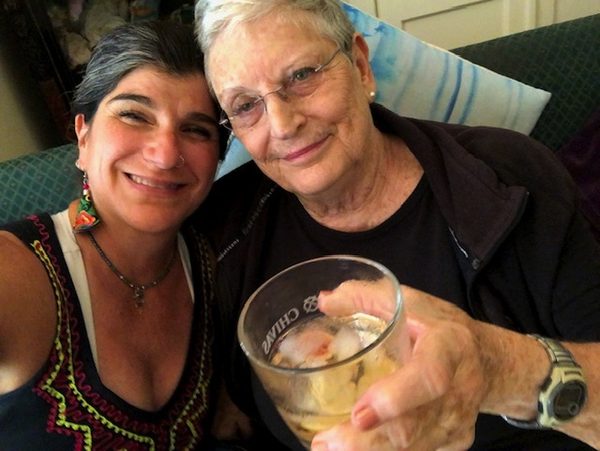
When Joanne Fedler’s mother was diagnosed with advanced ovarian cancer, the South African-born, Sydney-based author did what she has always done in moments of profound importance. She started writing.
Not a book. Not yet. Letters.
“My mum was diagnosed, I just started writing those letters to her,” Fedler recalled. “They were just kind of letters to my mother that she would never read. It was a way of me processing things, the same way as you would journal through something.”
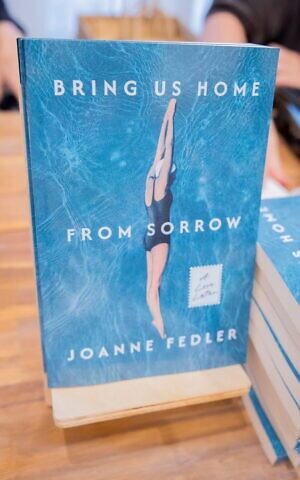
Those letters, written across nine months of illness, through her mother’s death and into the year that followed, became the raw material for her new memoir, Bring Us Home From Sorrow. It’s a deeply personal account of losing a mother, the rituals of Jewish mourning, and the solace Fedler finds in cold ocean water.
It is a book that nearly didn’t exist.
After her mother died, Fedler found herself unable to write at all. The woman who had built a career around words fell silent.

“I felt completely creatively bereft. I felt like my life force had somehow been unplugged,” she told The AJN. “There were months where I was seriously depressed. I really couldn’t get out of bed. Nothing had any meaning to me.”
One thing kept her going was ocean swimming. It’s a theme that runs throughout the book as Fedler describes the freedom she feels while swimming, and the gifts the ocean provides.
It was nine months after her mother’s death, when Fedler found herself reading children’s books. She said it was the only thing she felt capable of absorbing. It was while she was absorbed in children’s books, that something shifted. A story by American author Kate DiCamillo reignited something in her, and she began writing again, eventually completing a separate fable, The Whale’s Last Song, published in 2024.
Only then did she return to the letters.
“I came back to the letters and I thought, could I turn some of these into a journey about grief and ocean swimming?” she explained. What followed was a rigorous editorial process, whittling a manuscript that had ballooned to 170,000 words down to around 60,000, to produce the memoir that exists today.
“The best thing someone can say to me is that when I read your book, I cried — because I know what they’re saying is, I was able to feel something. With grief, it’s often so difficult to feel things, because we’ve got some defences around it, and we hide it and we bury it and we don’t want to look at it.”
“Amidst all the waffle, there might have been one or two really piercing insights, and what I had to do in the rewrite was to just sift those out and not make the reader work through all those extra layers to get there,” she recalled.
What makes Bring Us Home From Sorrow distinctive is its refusal to explain grief. Fedler was deliberate about this, drawing on her admiration for small, precise grief memoirs like CS Lewis’s A Grief Observed.
“You don’t need to tell a reader what it is like to lose somebody that you love,” she said. “What you’re trying to do is to offer a tiny little crack and an opening so that the reader can come in.”
To achieve this, she stripped back rumination and leaned hard into sensory moments, massaging her mother’s hands, standing beside her stirring jam, her daughter singing to her over Zoom.
“There’s something so profoundly visceral about death that kind of shocked me a little bit. Watching somebody die… and then touching the body of this person that you love that is now just a body, not the person anymore.”
Even the smallest domestic objects carry weight in the memoir. She describes having to re-establish her relationship with everyday things her mother left behind — a bottle of olive oil, a familiar smell — objects that were once simply part of life and now carried the full force of absence.
“All these very visceral signs of their life that they leave behind, like the olive oil, were like my mother, but then I had to re-establish my relationship with these things and orient myself again in the world.”
As well as this, Jewish identity runs through the memoir without apology. Fedler writes openly about the Shiva, about the rituals of mourning, and about her own battle to say Kaddish. It was something that proved complicated in the more conservative Jewish community of South Africa.
“My Jewishness has gone from being something very on the side… to being so core and central to everything,” she said. “I might have in my earlier, more ridiculous years wanted to be a palatable Jew, and now I want to be the most unpalatable of all.”
As a woman fighting to say Kaddish in a conservative community, Fedler faced resistance, but she pushed through it regardless.
“South Africa has got such a conservative approach around these things,” she explained. “It’s definitely not as liberal as it is here.” In the end, the determination paid off in ways she hadn’t anticipated. As she recited Kaddish, defiantly during the funeral service, she quietly heard her sister joining in. While in her novel she describes the displeasure of some in the community, she said she feels much more comfortable reciting the prayer now, even saying it at the grave of her ancestors in Lithuania who were killed in mass shootings during the Holocaust.
“Nobody in the family had ever been back to say Kaddish,” she explained. “There’s something really powerful just about saying that Kaddish.”
One of the memoir’s quieter revelations that Fedler shared with The AJN though is the way grief can make a person newly curious about the one they have lost. Freed from the rhythms of a parent-child relationship, Fedler found herself wondering about her mother as a young woman, as someone with her own interior life that had largely gone unspoken.
“I feel as if I only really started to see my mother as a person after she died,” she refected. “It’s almost like now that she’s back in spirit, and is no longer having to provide this role in my life, I’m interested in the woman that she was. This full human being.”
Part of this reckoning has involved recognising what was never said. Her mother, she knows, was heartbroken when Fedler left South Africa, but she never once let on.
“She would never have ever confessed to me her sadness. I know that she was absolutely heartbroken when we left South Africa, but she never spoke about that. She never said it.”
Now, watching her own adult son prepare to relocate to Perth, Fedler says she finally understands what her mother must have carried in silence.
Fedler is clear-eyed about what she wants the book to do. And equally clear that it is not, ultimately, about her.
“Writing is always about making meaning out of often very difficult life experiences and then just opening your hand and passing that on to somebody else,” she said.
She describes hoping the book feels like a warm stone placed on a reader’s back — heavy, but grounding. The responses she has received since publication suggest it is doing exactly that.
“The best thing someone can say to me is that when I read your book, I cried — because I know what they’re saying is, I was able to feel something. With grief, it’s often so difficult to feel things, because we’ve got some defences around it, and we hide it and we bury it and we don’t want to look at it.”
She explained though, that while it’s raw, open and very revealing, ultimately, she just wants to help people. “I felt like this was a real trespass into my mother’s privacy. She was such a private person. I kept saying, ‘Mum, I apologise. I’m doing it not to expose you, but just possibly, maybe this will help other people feel and heal’.”
Bring Us Home From Sorrow is available now.
comments