



A perspective: Israel in turbulent times
Clearly despite setbacks our beloved Israel is moving forward.
Mixed feelings and emotions are inevitable these days when one spends time in our land as despite the Iranian threats I was just privileged to so do. On the one hand is the tragedy of the north (and currently to a lesser extent, the Gaza envelope) where people’s lives are seriously disrupted and casualties including the lives of our most devoted young combatants are an almost daily occurrence. And on the other hand life in cities such as Yerushalayim and Tel Aviv seems to carry on in an almost normal manner.
The slogan “Od yihye tov” is a famous phrase loosely meaning “It will be better yet” or “Everything will be all right.” It is best known as the iconic chorus of the 1977 Israeli peace anthem “Yihyeh Tov” by singer-songwriter David Broza. Written as peace with Egypt was hopefully ushering in a new reality, it became a symbol of hope and peace contrasting the harsh realities of war, conflict and political tension with an enduring optimism that one day, people will live together without borders or fear.
In 2024 another song on a similar theme “Od Yoter Tov” (it will be even better) was released by Breslov Chasidic musician Yair Elitzur. As people sought hope in the post October 7 atmosphere it has since captivated so many.
We as visitors who come and go are exhorted to fulfil the immortal words of the Psalmist: “Ur’ei betuv Yerushalayim” (Tehilim 128:6) to see the good of Yerushalayim (and, though not specifically mentioned, the rest of our country). As per Joshua and Calev in last week’s Torah reading regarding the 12 spies, we need to recognise that “Tovah ha’aretz me’od me’od, the land is indeed very good” (Bamidbar 14:7).
All of which led me to the impressions I experienced as my recent visit unfolded. Most are well aware of the words: “Uv’nei Yerushalayim ir hakodesh bimhera b’yamenu – And build Jerusalem the holy city speedily in our days. Blessed are you Hashem who builds with his mercy Jerusalem, Amen.”
This ending to the third blessing of Bircat Hamazon is familiar to all Jews who pray. It is regularly recited in addition to the blessing included in the amidah prayer recited thrice daily on weekdays seeking God’s return to Yerushalayim And yes, the building of Yerushalayim is a key to our hopes otherwise expressed in the mantra recited at the most significant points in our calendar: “L’shanah haba’ah b’Yerushalayim hab’nuyah – Next year in Jerusalem rebuilt”. Note the emphasis on building in all these prayers. And as we have returned to our land and the city at its heart, building is clearly a key to a practical implementation of messianic hope even as we await the messianic advent.
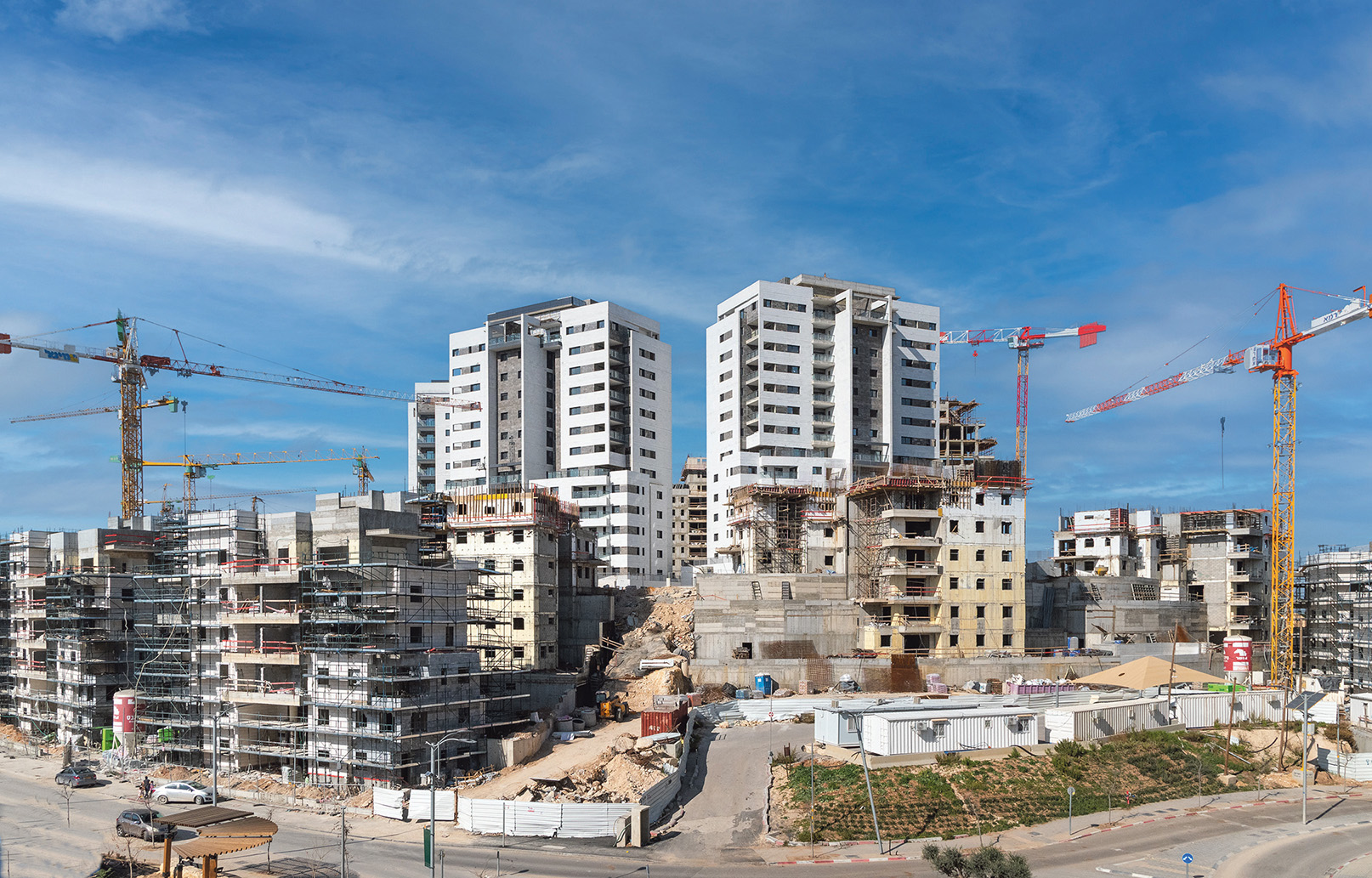
The skyline is dotted with cranes. Residential (and commercial) towers are rising everywhere. Yes I am a frequent visitor to Israel but after even the shortest interval there is clear evidence of change. And that aside, construction of facilities to improve urban life with particular emphasis on expansion of its light rail system, seems to occupy every corner of the city.
Building predominates. Additionally, while traditionally our emphasis was on Yerushalayim, the ubiquitous activity is everywhere. The greater Tel Aviv skyline too is dominated by cranes and there too light rail building carries on apace. (I was amazed to find that even major arterial Allenby Street was closed for extensive light rail works.) The difficulties thus created for everyday life are excoriated by the taxi drivers to whom I speak; their only hope is that in the end one may finally see an end to the “pkakim – traffic jams” that are a feature of urban and inter-urban life. (I noted the cute comment of one driver who focused on the expression “Bonei b’rachamav” in the blessing cited above. It seeks building “in his mercy” – perhaps a bit more mercy on the long suffering populace, suggested the driver, would make life easier.)
And the reality is that in towns across the country from Ashdod to Modi’in and Netanya expanded residential construction is everywhere – though surprisingly the price of new apartments seems not to be a barrier to their construction even as affordability is a major national issue. That despite the constant threat of war so many are apparently snapped up by immigrants, would-be immigrants (or second home purchasers from more affluent countries) and/or investors is part of the answer as to who purchases them – though here too the relentless rise in the value of the shekel versus the dollar is another key issue constantly in the headlines for its impact across the economy and particularly real estate related costs.
But building is only one element of the fulfilment of traditional hope that comes to mind in Israel today, The many parks – pocket size or larger – and other open spaces as well as even the benches placed on many roadsides bring to mind a prophecy of Zechariah some 2500 years ago:
“Thus said Hashem Tzevakot – God of Hosts: I will rescue My people from the lands of the east and from the lands of the west, and I will bring them home to dwell in Jerusalem … I have returned to Zion, and I will dwell in Jerusalem… “There shall yet be elderly men and women in the squares of Jerusalem, each with staff in hand because of their great age. And the squares of the city shall be crowded with boys and girls playing in the squares.” (Zechariah 8)
In the land with its population constantly expanded by immigration from east and west such is exactly what one sees particularly in the later afternoons of the warm sunny days of this time of year and of course especially on Shabbat afternoons.
May all the prophecies of the final redemption be witnessed before our eyes, bimhera beyamenu, speedily in our days.
Shabbat shalom,
Yossi Yossi Aron OAM is The AJN’s religious affairs editor.
comments