



A potted history of Persian–Iranian Jewish life
As we learn from the Tanach, the history of the Jews in Iran – formerly known as Persia dates back to biblical times.
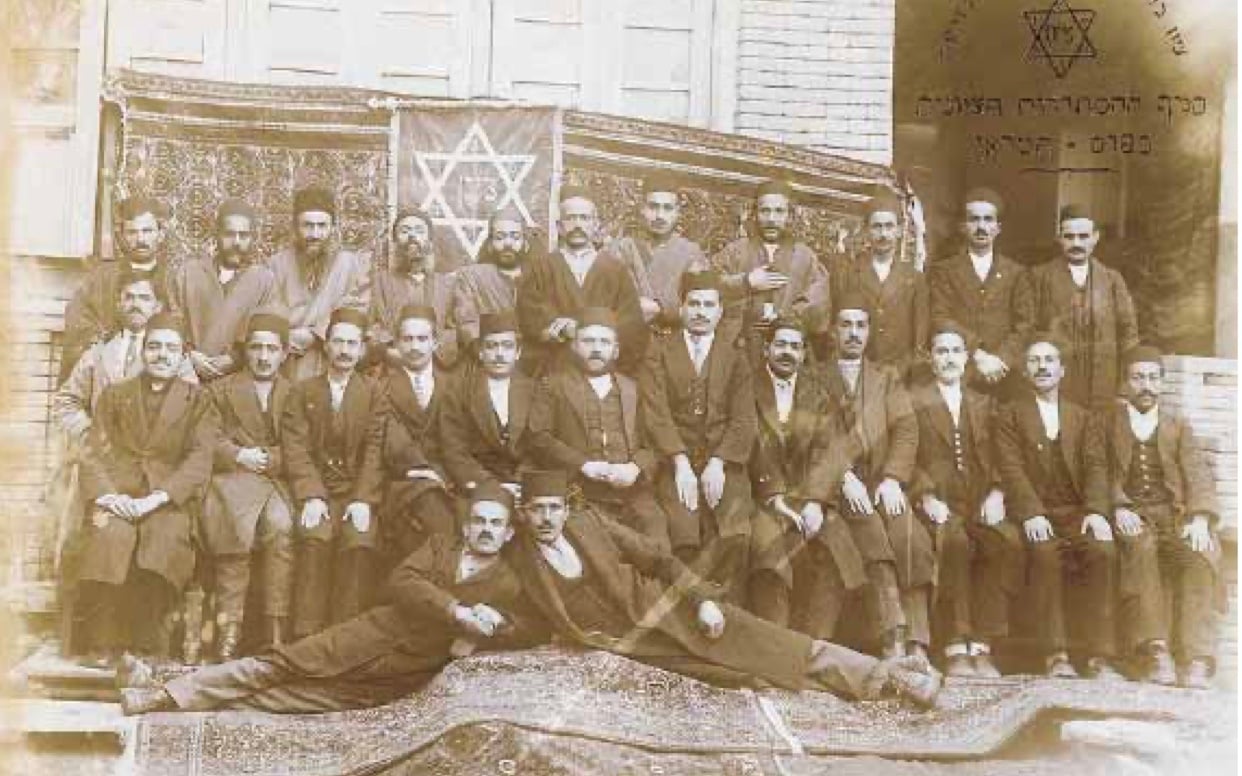
Persian Jews have lived in today’s Iran for over 2700 years, since the first Jewish diaspora when the Assyrian king Shalmaneser V conquered the (Northern) Kingdom of Israel (722 BCE) and took some of the Israelites into captivity. Judea survived, but following the Babylonian destruction of the first Temple the Persian kings are credited with enabling the Jews to return to Jerusalem and rebuild it.
Its reconstruction was carried out “according to the decree of Cyrus, and Darius, and Artachashta king of Persia” (Ezra 6:14). This took place in the late sixth century BCE, by which time there was a well-established and influential Jewish community in Persia. Megillat Esther is indicative of the positions of Persian Jews – as well as negativity towards them.
Less is recorded about Persian Jewry in Greek and Roman periods but by the early third century under Sassanid rule, Zoroastrianism became the official state religion. Now began the ups and downs of two millennia of Jewish status; the advent of Zoroastrianism resulted in the suppression of other religions. A priestly Zoroastrian inscription from the time of King Bahram II (276–293 CE) states that “The Jews (Yahud), Buddhists (Shaman), Hindus (Brahman), Nazarenes (Nasara), Christians (Kristiyan), Baptists (Makdag) and Manichaeans (Zandik) were smashed in the empire … and the habitations of the idols annihilated and turned into abodes and seats of the gods.”
Shapur I (Shvor Malka) was friendly to the Jews. His friendship with Amora (talmudic teacher) Shmuel advantaged the Jewish community. Shapur II’s mother Ifra Hormizd was half-Jewish, and gave the Jewish community relative freedom of religion. His friendship with another Amora, Raba, secured a relaxation of some oppressive laws enacted against Jews.
With the seventh century Islamic con- quest of Persia, the government assigned Jews to the status of dhimmis, non-Muslim subjects of the Islamic empire. Dhimmis were allowed to practise their religion, but were required to pay jizya, a poll tax, to cover the cost of financial welfare, security and other benefits to which Muslims were entitled. Viewed as “People of the Book”, Jews had some status as fellow monothe- ists, though treatment varied depending on particular rulers. Many served as doc- tors, scholars and craftsmen, and gained positions of influence in society.
In 1255, Mongols captured Baghdad and built a capital city in Tabriz. Mongol rulers abolished the inequality of dhimmis; all religions were deemed equal. Arghun Khan preferred Jews for the administrative positions and appointed Sa’d al-Daula, a Jew, as his vizier. The appointment, however, provoked resentment from the Muslim clergy, and after Arghun’s death in 1291, al-Daula was murdered and Jews in Tabriz suffered violent persecutions from the Muslim populace instigated by the clergy. Subsequent years saw destruction of many synagogues and a decree that Jews had to wear a distinctive mark on their heads; Christians endured similar persecutions.
But worse was yet to come.
During the reign of the Safavids (1502– 1794), they proclaimed Shi’a Islam the state religion. This development that fore- shadowed the subsequent history of Persia led to a deterioration in the Jewish posi- tion. Safavid Shi’ism emphasised ritual purity – tahara. Non-Muslims, including Jews, were deemed to be ritually unclean. Any physical contact would require Shi’as to undertake ritual purif ication before doing regular prayers. Accordingly physical contact between Muslims and Jews was limited. Jews were excluded from public baths used by Muslims. They were forbid- den to go outside during rain or snow, as an “impurity” could be washed from them upon a Muslim.
The reign of Shah Abbas I (1588– 1629) was initially benign; Jews prospered, even were encouraged to settle in Isfahan, which was made a new capital. However, over time, Shi’a clergy (including a Jewish convert) persuaded the shah to require Jews to wear a distinctive badge on cloth- ing. In 1656, Shah Abbas II ordered the expulsion from Isfahan of all Jews because of the common belief of their “impurity”. They were forced to convert to Islam, but then the treasury suffered from the loss of jizya collected from Jews.
There were rumours that the converts continued to practise Judaism in secret. In 1661 Jews were again allowed to take up their old religion, but were still required to wear a distinctive patch on their clothing.
Nadir Shah (1736–1747) allowed Jews to settle in the Shi’ite holy city of Mashhad. As many Jews were traders, they were able to prosper due to the connection of Mashhad to other cities along the Silk Road through central Asia. In 1839, fol- lowing a pogrom known as the Allahdad incident, many Jews were forced to con- vert to Islam or leave Mashhad, to Herat in Afghanistan or cities such as Bukhara (Uzbekistan). The converts became known as “Jadid al-Islams” (new Muslims) appear- ing to superficially accept the new religion, but continuing to practise many Jewish traditions, just as Crypto-Jews in Christian lands did. Except for a few individuals, the community permanently left Mashhad in 1946, for Tehran, Bombay and Palestine.
A tightly knit community still exists in Israel. I personally have seen their shule in the Knesset Yisrael quarter behind the Machane Yehudah shuk.
In the 19th century, European colonial powers noted numerous forced conver- sions and massacres, usually generated by Shi’a clergy. Major blood-libel conspiracies took place in Shiraz and Tabriz. European travellers reported that Jews of those cities continued to practise Judaism but in secret for fear of further persecutions. Historian traveller J. J. Benjamin wrote about the life of Persian Jews, describing conditions and beliefs that went back to the 16th century:
“They are obliged to live in a separate part of town … for they are considered as unclean creatures … If a Jew enters a shop he is forbidden to inspect the goods … Should his hand incautiously touch the goods, he must take them at any price the seller chooses to ask for them … Sometimes the Persians intrude into the dwellings of the Jews and take possession of whatever pleases them.”
Despite all the above, through the 19th century Jews became the most significant minority in Tehran, numbering 5571 in 1884. Nevertheless in 1894, a represent- ative of the Alliance Israélite Universelle wrote from Tehran: “Every time that a priest wishes to emerge from obscurity and win a reputation for piety, he preaches war against the Jews.”
In 1901, the riot of Shaykh Ibrahim was sparked against the Jews of Tehran. An imam began preaching on the impor- tance of eliminating alcohol for the sake of Islamic purity, leading to an assault against Jews for refusing to give up the wine they drank for Shabbat. In 1910, there were rumours that the Jews of Shiraz had ritually murdered a Muslim girl. Muslims plundered the whole Jewish quarter. Twelve Jews were killed, and many others injured. In the late 19th to early 20th century, as interest in movement to the territory of present-day Israel spread, thousands of Iranian Jews emigrated to escape such persecution.
A new and brighter era for Jews in Iran began with the 1925 advent of the Pahlavi dynasty that weakened the influ- ence of Shi’ite clergy. Restrictions on all religious minorities were abolished. Reza Shah prohibited mass conversion of Jews and eliminated the Shi’ite concept of ritual uncleanness of non-Muslims. Modern Hebrew was incorporated into the curric- ulum of Jewish schools and Jewish news- papers were published. Jews were also allowed to hold government jobs.
In the wake of Zionist activity, many Persian Jews emigrated to Palestine. However, even though Reza Shah was initially sympathetic to Jews, he did not like the growing connection between European Jewry and Persian Jews. There was even some sympathy for Nazi Germany given its anti-British policies. Nevertheless in light of its wartime neutrality, Iran became a home to tens of thousands of Polish refugees – including 5000 Jews – as well as facilitating the survival of the famed group of Jewish children known as Yaldei Teheran.
Anti-Jewish sentiment occurred after the establishment of the State of Israel in 1948 and continued until 1953, due to the weakening of the central government and strengthening of the clergy in the course of political struggles between the Shah and Prime Minister Mohammad Mosaddegh. However Mosaddegh’s 1953 deposition saw the commencement of the most pros- perous era for the Jews of Iran.
The Six-Day War created a tense envi- ronment for Persian Jewry. During this time, the synagogues in Shiraz remained closed for more than 10 weeks until Tisha b’Av for fear of attacks from Muslim masses. Attempts to invade the Jewish quarters were dispersed by the police.
In the 1970s, only 10 per cent of the 80,000 Iranian Jews were classified as impoverished. An important factor in economic improvement of the Jews was close relations between the Shah and the state of Israel. From the early 1950s until 1979, Iran and Israel maintained a quiet, pragmatic partnership grounded in shared strategic interests.
Iran supplied up to 60 per cent of Israel’s oil through a discreet pipeline. El Al flights connected Tel Aviv and Tehran. Israeli experts aided Iranian agriculture, while Iranian students studied in Israeli universities.
But all this came to a sudden stop following the revolution of 1979, the history of which is well known. It led to an exodus of almost all Jews able to leave and became the cause of suffering till today both inside and outside Iran.
May the situation change in the near future!
Shabbat shalom, Yossi
comments