



A story of belonging
John Irving's new book Queen Esther reimagines identity and history through one of the strongest Jewish heroines. Jessica Abelsohn explores the author's 16th work of fiction.
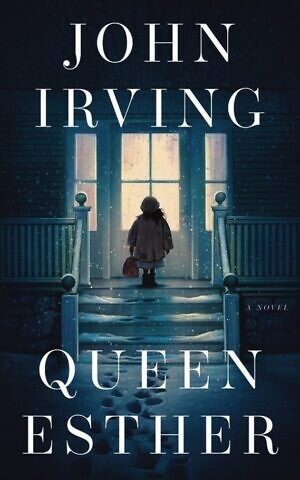
John Irving, renowned for his sprawling narratives and deeply human characters, has once again captivated readers with Queen Esther, a novel that blends history with personal struggle, anchored by a fierce Jewish heroine.
Published in late 2025, Queen Esther is Irving’s 16th novel and reflects both a return to familiar territory and a departure into new thematic ground.
The story begins in the early 20th century with Esther Nacht, born in Vienna in 1905, whose life is shaped by antisemitism, loss and the pursuit of self-definition. Her father dies of illness on the voyage to the United States, and her mother is murdered in an antisemitic attack upon arrival in Portland, Maine, leaving Esther alone at St. Cloud’s orphanage, an institution featured in Irving’s earlier work, The Cider House Rules.
Irving told Kveller that the novel’s structure was dictated by his signature “end-driven” approach to writing.
“It was always my intention that this novel would end in Jerusalem in April of 1981 … when Esther would be 76,” he said, mapping out her life with precision before a word was even written.
In designing Esther’s character, Irving sought a figure whose identity was both personally felt and historically resonant.
“Her Jewish childhood has been stolen from her,” he said, explaining that Esther’s life is always in pursuit of what it means to be Jewish. “To become, in her estimation, the best Jew she can be,” Irving told Kveller.
Her journey takes her from New England to Vienna and ultimately to Israel, where she joins the Zionist struggle during the formative years of the state.
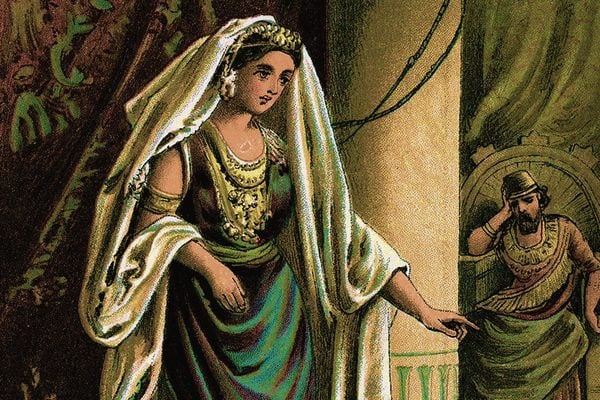
Irving’s enthusiasm for the biblical Esther of the Purim story also shaped his conception of the novel. Queen Esther’s heroine, he told Kveller, was inspired by the dramatic arc of the ancient Queen of Persia.
“I love that character. The outrageousness of the very idea of a Jewish Queen of Persia. Her Jewishness … hidden until she comes out – and then watch out! A modern equivalent to her in my imagination was [to] create an empathetic Zionist. If anyone knows that being Jewish is not safe, Esther knows,” Irving said.

The novel’s early chapters revisit the world of St. Cloud’s, with Dr. Wilbur Larch appearing in a younger incarnation. “I often struggle with the beginnings of my novels because I know so much more about where they end,” Irving told Kveller, describing how he returned to this setting to anchor Esther’s beginnings in a familiar yet distinct context.
Yet Queen Esther is not simply a chronological journey. It also analyses how identity and displacement interact with the responsibility of storytelling. And as Irving’s narrative expands, that focus sometimes shifts.
In a review for The Spectator Australia, the novel was described as a “vast, sweeping story” that moves across the globe and through the decades while presenting Esther as “a moral force of unshakable determination” whose unconventional life defies easy categorisation.
Yet not all responses have been enthusiastic. Some reviewers contend that the novel’s sprawling structure and shifting focus dilute its emotional impact, making it feel less cohesive than Irving’s most celebrated works. The Guardian‘s critique argued that Queen Esther, while rich in ambition, at times lacks the narrative precision that characterised Irving’s earlier classics, rendering it a “disappointing companion to The Cider House Rules“.
Among these debates though, Queen Esther is a testament to Irving’s ability to blend historical imagination with deeply personal storytelling. He tackles weighty themes including antisemitism, Zionism, LGBTQ+ rights and the legacy of historical violence, not as abstract concepts but as forces shaping real lives. Irving told Kveller that he uses history as a guide.
“I’m not a current events writer. There’s a reason for that. I trust history. I believe that the past is a mirror that reflects what’s going to happen,” he said. “The passage of time is a truthful teacher.”
Irving has a long history with Judaism and told Kveller he always felt a sense of allyship with the community, way back to when he was a teenager in boarding school, saying his wrestling teammates were the first Jewish and Black kids he had ever met.
“The Jewish kids told me stories of what it had been like to be Jewish, and the Black kids told me the same stories. And I felt myself an ally to them,” he said, explaining that as a student in Vienna he also had a Jewish roommate.
 “He opened my eyes to the antisemitism in Vienna, and he was very much on my mind [while writing this book]. He was still alive when I first went to Israel in the spring of 1981. And when I went back to Israel in the summer of 2024 to check my facts with Israeli readers, my Israeli friends who had read the first draft of this novel – that Jewish roommate had died, and it was very sad for me to realise that he’d read all of my novels in manuscript. But he never got to read this one, and I had always imagined when I was writing it: Oh, I think Eric is gonna love this one the most of all. So, he was very much a presence.”
While Esther herself often recedes into the background of the story, her life ripples throughout the narrative. Born amid upheaval, defined by her refusal to be defined, she becomes a symbol of resilience and self-determination, showing that identity is never static, but rather, it is influenced by the choices people make, together with the histories and the stories people inherit and pass on to future generations.
Queen Esther is published by Scribner UK, $36.99 rrp
comments