



The Jewish International Film Festival has long been a centrepiece of Australia’s cultural calendar, and in 2025, it returns with what is arguably its boldest and most ambitious line-up yet. Across six cities, audiences will be immersed in stories that traverse continents, centuries and genres, reflecting the complexity and vibrancy of Jewish life. They’re also a testament to the resilience of the Jewish nation, throughout the ages.
With 50 new films on offer, from Cannes premieres to Israeli box office smashes and rare archival restorations, JIFF 2025 embodies the mission articulated by festival directors Lindy and Eddie Tamir: to nourish the fragile multicultural utopia we crave in Australia and to showcase the breadth of Jewish experience at a time when dialogue, empathy and memory are more important than ever.
As Artistic Director Eddie Tamir and his team emphasise, this year’s program refuses to be pigeonholed. It is at once celebratory and confronting, intimate and expansive. The festival launches with Bad Shabbos, a comedy of manners gone awry that Variety has described as “an entertaining, fast-paced comedy,” which took home the Audience Award at the Tribeca Film Festival.
According to Tamir, the choice of such a light-hearted yet cleverly constructed film to open JIFF marks a deliberate tonal shift.
“Bad Shabbos is probably the lightest film we’ve done for many years,” Tamir told The AJN, explaining that the film is what’s called a ‘sleeper hit’ having been in cinemas around the US for the past eight months.
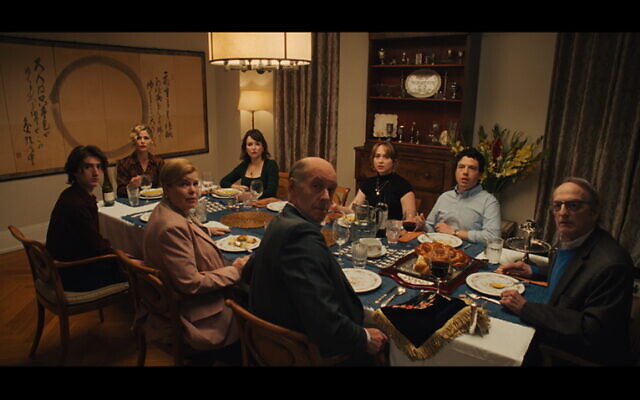
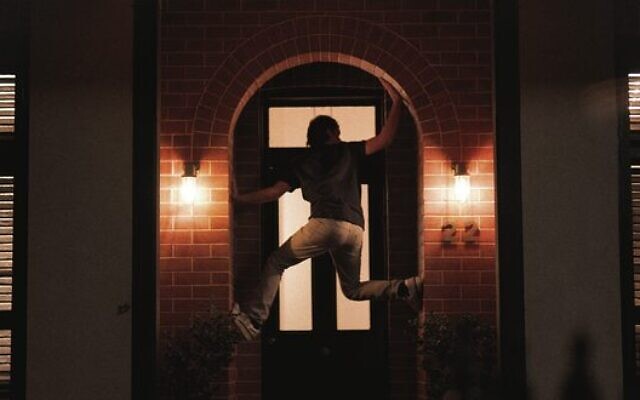
Bad Shabbos is a dark comedy focusing on a family-centred Shabbat dinner, complete with challah, brisket, candlelight and the pressure of perfect hosting.
But beneath it all is a deliriously twisted tale, with a corpse in the bathroom, interfaith tensions, frantic cover-ups and a doorman stepping in as an impromptu Shabbat-savvy rabbi. It’s truly a comedy of errors.
The film shares the story of David, played by Jon Bass, who invites his non-Jewish fiancée Meg (Meghan Leathers) and her Catholic parents to meet his Jewish family, where, of course, chaos ensues.
Robbins questioned why more movies about Shabbat don’t exist. “We just wanted to make an authentic depiction of Shabbos in a Modern Orthodox house and show what that energy is like. We know it so well. If we could mix that with a dead-body thriller, we knew it could be a funny movie,” Robbins told Jewish Website.
“I don’t know why Shabbos movies don’t exist. It seems like some would be leaning into it as an excuse – you know, you can’t use phones and there are other restrictions. So far, we stand alone in the genre.”
For a festival so often defined by its deep dives into historical trauma and political complexity, beginning with a sharp comedy about family, faith and the chaos of a Shabbat dinner gone wrong sets the stage for a season that balances joy with reflection. From there, the festival casts its net wide.
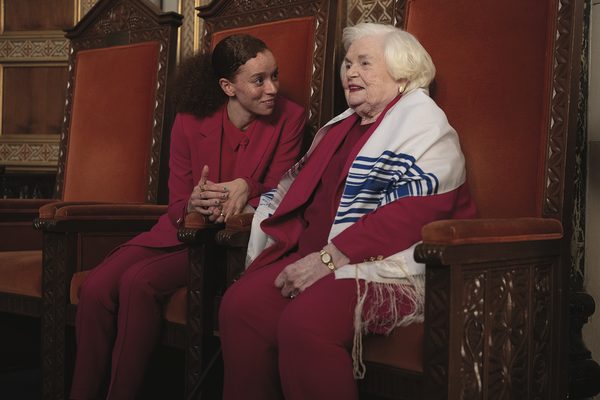
The special presentation of Eleanor the Great, Scarlett Johansson’s directorial debut starring 95-year-old June Squibb, has already been hailed at Cannes as both tender and audacious. The story of a nonagenarian who accidentally inserts herself into a Holocaust survivor group by claiming a story that is not hers, it is a story about ageing, resilience and the ethics of storytelling.
“It’s a very gentle, nuanced, beautiful film,” Tamir said, noting that the JIFF screening is the Australian premiere of the film. Tamir also explained that Squibb is a 94-year-old playing a 94-year-old Jewish woman and that Squibb actually converted to Judaism in real life. In a touching tribute, Johansson also deliberately cast Holocaust survivors in the film.
Johansson’s debut will undoubtedly be one of the festival’s most talked-about features, especially as it raises questions about identity, appropriation and the impulse to narrativise trauma; all themes that resonate strongly within Jewish history.
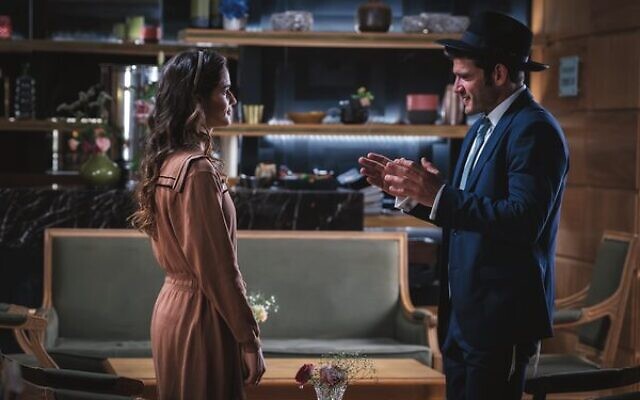
The French hit Once Upon My Mother offers another perspective on intergenerational resilience. Set in 1960s Paris, the film follows a mother’s determination to ensure her child, born with a club foot, will not only walk but dance.
Tamir described it as “very appealing, very warm and a real crowd favourite”.
Its Tiger-mum protagonist, played against a backdrop of vibrant Parisian colour and movement, embodies the drive and stubborn optimism that have characterised Jewish survival across time.
Alongside it, The Ring, directed by and starring beloved Israeli comedian Adir Miller, reframes Holocaust memory through humour, undercutting tragedy with levity.
“The utopian vision of multicultural Australia which is being really smashed around at this moment, it’s very fragile … It needs support and to be nourished. To really grow that notion of multiculturalism, film festivals are crucial for that. Art is important. And JIFF is a big part of that, now more than ever.”
The Ring follows the relationship between Arnon, a devoutly religious man, and his close bond with his mother, Violetta. This is contrasted against his fraught relationship with his daughter, Alma, as the duo travel to Budapest to find a gold ring that saved Violetta’s life during World War II.
“Adir is a comedian, [so] it has that undercutting edge to the way he presents everything; that joyous thing in amongst the drama,” Tamir explained, adding that it has already been a huge hit in Israel.
As always, Israeli cinema features prominently, connecting the Diaspora to the arts world in Israel, including the smash hit Soda starring Fauda’s Lior Raz alongside Rotem Sela.
Matchmaking 2, a sequel to the original crowd-pleaser, continues to mine the cultural tensions between Ashkenazi and Sephardi Jews with both humour and insight.
Come Closer emerges as one of the most acclaimed Israeli films of recent years, sweeping the Israeli Oscars in 2024 with Best Film, Director, Lead Actress and Editing. Sharing the story of two women bound by grief after the sudden death of a brother, it is an intimate exploration of love, obsession and healing.
Variety praised it as “one of the most beautiful and visceral portrayals of grief and the ways we try to make peace with loss”.
For festival-goers, it is both a testament to the ongoing dynamism of Israeli filmmaking and a universal story of resilience.
Among international highlights, Richard Linklater’s Blue Moon is already being hailed as a masterpiece. Starring Ethan Hawke as Jewish lyricist Lorenz Hart, the film unfolds over the course of a single night in 1943, exploring Hart’s bitterness after being abandoned by Richard Rodgers in favour of Oscar Hammerstein II.
“It’s there because of that Jewish change-making of a whole industry,” Tamir explained, saying Hawke acts like he has never acted before, predicting that he will be nominated for an Oscar for his portrayal of Hart.
The program also boasts a remarkable slate of documentaries, underscoring JIFF’s role not just as entertainment but as an ongoing dialogue with memory and history.
All I Had Was Nothingness, a “making of” companion to Claude Lanzmann’s epic Shoah, unearths more than 220 hours of unused footage to reveal the philosophical struggles and clandestine tactics Lanzmann employed while crafting his nine-hour masterpiece. This screening coincides with the 40th anniversary of Shoah, newly restored and returning to Australian screens as part of JIFF.
“We present a new digital print of Claude Lanzmann’s epic Shoah, one of the greatest films of all time … Shoah changed the public perception of the Holocaust and the way films about historical horrors are made,” Lindy and Eddie Tamir wrote in their program welcome note.
Other documentaries bring fresh perspectives on seminal Jewish figures. Yair Kedar’s Outsider. Freud, an exploration of Freud’s Jewishness, long overlooked in mainstream treatments of his life, delves into the ways Jewish identity shaped his psychoanalytic legacy.
Art Spiegelman: Disaster is My Muse celebrates the creator of Maus, situating his Pulitzer Prize-winning graphic novel within a broader oeuvre that includes responses to his mother’s suicide and the September 11 attacks.
The program also includes profiles of Elie Wiesel, Jerry Lewis, Andy Kaufman and Franz Kafka, ensuring that JIFF remains a vital space for revisiting and reinterpreting cultural icons through Jewish lenses.
Another highlight is Riefenstahl. Directed by Andres Veiel, the documentary reveals damning evidence of filmmaker Leni Reifenstahl’s deep complicity with Nazi propaganda.
“It’s so clear. Of course, she was a Nazi,” Veiel told The AJN ahead of Riefenstahl screening at the German Film Festival earlier this year.
“Whoever separates aesthetics from politics, for me, it’s a naive idea. It’s even a dangerous idea. Because they belong together, and Leni Reifenstahl is a living dead example that you can’t separate it.”
The film shares a lot of new information about Leni, including the fact that the filmmaker herself admitted that after reading just the first few pages of Hitler’s Mein Kampf, she became an enthusiastic National Socialist.
For Australian audiences, the festival’s commitment to local stories remains strong.
This year’s program features the world premiere of Frank Lowy’s To Be a Jew, a work-in-progress screening of Esther Takac’s RISING: Voices of Protest and Hope, and the story of Holocaust survivor and beloved Australian music icon Tommy Tycho.
“Frank Lowy’s film screened in Israel so this is the Australian premiere of that one,” Tamir said. “It runs through his story, and then there’s a lot of original material which covers his Israeli life now, including his post-October 7 reactions. So that’s all very unique.”
The Short Film Fund, supported by JASF and JIFF, also returns, offering a platform for emerging Jewish filmmakers to share new work. In curating both global and local voices, JIFF sustains its role as a cultural bridge between Diaspora and homeland, past and present, collective memory and individual creativity.
Thematically, the festival also confronts October 7, as it has done since the Hamas-led massacre, both during the festival itself and with various films throughout the years.
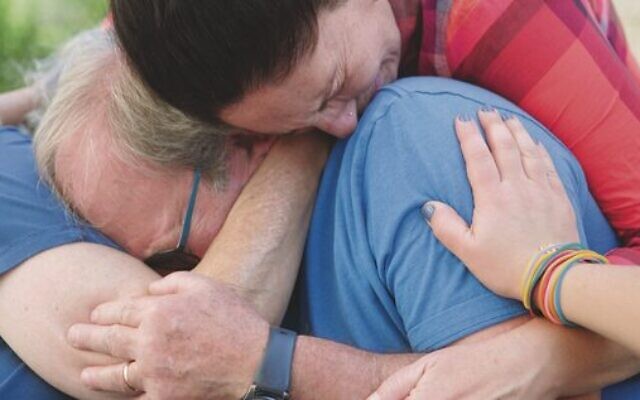
Films such as A Letter to David, A Road Between Us and Holding Liat examine the personal and communal aftermath of that traumatic day.
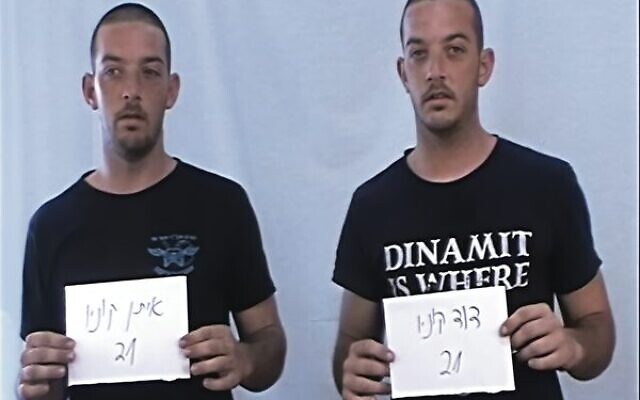
A Letter to David is incredibly unique and touching, especially given David is still being held hostage by Hamas. In 2013, twin brothers David and Eitan Cunio starred in Tom Shoval’s debut feature film Youth which follows twin brothers who kidnap a schoolmate for ransom. Ten years later, David was taken hostage from Nir Oz. The film has become a personal cinematic letter from Shoval to his friend.
As Tamir explained to The AJN, the film doesn’t use any archival footage from October 7, rather focusing on the human story, using unedited behind-the-scenes footage, audition tapes and interviews with the Cunio family.
Holding Liat is a gripping documentary of one family’s push for the release of their abducted family members – Liat and Aviv Atzili. Director and producer Brandon and Lance Kramer respectively, are relatives of Liat, leading Brandon to tell The AJN that this was the hardest film he’s ever made.
“I’ve never made a film with family, with people that I love. I’ve never made a film where I’ve been so up close to trauma unfolding in real time,” he said, ahead of the film’s premiere at the Melbourne International Film Festival.
The film received a standing ovation at the Tribeca Film Festival and won the best documentary award at the Berlinale.
“Holding Liat is a great example of a delicate film that is about October 7, yet critical of the government,” Tamir noted. “There’ll be probably people on certain sides of the political landscape, Jewish and beyond, that will have a problem with something about that film. But we think it’s special and so we include it. We don’t shy away from complexity in a very complex time.”
“As per my introduction, there’s also the comment about the utopian vision of multicultural Australia which is being really smashed around at this moment, it’s very fragile,” Tamir continued.
“It needs support and to be nourished. To really grow that notion of multiculturalism, film festivals are crucial for that. Art is important. And JIFF is a big part of that, now more than ever.”
Multiculturalism is also supported through the Yiddish programming, from Yiddish horror shorts to the restoration of I Have Sinned, one of the first Yiddish talkies starring Rachel Holzer.
These inclusions remind audiences that Jewish cinema is not monolithic but kaleidoscopic, encompassing laughter and fear, horror and beauty, experimental form and timeless storytelling.
I Have Sinned is a 4k restoration, described in the program as “a treasure of early cinema out of circulation for generations”. Holzer became the queen of Yiddish theatre in Melbourne after she came to Australia in 1939.
For Tamir and his team, the challenge is not just curating an ambitious program but connecting it to audiences across cities with differing levels of engagement.
The festival balances crowd-pleasers against more challenging works, ensuring there is something for everyone. It also speaks to the festival’s identity as both a cultural event and a communal gathering, a place where Jewish Australians of all backgrounds can come together in cinemas.
At a time when antisemitism has surged globally, and when debates over Israel and identity reverberate through every corner of public discourse, the act of sitting in a cinema together to watch Jewish stories becomes itself an act of solidarity.
So, as Eddie and Lindy write in their welcome, “Now more than ever, welcome all. See you at the movies”.
JIFF opens in Melbourne on October 19 and in Sydney on October 20, before continuing in Brisbane, Hobart, Canberra and Perth. For the program and to book tickets, visit jiff.com.au
comments