



All in a day’s work
FOR three weeks in December 2009 and January 2010, Captain Benjamin Rutland worked harder than he ever had before.
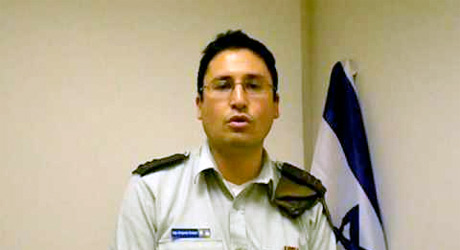
FOR three weeks in December 2009 and January 2010, Captain Benjamin Rutland worked harder than he ever had before.
For 18 hours a day, the then IDF spokesperson answered European and Australian journalists’ questions and provided information about every aspect of Operation Cast Lead, the war in Gaza. It was a long way from Moriah College or Australasian Union of Jewish Students (AUJS) events.
But the only regret Sydney-born Capt Rutland, 36, has is that the media did not stick around to get the full story. “Journalists don’t often have the attention span to stay around after a conflict,” said the officer, who is set to visit Australia in an official capacity next month.
What this meant was that erroneous reports from the heat of the battle – that thousands of civilians had been killed – were never properly corrected.
An IDF report after the war found that of the approximately 1200 killed, 700 were terrorists, Capt Rutland explained. A further 300 were, in fact, civilians, and 200 more were unidentifiable.
But by the time the report’s findings were released, “the media had lost interest”, he said.
Most journalists also missed it when Hamas confirmed, about three months ago, that around 600-700 of its fighters had been killed.
“By the time the truth comes out, the media has moved on.”
Since that war, Capt Rutland has also moved on, and now finds himself serving in the IDF Strategic Division as NATO desk head.
The work is similar to that in the spokesperson’s office; he briefs international visitors and flies them around the country to see different installations. The difference is that the visitors are not journalists, they are high-ranking political and military officials.
While Israel is not a NATO member, its military shares many of the challenges faced by NATO forces in Afghanistan, particularly defending a force against improvised explosive devices.
“Hezbollah and Hamas have used them and the Taliban has used very similar technology,” he said.
“We can see the Iranian footprint on the technology in many of these places.”
Capt Rutland joined the IDF five years ago and enjoyed a stellar rise from private to captain.
He made aliyah after a youth filled with community service, including as a president of AUJS, a volunteer with the Communal Security Group and a writer of Jewish sketch comedy.
Asked why so many Australians are serving in high-profile Israeli positions – Mark Regev in the Prime Minister’s Office, Tal Becker in Tzipi Livni’s office and Capt Rutland’s successor in the spokesperson’s unit, Corporal Mike Nasielski – he attributed it to two things.
“Firstly, I think everyone likes Australians,” he said, adding, “Most of the people who have been successful were involved in Jewish organisations in Australia.”
In Melbourne, Capt Rutland will speak at the Young United Israel Appeal Purim ball on March 19, 9.30pm, at the MCG. Enquiries: (03) 9272 5533. He will also address a community evening at Lincoln of Toorak on March 15, 6.15pm. Bookings (03) 9272 5533.
In Sydney, Capt Rutland will speak at a Young United Israel Appeal event on March 14. Enquiries: (02) 9361 4273.
NAOMI LEVIN
comments