



In February 2024 a spreadsheet began doing the rounds online.
It listed almost 600 Jewish writers, artists, musicians and academics, with their names, photos, professions and social media accounts, and it came with a leaked transcript of nearly 900 pages from a private WhatsApp group they had joined in the months after October 7.
Pro-Palestinian activists circulated it. Some of those named reported threatening calls and emails. The list didn’t sort anyone by politics, observance or synagogue membership.
As Anthony Albanese said at the time, what the people on it had in common was that they were members of the Jewish community.
Philip Zajac, president of the Jewish Community Council of Victoria, thinks the creatives have changed more than any other group.
“The most affected section of the Jewish community over the past three years has been the creatives, musicians, artists,” he said.
“They have suffered big time, and they have realised that the Jewish community will support them.”
Many felt betrayed by friends and colleagues, he said, and found that other Jews would stand by them.
Lee Kofman, the Melbourne author of nine books who founded the WhatsApp group, recognises that picture.
Before October 7, she said, “I was not really a part of the Jewish community … I didn’t know many people from the Jewish community, and now I know so many.”
She felt the pressure before the leak. A friend told her that staff at a writing organisation that had employed her for many years had started complaining about having an Israeli tutor.
As she sees it, the choice she faced wasn’t between being progressive and being Jewish, it was “between being a part of the literary tribe and being openly who I am, which is somebody who supports Israel’s right to exist”.
She has harsh words for the arts world, where, she says, only Jewish creatives who are assumed to be antizionist are accepted or even rewarded for it.
“If you promote and advance a Jewish artist who is antizionist or seem to be antizionist, then it’s like you’re not antisemitic,” she said. “It’s like a cover.”
What she found on the other side delighted her. “There are plenty of progressive people in the Jewish community, so I don’t feel like I came to a necessarily conservative place.”
After the doxxing, volunteers from Project A organised meal rosters, and for a couple of weeks someone brought her family dinner every day.
She has had free legal advice throughout, including for her Royal Commission evidence.
When she launched the anthology Ruptured, Jewish readers filled events around the country, and it is close to selling out its third print run.
“Where was I before October 7?” she asked. “Why didn’t I know anybody? It was my loss really.”
Worse followed the doxxing: a string of arson attacks on Jewish targets.
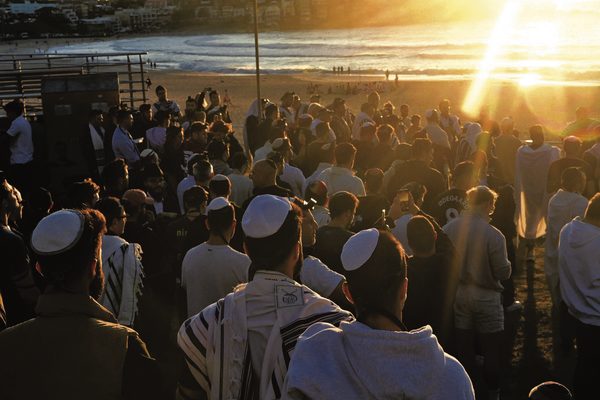
Then, on December 14, 2025, a father and son opened fire on Chanukah by the Sea at Bondi Beach.
Fifteen people were killed, the youngest 10 and the oldest 87.
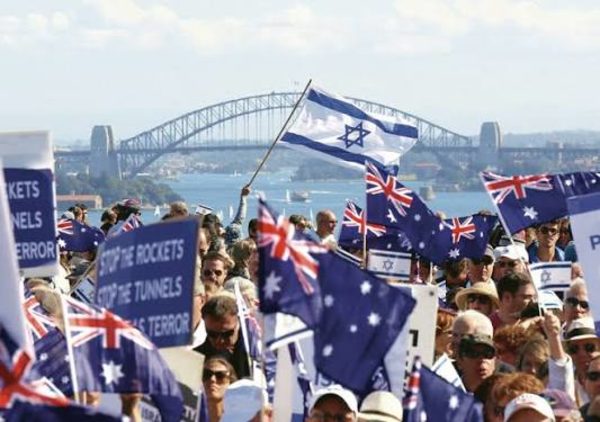
Ask almost any communal leader whether the community is more united now than three years ago and you’ll get a yes.
Zajac says Victoria’s 55,000 or so Jews are closer than at any time he can remember, “and sadly, that’s a reflection of us all having our backs to the wall and being attacked by outside influences”.
Ask what that means in practice and the answers diverge.
The institutional view
For Dr Colin Rubenstein, executive director of the Australia/Israel & Jewish Affairs Council, the change shows up in how the organisations behave.
“There is no doubt that the mainstream Jewish community organisations have been working more closely together over the past three years, with greater collaboration, information sharing and a conscious effort to avoid duplication and to make the most effective use of our collective resources,” he said.
His prime example is the Royal Commission on Antisemitism and Social Cohesion, which the Prime Minister announced in January after the Executive Council of Australian Jewry and every state roof body had lobbied for it.
Before Commissioner Virginia Bell, the community appeared as a single principal party rather than a queue of competing submissions.
Anyone who has covered communal politics for a while will know that “a conscious effort to avoid duplication” is not a phrase that would have come easily a decade ago.
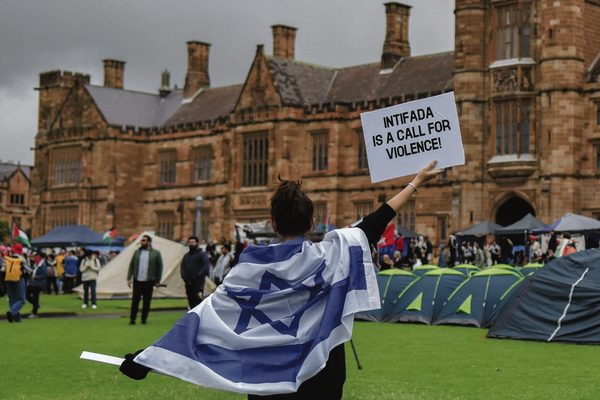
In Sydney, Michele Goldman, CEO of the NSW Jewish Board of Deputies, sees closer practical cooperation across welfare, security, education and advocacy.
Her standout example is JewishCare and Jewish House, which since Bondi have worked even more closely to support victims, the bereaved and the wider community.
“Ultimately, communal unity is demonstrated by what we do,” she said.
Not everyone thinks the organisations have changed as much as they say.
Rabbi Moshe Kahn, president of the Rabbinical Council of Victoria, agrees the community has drawn closer, and credits emergency response initiatives that pulled several groups together.
But he still sees “a lack of clarity of who does what in the community and who is responsible for what”.
“I think there’s a lot of petty ‘this brand and that brand and this acronym’ and I don’t think there’s meaningful collaboration,” he said.
He was quick to add it was nothing personal.
“There’s no one that I’ve ever felt I can’t pick up the phone to and work with.”
Peoplehood
Jeremy Leibler, president of the Zionist Federation of Australia, sees something bigger than better coordination.
He describes “an explosion in this sense of Jewish peoplehood”, reaching Jews for whom the community “just wasn’t a core part of their identity”.
Some had watched the exclusion from a distance; others had experienced it “from people that they previously believed had fully accepted them”.
It’s hard not to think of the people on that spreadsheet. Far more of them, he said, “now genuinely want to lean in”.
Leibler said he isn’t comfortable with how it happened. “I regret that sometimes these explosions of unity happen only when it’s a result of being under siege and pressure, and a rise in hatred.”
He is careful to separate unity from agreement. “One can have unity and unity of purpose without having unanimity of opinion,” he said.
Israel’s right to exist and defend itself, and the legitimacy of Zionism, are “frankly red lines”.
Inside them there has to be room for Jews who feel conflicted about the war, its conduct, or the Israeli government.
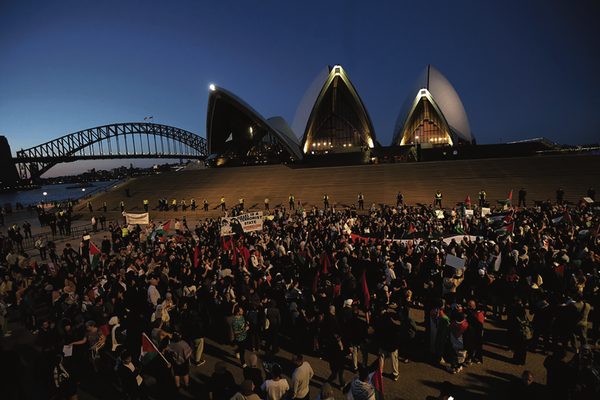
“There needs to be a place for them within the community, at the table.”
Goldman agrees. “Difference isn’t division, and unity isn’t uniformity,” she said.
She, too, draws a boundary: “There is no place within our communal framework for those who actively seek to undermine Jewish peoplehood, deny the Jewish people’s right to self-determination, or work with movements that threaten the safety and wellbeing of Jews in Israel, Australia or elsewhere.”
Unity from the right
Robert Gregory, CEO of the right-leaning Australian Jewish Association, also sees “a positive change across much of the Jewish community”.
Grassroots groups have multiplied, he said, and many have approached AJA, which has “even collaborated behind the scenes with groups that might surprise people”.
In his telling, the gap has narrowed because others have moved towards AJA.
A handful of established leaders, he said, still attack AJA and “increasingly appear out of step with the broader community”.
He is also concerned when major communal organisations publicly criticise Israel’s government “in ways that undermine Jewish unity”.
“Unity does not require pretending those differences don’t exist,” he said.
“The challenge is making cooperation last without expecting everyone to agree on everything.”
Put Gregory beside Leibler and they use similar words for quite different things. Both say unity doesn’t mean agreement. Leibler wants room at the table for Jews uneasy about the war or the Israeli government; Gregory worries when the big organisations air that unease in public.
Unity from the left
From the left-leaning New Israel Fund, the complaint runs the other way. Kate Rosenberg, NIF Australia’s executive director, says its NewGen Advocacy and Leadership Summit, held in Canberra this month for Jewish leaders in their 20s and 30s, heard how hard recent years have been for young progressive Jews.
“They shared their frustration with having to conform to the views of mainstream Jewish community organisations on Israel or face the risk of being ostracised from the community,” she said.
They also talked about the struggle of being Jewish in left-wing spaces, and many were worried about “the frequent conflation of antisemitism with legitimate criticism of the Israeli government and their policies”.
It is Kofman’s dilemma reversed. She felt pushed out of the literary world for supporting Israel; these young Jews feel the pressure coming from inside the community.
Whether there is room for them is the test Leibler set when he talked about keeping a seat at the table.
After the emergency
Communities have a long record, Jewish ones included, of discovering their solidarity under fire and mislaying it once things quieten down.
Leibler doesn’t think the clock will wind back. “For better or for worse, October 7 changed the Jewish world, and we are not ever going back to what it was before.”
If the closeness does last, it may carry a price.
The sociologist Lewis Coser, building on Georg Simmel, argued that conflict with outsiders strengthens a group’s cohesion, but that groups locked in long struggles grow less tolerant of even limited dissent, and hold together by pushing out members who seem to threaten that unity.
It is the risk Leibler raised about excluding Jews who disagree, and the one Rosenberg’s young progressives say they already feel.
Jewish history has seen this before. When Rabbi Akiva hailed Simon Bar Kochba as the messiah in the revolt against Rome in 132 CE, Jewish followers of Jesus could not fight under him and were treated as traitors. The dispute was theological; the war made it a rupture.
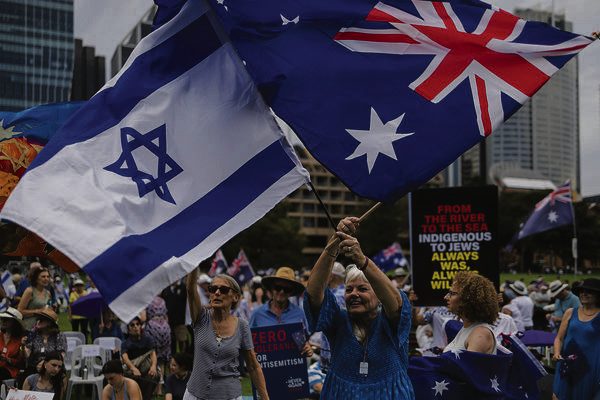
Leibler’s hope is that the togetherness born of trauma can be steered towards something less defensive: Jewish values, identity, the pleasures of Jewish life rather than just its protection.
Kofman doesn’t expect things to recede either, though she won’t paint an ideal picture. “Of course, there’s plenty of arguments and tensions, as in every small community.” Many people, herself included, “discovered how much we need each other”.
The creatives’ WhatsApp group has only grown stronger following the doxxing, albeit now in a smaller, safer format of 400 members.
“It’s a bit like soldiers who go through wars, they forge very special bonds,” she said. “They’re not that easily breakable.”
Zajac is less certain. Without real effort, he said, “we may fall back into a more relaxed approach where we dissipate back to our little enclaves and stop working together”.
Goldman frames the same risk as a test: “The test isn’t whether we always agree, but whether we preserve the relationships, cooperation and shared responsibility that have strengthened over the past three years.”
None of the people I spoke to claimed the community agrees on much more than it did in 2022.
What has changed, by their accounts, is a greater willingness to pick up the phone and work alongside people they disagree with, and many more Jews who now care where the community is headed.
Some of them got there because somebody put their name on a spreadsheet. Whether they stay once the pressure eases will depend less on the threat than on what they find now they’ve arrived.
- Features
- Jewish creatives
- October 7 attacks
- Pro-Palestinian activists
- Anthony Albanese
- Philip Zajac
- Jewish Community Council of Victoria (JCCV)
- Lee Kofman
- Dr Colin Rubenstein
- Australia/Israel & Jewish Affairs Council
- Royal Commission on Antisemitism and Social Cohesion
- Executive Council of Australian Jewry
- Virginia Bell
- NSW Jewish Board of Deputies (JBOD)
- Michelle Goldman
- Rabbi Moshe Kahn
- Rabbinical Council of Victoria (RCV)
- Jeremy Leibler
- Zionist Federation of Australia (ZFA)
- Robert Gregory
- Australian Jewish Association
- Kate Rosenberg
- New Israel Fund
comments