




In Australia, one in seven women will be diagnosed with breast cancer. That number is likely higher in the Jewish community, as Jewish people are more likely to carry a BRCA gene mutation, which can increase the risk of breast, ovarian, melanoma, prostate and pancreatic cancers. A woman with a BRCA mutation has a seven in 10 chance of developing breast cancer and a four in 10 chance of developing ovarian cancer.
It is therefore important that Jewish people, both male and female, know whether or not they carry a BRCA mutation. In Sydney, the Wolper Jewish Hospital offers free BRCA testing for three common variants in the Ashkenazi population to Jewish people living in NSW.
Outside of NSW, BRCA testing can be covered by Medicare where a person has a breast cancer diagnosis or a family history of BRCA faults. In Melbourne, the JeneScreen program tested widely for three common BRCA faults, but that project has now concluded.
BRCA tests can cost around $500, while private labs such as Eugene can test for a range of genetic faults that increase cancer risk for around $950.
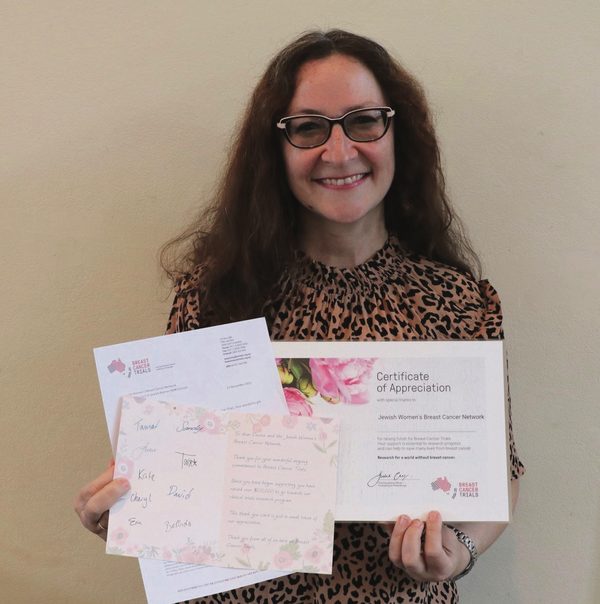
Davina Ash.
However, only five per cent of female breast cancers can be explained by an inherited gene fault. That is why Dr Orit Kaidar, a renowned radiation oncologist from Israel’s Sheeba Medical Centre, said it is important not to delay breast checks.
“We need to remember that not all BRCA-mutated patients will have a significant history of breast cancer … and some patients will not have any mutation in the family … but a strong family history of breast cancer puts you at risk,” Dr Kaidar said.
“The fact that we have breasts and we have oestrogen in our body puts us at risk, and by detecting it early and doing preventive measures, we save lives. We cannot say that about all cancers, so it’s very important.”
Dr Kaidar will be a keynote speaker at the Australian Society for Breast Disease 14th scientific meeting on the Gold Coast this week.
Those who discover they have a BRCA gene fault or a family history of breast cancer have to weigh up complex decisions – whether or not to have medical interventions such as a bilateral mastectomy and ovaries removed, whether or not to have hormone treatment that puts them in early menopause, or whether to wait and see while having screenings. There is also stigma associated with carrying a BRCA gene fault, particularly in the ultra-Orthodox community, where there are fears it could impact marriage prospects.
Gabrielle Oberman has written about the challenges of living with a BRCA gene fault as a young Jewish woman.
“Finding out that I carry the BRCA1 mutation has been confronting and life-changing,” she told The AJN.
“I am privileged to have access to world-class medical professionals and annual breast MRI scans. However, knowing that I also carry a risk of ovarian cancer, without the existence of early-detection screening, is incredibly difficult. I am learning to live with the physical health implications, as well as the psycho-social and emotional ones, which at times are a huge burden.”
BRCA faults can also lead to breast cancer at a younger age. Currently, women are only invited to have free mammograms through BreastScreen Australia when they are over 50. Many are not aware that they are eligible to have free mammograms once they turn 40.
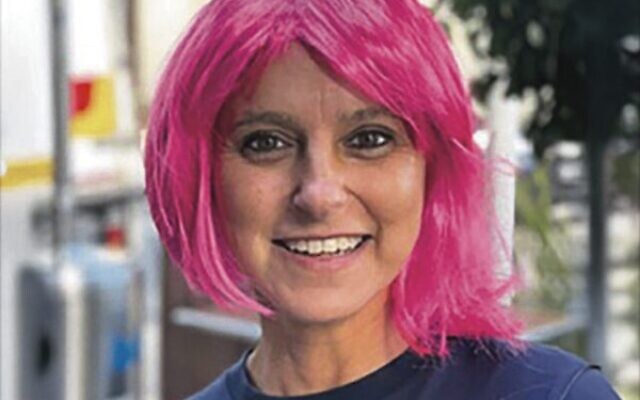
For women under 40, they are told to be “breast aware” and look for changes, but not all breast cancers present as lumps and sometimes they are found too late. Breast cancer is the leading cause of death from cancer for women under 40. Young women need to be empowered to have conversations with their GP about their risk, feel confident to raise concerns, and know that screenings for young women can be conducted via ultrasounds, breast MRIs and contrast mammography.
As Dr Kaidar advised, “Do not neglect any lump that you feel in your breast … We’ve seen a lot of patients that were either breastfeeding or after breastfeeding, and they were told it was associated with the breastfeeding. Get checked, don’t assume that since you’re young, you cannot have breast cancer. It affects all of us.”
Finding breast cancer early before it has spread can save lives. But even for women who do find it early, many face life-saving but gruelling medical treatments – chemotherapy, radiation, surgery, hormone treatment and immunotherapy. There is often a life-long fear of recurrence, side effects from treatments, and emotional scars that never heal.
Reflecting on losing her hair from chemotherapy and undergoing a bilateral mastectomy, Natalie Snelling shared, “I felt down from time to time when I would look at my body in the mirror with the scarring from multiple surgeries, loss of hair and baldness and upset that I didn’t look or feel myself.”
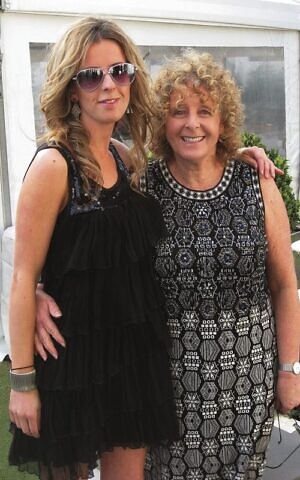
But even among those who detect breast cancer early, around 30 per cent will develop metastatic disease, which is currently incurable.
Pixie Silverman lost her mother Rachel to breast cancer. Rachel found the cancer relatively early, but a year later it had spread throughout her body. Pixie told The AJN, “When we found out the cancer had returned, the doctors told us she only had six months – three weeks later she was gone.”
At that time Pixie was 35 with a new baby. She shared, “Since then, the hardest thing for me has been watching my two daughters grow up without a grandmother – without the showering of love that only a grandmother can give.”
New research is leading to significant developments that could help save lives. Early detection could be improved with blood tests currently in clinical trials, and artificial intelligence in mammography and MRIs is expected to significantly improve risk assessments. Precision medicine is also advancing treatments through genomic profiling, targeted therapies and immunotherapy breakthroughs.
Many breast cancer survivors are turning their pain into purpose. In Sydney, Davina Ash started Tikvah V’Or – Jewish Women’s Breast Cancer Network, run through NCJW NSW, which provides connection, education, resources and referrals for those diagnosed with breast cancer and other cancers. Tikva V’Or is hosting an event with Days for Girls with Dr Inna Lieb on October 12 at 2 pm.
In Melbourne, Renee Gani began a private Facebook group, JewBewb, to share advice for those undergoing treatment. Natalie Snelling started a podcast, Bosom Buddies, with her fellow breast cancer survivor friend Elle, sharing the experience of women going through breast cancer.
Meanwhile, Nicole Gold and her husband Ben are launching an in-home exercise program catered to women going through treatment for cancer. Ellie Rogers had breast cancer and her sister Lisa Bardas carried a BRCA fault; both lost their mother to cancer. Together they started the TwoSisters Foundation, which fundraises for medical research to fight breast and ovarian cancers.
For many, the battle is difficult, and families and carers suffer alongside those diagnosed.
As someone who has personally battled breast cancer, I felt that more could be done to raise awareness about breast cancer in the Australian Jewish community and to support those diagnosed as their lives are turned upside down. When I was diagnosed with breast cancer at 39, two weeks after my mother passed away from cancer, navigating grief and medical treatments while looking after young children was challenging. This journey has led me to speak out about the importance of early detection in young women, and to urge the community to offer deeper, more compassionate support to those fighting this illness.
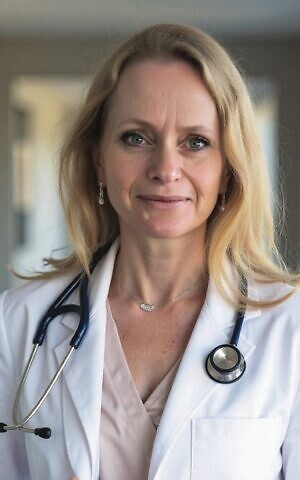
I discussed my concerns with Jewish Care Victoria’s Rachel Ash and National Council of Jewish Women Victoria President Anna Serry, and their support has led to a panel discussion I will be moderating on breast cancer awareness on October 24.
The panel includes breast surgeon Dr Jocelyn Lippey, psychologist Dr Lesley Stafford, and breast cancer warriors Sarah Singer and Rachel Ben-Atar.
Singer was diagnosed at 32, just as she was a new mum to 16-month-old Mia. Two years after treatment she learnt she had a BRCA1 gene fault and today is navigating preventative treatments with her adult daughters.
Ben-Atar is a teacher at The King David School who was diagnosed with Stage 3 breast cancer at 37, when her kids were aged six and four. She will discuss the challenges of having treatment while working and caring for young children.
“Through this panel we aim to share our invaluable knowledge and resources as well as share our personal journeys, aiming to provide comfort to others. It’s time for our community to offer those battling or impacted by breast cancer a supportive and safe network,” Ben-Atar said.
Discussing the motivation for the panel, NCJW Vic President Anna Serry told The AJN, “At NCJWA Vic, we know that Jewish women’s health is not just a medical issue but a community issue. Breast cancer touches many families in our community, yet too often the conversations around support, care and recovery are kept private.
“By partnering with Jewish Care and the Australian Jewish News, we hope to bring these conversations into the open, raise awareness and highlight the importance of culturally sensitive support networks. We want Jewish women to feel seen, understood and supported – not only in treatment, but in the ongoing emotional, spiritual and communal journey of healing.”
Significantly, a cancer support group for women will be launched at this event. Jewish Care’s Rachel Ash commented, “At Jewish Care, we recognised a gap in our community when it came to support for those facing breast cancer and their families. After hearing Rachel Ben-Atar’s courageous story, speaking with Sharyn Kolieb, and reflecting on my own life experiences as a partner, I felt deeply compelled to ensure that no one in our community feels alone on this journey.
“This breast cancer awareness morning is more than an event, it is the beginning of a support network, a safe space and a commitment to walking alongside those who need us most. It is extremely humbling to be joining forces with NCJWA Vic and The AJN on this important initiative and I am truly excited about what we can achieve together. If even one life is saved, or one person finds renewed hope because of this collaboration, then every effort will have been worth it.”
The AJN is proud to be co-hosting this event – as a community we must bring this discussion out of the shadows and raise awareness, because when we raise awareness, we can save lives.
To register: Melbourne: October 24, 10am to 11.30am, breast cancer awareness panel discussion events: humanitix.com/breast-cancer
Sydney: October 12, 2pm to 5pm, Tikvah V’Or and Days for Girls: events.humanitix.com/tikvah_dfg_12102025
comments