



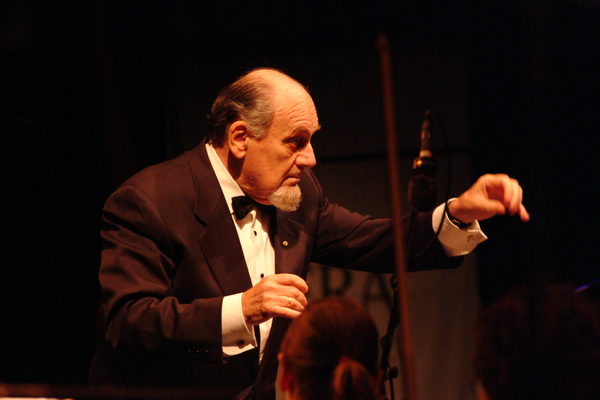
Vicky Tycho’s dream has always been to have her father’s life and music portrayed on film. Director Stephan Wellink has brought this dream to life.
There was something ineffably grand about the way Tommy Tycho sat at a piano. The posture, the poise, the restraint before his hands descended. It all spoke of a lifetime spent in reverence to music.
For more than six decades, Tommy Tycho shaped the sound of Australian popular and orchestral music, quietly conducting, arranging, and performing his way into the nation’s cultural DNA.
But behind the glamour of television orchestras and Royal Command Performances lay a story of survival, faith, and the unshakeable discipline of a man who believed that music, like Judaism, was an act of devotion.
Born in Budapest in 1928, Thomas Tycho (then Tychy) was a child prodigy. By the age of 10, he was performing with the Budapest Symphony Orchestra. But his early life was anything but charmed. As a Jewish teenager in wartime Hungary, Tycho and his family lived under the shadow of the Holocaust. He only narrowly survived.
Tycho, however, was unaware he was Jewish until he was in his teens. “His mother sat him down after [Hitler’s] edict was handed down and said, ‘I have something to tell you – you’re Jewish’,” Tycho’s daughter Vicky Tycho told The AJN when Tommy passed away in 2013. “Dad lost a lot of relatives in the Holocaust, but he and his mother and sister all survived.”
After the war ended, Tycho, then 18 years old, enrolled at Budapest’s Franz Liszt Academy of Music and later joined a dance band, touring the Middle East. During that tour, the Shah of Iran appointed him as his personal pianist.
Tycho stayed in Iran for four years, meeting his Budapest-born wife Eve during his time there.“When they decided to leave Iran, my parents applied for visas to Canada, America, New Zealand and Australia,” Vicky recalled. “Australia responded first, so they came here.”
“The documenting of Tommy Tycho’s story on film means that there is a readily accessible record of his prominent place in the cultural history of Australia.”
When Tycho arrived in Australia in 1951, he brought with him not only European musical sophistication but an ethos rooted in Jewish culture.
These values shaped his work from the moment he touched Australian soil. Tycho brought a framework, and some heart, arranging, conducting, and mentoring with a precision that lifted standards across the entertainment industry.
He became a household name, even if during the televised performances, his face was often just beyond the camera’s reach. He believed that music should carry the integrity of classical form, yet uplift the audience with warmth and celebration. It was a balance he pursued in every arrangement and performance.
For fifteen years from 1956, as Music Director for Channel Seven, he shaped the sound of Australian television. This included his arrangement of Advance Australia Fair, which became the nation’s sonic signature.
Yet, even as he became a fixture in Australian show business, Tycho never forgot what it meant to start again, as an immigrant, a survivor, and a stranger. That empathy infused his mentorship of young musicians. Many remember him as exacting but generous, demanding excellence not out of ego, but out of love.
When Tommy Tycho died in 2013, Australia lost not just a conductor but a cultural bridge who carried the disciplined artistry of Europe into the easy warmth of the Antipodes, helping the country find its sound.
While Wellink knew of Tycho’s work through television, and had featured Tycho in a previous documentary, it was Vicky who drew him to the story. He told The AJN that he jumped at the opportunity to make a film about the incredible musician.
“Film is a good way to shine a light on who our stars of 60 or 70 years ago were. It is important to honour the legacy of those who came before this particular generation or the last couple of generations,” Wellink said. “The documenting of Tommy Tycho’s story on film means that there is a readily accessible record of his prominent place in the cultural history of Australia.”
Using archival footage and interviews with many famous faces including Julie Anthony, James Morrison, Todd McKenney, Rhonda Burchmore and more, TYCHO! Beyond the Baton celebrates the incredible mark Tycho made on Australia’s cultural landscape.
Vicky said that every day the crew worked on the film, they discovered something new about her father. She said it was an incredibly moving experience, particularly seeing Tommy’s Shoah interview combined with music he actually wrote during the Holocaust.
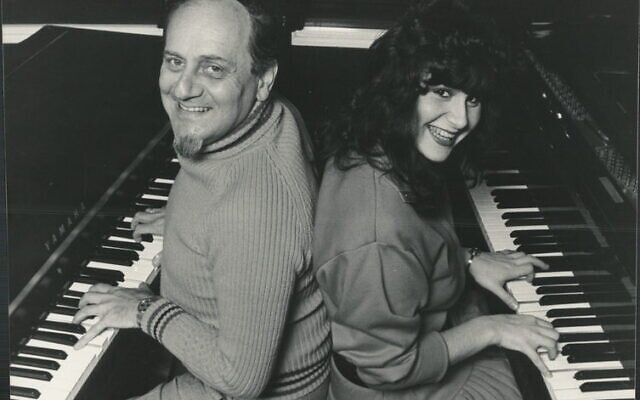
For Wellink, he was surprised to learn just how many people Tommy mentored throughout his life and career. He said while many know Tommy, so many Australians will also be surprised by just how widely his influential net spanned.
“TYCHO! Beyond the Baton will be a walk down memory lane for some and a revelation to others,” Wellink said, saying audiences can expect an immersive experience that combines archival footage, narration by Tommy himself – taken from interviews conducted over a 30-year period – interviews with some of Australia’s finest talent, and in a special tribute to the maestro, a soundscape featuring Tommy’s music.
“The music – at times poignant, dramatic or exciting – reflects how Tommy was feeling at various stages of his life,” Wellink explained.
Vicky said the documentary also includes music that has never previously been heard which will be a treat for audiences Australia-wide.
“As a musician, I hope filmgoers are in awe of his talent and understand Tommy was a musical genius. He was a legendary performer, a master of his craft and an icon of the Australian entertainment industry,” Vicky continued. “As a person, Tommy was a survivor, someone who could reinvent himself in a life of many highs and lows. My father was foremost both professionally and personally a kind, gentle and generous man.”
TYCHO! Beyond the Baton will premiere worldwide at JIFF from Thursday October 23. For tickets, visit jiff.com.au
comments