



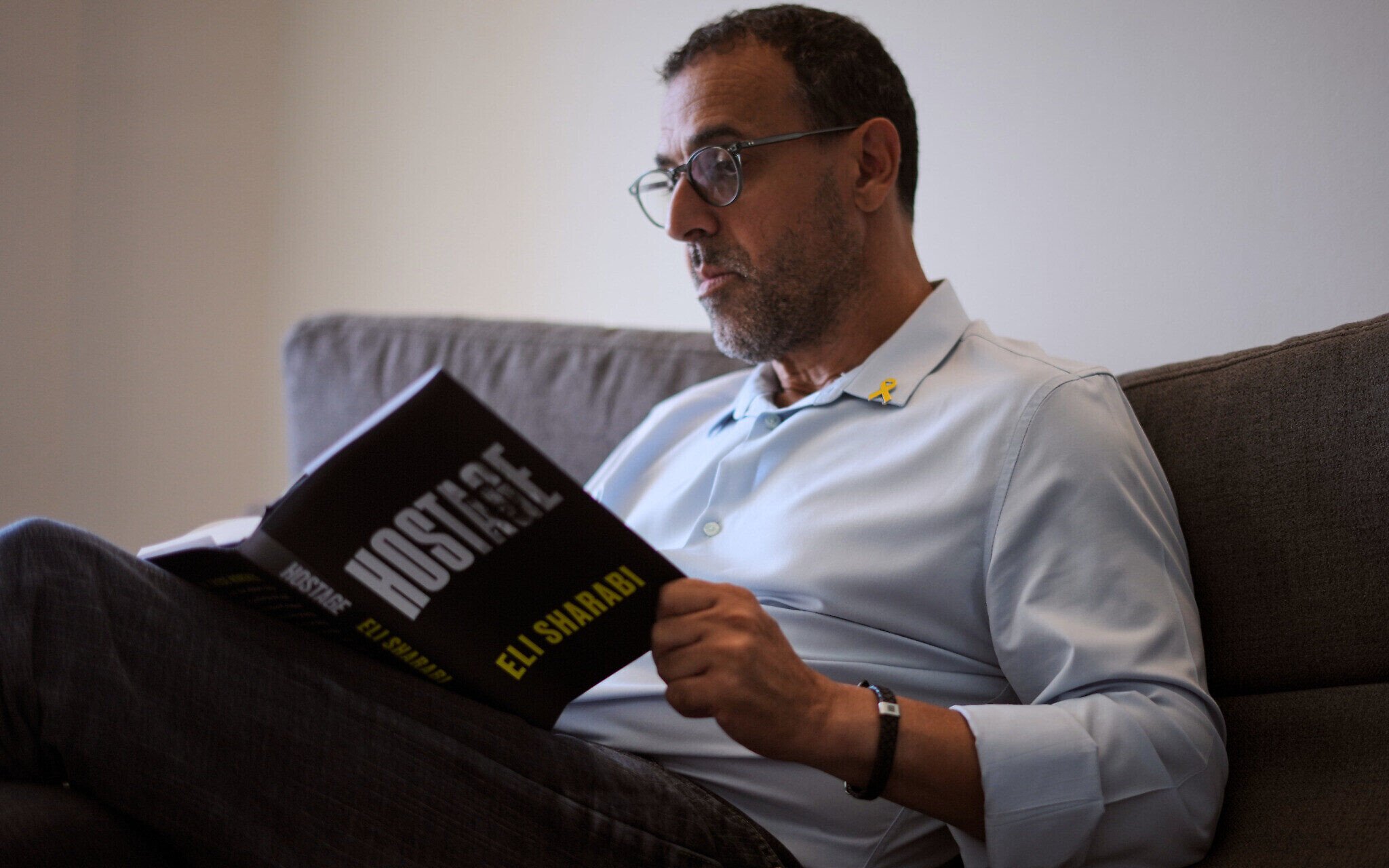
When Eli Sharabi was freed from captivity after 491 days, he decided that the world needed to understand what he and his fellow captives went through. Especially because when Sharabi was released, many were still being held and tortured in Hamas tunnels – physically, mentally and emotionally.
So he wrote it all down, as quickly as he could.
His book, Hostage, is now a New York Times bestseller. It’s the first memoir to be written and published by a released Israeli hostage, and was honoured with the Golden Book Award, after breaking the Israeli record for the fastest-selling book.
When Hostage was first released, Sharabi told The Times of Israel that he felt it was important for the story to come out as quickly as possible to ensure the world understands what it was like for those held hostage by Hamas.
“Once they do, they won’t be able to remain indifferent,” he said.
Sharabi was taken from his home on Kibbutz Be’eri. He was still wearing his pyjamas. Terrorists holding Kalashnikovs, blindfolded him and dragged him out of his home, leaving Sharabi’s wife Lianne and teenage daughters Noiya and Yahel, just 16 and 13-years-old respectively, behind. When the terrorists first entered their home, Sharabi writes that he tried to reassure his daughters.
“They don’t scream. They don’t cry. They don’t even speak. They are frozen in terror. I will never forget that look of terror in their eyes,” Sharabi recalls.
Sharabi, knowing they held British passports, believed they would be spared.
He wrote that he knew he was being abducted to Gaza but he believed it would be ok because his family was being left behind. He held onto that belief for almost 500 days, using it for motivation. In Hostage, he writes, “I focus and concentrate on one mission: my survival and return home. There is no more regular Eli. From now on, I am Eli the survivor.”
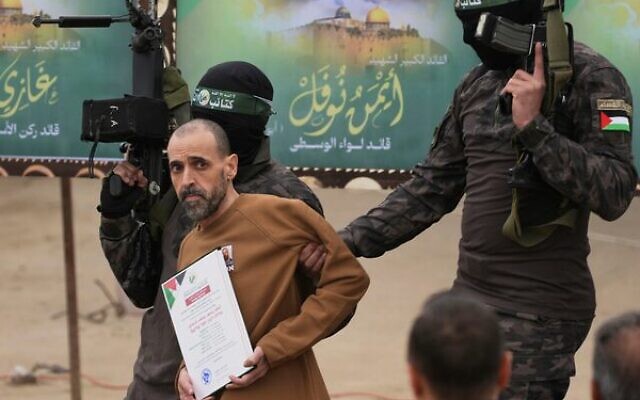
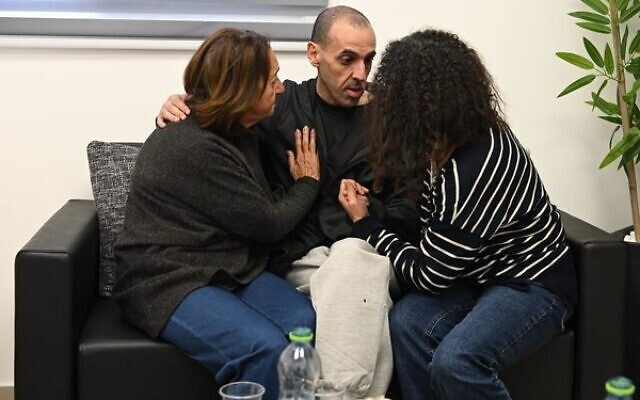
When he was finally released in February, he was informed that his wife and daughters were murdered on October 7. Terrorists killed them mere moments after Sharabi was taken away. Sharabi told Piers Morgan that had he known his family had been murdered, he may not have survived.
“Thank G-d no one told me during captivity. That helped me survive — it gave me motivation to hold on, because I believed that one day I’d return, just as I had promised my daughters before the abduction. I clung to the idea that one day I’d see them again, hug and kiss them again. I promised myself we would move to London and live there,” Sharabi told Morgan earlier this month, explaining that it was only when he was handed over to the IDF that he found out they were no longer alive. While he immediately asked the social worker to take him to his family, he was told that his mother and sister would explain everything.
“And of course, that was the moment I understood that the worst had happened,” he recalled. “It felt like a five-kilogram hammer had struck me on the head. I cried. But afterward, after the crying, when they tried to calm me down, I remembered where my strength comes from, and it always comes from my family. I wanted to see my mother and sister and hug them, and that’s what happened.”
It was also only three days before his release that he learned his brother Yossi had also been abducted and murdered after three months in captivity.
In Hostage, Sharabi doesn’t shy away from his experiences. He is brutally honest about what happened to him, shattering any illusions that Hamas treated the hostages humanely, despite attempts by Hamas to gain sympathy.
Sharabi explains that he was at first held in a family house in Gaza, bound and then shackled. Fifty days later, he was taken underground. Sharabi only saw daylight three times during his captivity. He was fed very little, barely enough to survive. He was taunted, chained, humiliated, rarely allowed to bathe, forced to beg to use the bathroom and often beaten.
During his time in captivity, Sharabi was held with several other hostages. A few days after he was taken into the tunnels along with several other Israeli men and women, three hostages were told they were being released. Months later, Sharabi found out they were, in fact, murdered.
At one point, Sharabi was beaten so badly that his ribs were broken. While his captors ate like kings – often going through boxes of humanitarian aid – Sharabi recalled being given perhaps one mouldy pita bread a day. When he was released, in a staged ceremony where he was paraded onto the stage, he weighed just 44 kilograms.
Sharabi explained that before his release, he was coached by Hamas terrorists to say in interviews that he was most looking forward to seeing his wife and daughters. Right up until the last moment, they were taunting him.
In Hostage, Sharabi also details that he was held for months alongside Alon Ohel, Eliya Cohen and Or Levy. Sharabi and Levy were released on the same day, with Ohad Ben Ami. During the same ceasefire, Cohen was also released.
Sharabi recalls that while they were together, they taught Cohen how to read English. He also took on the role of a father figure to the other men, helping them create exercise programs to ensure they moved their bodies despite the chains, and ensuring that each day they shared something good that had happened to stay as positive as they could. They prayed together regularly and on Friday nights they would take a cup of water to recite Kiddish together.
He also explains that leaving Ohel was very difficult, saying he couldn’t stop thinking about the hostages left behind. “He refused to let go of me. The terrorists tore him away,” Sharabi recalled.
But, in his optimistic mindset, he felt and knew that the hostages would all come home.
Indeed, Ohel, who was badly injured in his eye from shrapnel while fleeing the Nova festival, has come home. And, while the world waits for the remaining bodies to be released by Hamas, Sharabi’s brother Yossi was part of the first four deceased hostages to be returned to Israel.

Since his release, Sharabi has campaigned relentlessly for the other hostages. He met Trump at the White House, Starmer in Downing Street, addressed the United Nations Security Council and came to Australia, hosted by JNF, meeting with Deputy Prime Minister Richard Marles, Foreign Minister Penny Wong and many other parliamentarians, where he advocated for the release of, at the time, the remaining 48 hostages.
When he was interviewed on stage by acclaimed Israeli journalist Nadav Eyal at the JNF event in Sydney, Sharabi shared his pain, saying there was nothing he could do to “fill the hole in his heart” but he feels the “circles of love” around him.
During that visit to Australia, Eli had one simple, main message – “choose life”. It is a daily commitment that has fueled his survival during captivity and beyond. He keeps living, advocating, and sharing his story, in the belief that life can be rebuilt.
Sharabi, and indeed Hostage, is a testament to that belief.
Hostage is published by Allen & Unwin, $34.99 rrp
comments