



Compassion doesn’t check for religion
It’s not enough to pray for a better world; we are obligated to build it, step by step, brick by brick.
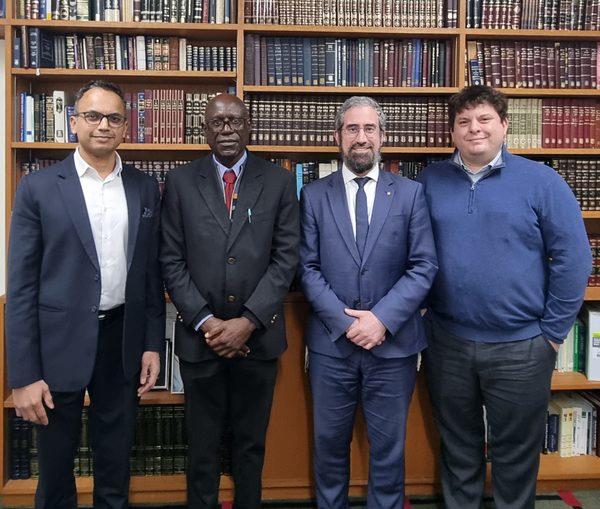
Recently, I had the privilege of meeting a remarkable individual whose work left a deep impression on me. Abraham Muma, the Health Services Coordinator at Chilonga Mission Hospital in Zambia, was visiting Melbourne for a fundraising event. He chose to visit St Kilda Shule alongside colleagues from Catholic Mission’s National Office. Their mission was clear: to shine a light on the silent suffering of mothers in rural Zambia and to share their commitment to doing something about it.
They told stories that were difficult to hear: of women walking for hours — sometimes days — while in labour, simply to reach the nearest medical facility. Of mothers giving birth on the side of dirt roads. Of preventable deaths. In Zambia, more than 30 per cent of women still give birth without medical assistance. Postpartum haemorrhage remains the leading cause of maternal death. The statistics are disturbing, but it’s the human faces behind them that stayed with me. And how we in the west so often take these necessities as a given.
Abraham shared with humility and quiet strength his work in maternal healthcare. He didn’t speak in abstractions or grand language — just about his responsibility, as a man of faith and compassion, to ensure that no woman dies because she cannot reach help in time. He spoke of building trust in remote communities, of finding solutions one clinic, one health outpost, one mother at a time.
Fascinatingly, Abraham shared with me his knowledge of the Hebrew language which he had learned as a devout Catholic, to understand the origins of his faith in the Bible. He told me how he learned the Alef-Bet in his younger years together with the nekudot – Hebrew vowels!
In Judaism, the value of pikuach nefesh — saving a life — overrides almost every other religious obligation. There is no higher calling. Listening to Abraham, I saw that same value reflected in Catholic Mission’s work in Zambia. Though we come from different traditions, our belief in the sanctity of life is shared. This, I believe, is where interfaith solidarity becomes real — not just in words, but in action.
comments