



Don’t undermine the Royal Commission, ‘you’re not going to get a rerun’
Senator says ministers should have been called, and delivers a New Year message to the community
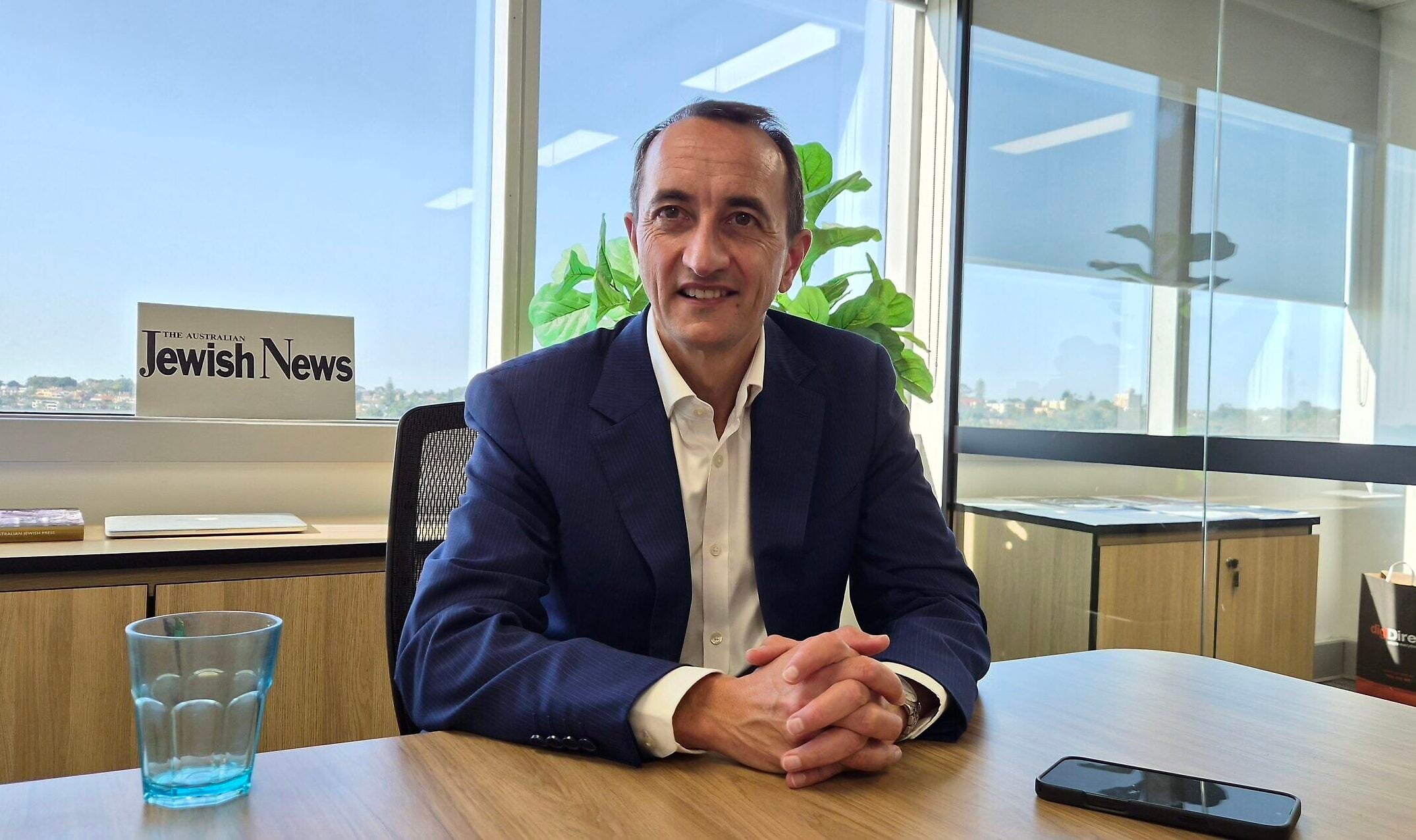
Liberal senator Dave Sharma says the Royal Commission on Antisemitism and Social Cohesion has given non-Jewish Australians an insight into Jewish life that was not previously well understood, while cautioning against undermining the inquiry as it prepares to report.
In a wide-ranging interview at The AJN’s Sydney office a week after the commission’s hearings concluded, Sharma said he had fought hard for the commission’s establishment and believed it had already achieved important things.
“The fact that it’s heard over these past nine months from many people – perhaps not every person, but many people – I think is important,” he said. “It’s provided importantly an insight for non-Jewish Australians into the lived experience of Jewish Australians.
“The fact that there are security guards at schools, the fact that there has to be the CSG, a private security force outside synagogues, the concerns parents have about sending their children to school in Jewish uniforms, or the concerns people had about wearing Jewish insignia – the Royal Commission I think helped provide that experience of voice, and I think that was important for the rest of Australians to hear, because when Australians hear these things, they realise how unacceptable and intolerable it is.”
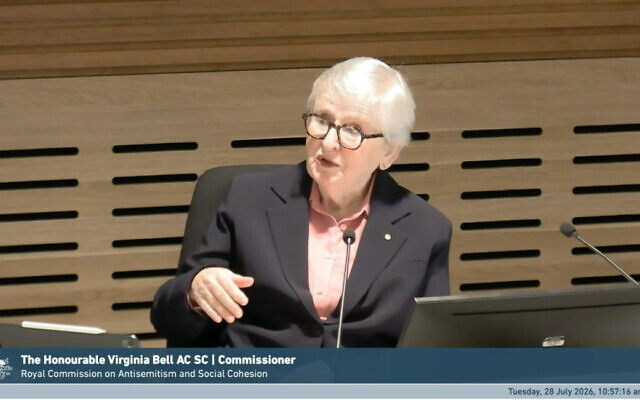
On calls to extend the Royal Commission, Sharma said he had some sympathy but was mindful of its independence.
“I’ve been keen to take my lead from the Jewish community by and large here. If they were calling for an extension, I would support it, but I certainly haven’t detected at least a uniform view from the peak bodies … I don’t want to get out ahead of them, because ultimately they’re the best placed to judge what the best interests of the community are,” he said.
“We should all look at the Royal Commission’s findings closely and scrutinise them, and if they merit some criticism, we should be prepared to provide that. But we want to be careful not to undermine the Royal Commission entirely, because you’re not going to get a rerun. So this is what we have to work with.”
Sharma said he was however surprised the Royal Commission had not called Prime Minister Anthony Albanese, Foreign Minster Penny Wong or Home Affairs Minister Tony Burke to give evidence. “I think they could have added important perspective and context to the Royal Commission’s work,” he said.

“In Tony Burke’s case, as Home Affairs Minister in charge of our security agencies, including ASIO and the AFP, and from the Prime Minister’s perspective, the Chair of the National Security Committee of Cabinet. Ultimately our security agencies prioritise and allocate resources according, quite properly, to the direction set by their political masters of the day. They are accountable to the elected representatives of the day … That doesn’t mean that not hearing from them fatally undermines the Royal Commission’s work, but I think it would have been helpful.”
Turning to the government’s response to Israel closing its file on the strike that killed Australian aid worker Zomi Frankcom, Sharma said there were clear double standards at work.
“There are at least two Australians, known Australians, who’ve been killed during this conflict. One was Galit Carbone, by Hamas, on October 7, 2023. The other was Zomi Frankcom,” he said. “In the case of Galit Carbone, yes, the government of the day regretted her death, but we didn’t see nearly the level of attention given to her family when Penny Wong visited Israel. She didn’t meet the Carbone family. I’ve met with her brother. She didn’t visit Kibbutz Be’eri, the site of Galit Carbone’s death. I visited that. Many other politicians did. She refused to do that, and I haven’t heard the same calls for accountability for Galit Carbone’s death.
“Zomi Frankcom’s killing was a tragedy, but Mark Binskin’s report found that it was not intentional. It seems that Israel’s investigation into this has found the same, that yes, there were mistakes made in the chain of command … There are criminal proceedings being pursued against a number of IDF personnel involved in the conflict for other incidents, so it’s not as if Israel is not holding some of its own to account.”

Photo: X
He said the government’s protestations were for a domestic audience. “I think they probably knew that this was going to be the outcome … They’re not seeking to address this constructively,” he said. “They’re just seeking to condemn Israel in the court of public opinion.”
Sharma described as disgraceful Greens senator Nick McKim’s claim in parliament that the government was captured by Zionist interests. “I’m glad James Paterson and others sought to hold them to account. I don’t know if he’s unaware of that antisemitic trope or stereotype, but I think it’s very dangerous,” he said. “We had a New South Wales member of the Greens, Jenny Leong, talk about the tentacles of Jewish power. This is very much in the same vein. This is classic early 20th century antisemitism … It’s insulting and it’s dangerous.”
He said the Greens had been radicalised over the past 10 to 15 years and had not reflected after losing seats at the last election.
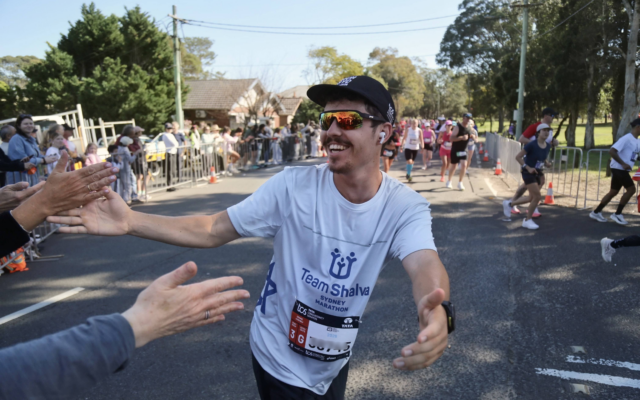
He also said he was appalled by anti-Israel protests along the route of the recent Sydney Marathon, where Israelis were running for a disability charity. “It’s their willingness to seek to politicise clearly non-political events and seek to create a sort of social division where none needs to exist,” he said.
Sharma said he and other Coalition senators would pursue the ABC at Senate estimates over guidance on covering Israel, which the Australia/Israel & Jewish Affairs Council (AIJAC) has said entrenches bias, seeking its public release and asking who compiled it and what external scrutiny it received.
Ahead of Rosh Hashanah, which begins on the evening of Friday, September 11, Sharma said he could not offer a message of hope without acknowledging that this was the first Jewish New Year since the Bondi terrorist attack. “This last Jewish year has been a very painful and traumatic one for the Jewish community … I recognise it’s probably been the most difficult year in the Jewish community’s existence in Australia,” he said.
“But the message of hope I’d have is that the broader Australian community has now recognised, and the Royal Commission reflects this, that the fate of Jewish Australians is a concern for all Australians, and the safety and security of Jewish Australians is rightly a concern for all Australians, and that we all, as Australians, have a responsibility to address some clear deficiencies in how Jewish Australians have been treated and how they’ve been able to live their lives in Australia. That awareness and acceptance of responsibility is an important step forward.
“I just wanted to pass on a message of hope and renewal to the Jewish Australian community, to acknowledge the difficult year they’ve had, but to thank them for keeping faith with Australia, because I know that faith has been tested, and rightly so. Australia would be a vastly diminished and poorer country, in the spiritual and cultural sense of the word, if we didn’t have our Jewish Australian community.”
- News
- Australia
- Dave Sharma
- Royal Commission on Antisemitism and Social Cohesion
- Antisemitism
- Anthony Albanese
- Penny Wong
- Tony Burke
- Zomi Frankcom
- Galit Carbone
- Mark Binskin
- Nick McKim
- Jenny Leong
- James Paterson
- Greens
- ABC
- Sydney Marathon
- Bondi Beach terror attack
- Rosh Hashanah
- Federal politics
- Israel
- Australia/Israel and Jewish Affairs Council (AIJAC)
comments