



Drawing strength from difficulties
The theme of the 2021 Chabad Emissaries Gathering was a focus on serving Jewish communities despite all challenges.
In a night that most often showcases the profound growth and success of the Chabad-Lubavitch movement, this year’s International Kinus Hashluchim (albeit smaller owing to COVID) paused to draw strength from the many difficulties emissaries meet and overcome in the course of their work. At times, the hardships begin even before a young couple has landed in the community they will call home.
In 1998, Rabbi Schneur Zalman Zaklos was 24 years old, newly married to his wife, Miriam. They both dreamed of becoming Chabad emissaries anywhere in the world, with one exception. “When I was dating my wife she told me: ‘I am ready to go … with you anywhere, except Russia.’”
Still, when friends suggested that they meet with Rabbi Berel Lazar, chief rabbi and head Chabad emissary of Russia, they did so. “I told him there’s actually a big city, Novisibirsk, the capital of Siberia,” Lazar recalled. “His first reaction was, it’s not for him, it’s not for his wife.”
Lazar urged them to at least visit the city, before declining the offer. They flew there to spend Purim with its local Jewish community. The city was everything they feared – the thermometer read way below zero. The synagogue was a broken shell, with bathroom facilities consisting of a frozen bucket in the courtyard. They arranged a Purim program to the best of their ability and prepared to leave.
Two days before their planned departure, local thugs broke into the modest prayer room and tore it apart throwing sacred items on the floor. By the time Rabbi Zaklos got there the thugs were gone, leaving behind antisemitic graffiti threatening more.
Before long Zaklos found himself facing TV cameras and microphones.
“The first question I was asked was if I am the rabbi of Novosibirsk,” Zaklos recalled. At that moment the Conference screens flashed an image of a young Zaklos, being asked how long he had lived in Novosibirsk and what brought him there.
“I haven’t been living here long,” the archival footage showed him responding. “I’ve only been here a short time, in order to be the rabbi for the Jews here in Novosibirsk.” He then addressed the municipality directly: “You must truly do everything in your power that something shameful like this should never happen again. And the only way to ensure this is by finally having a place where it will be possible to build a large synagogue.”
Even as the story went viral in Russia, the couple returned to Israel – and a barrage of congratulations from friends and family on their new position as Chabad emissaries and leaders of the Jewish community of Novosibirsk.
“Zaklos realised that when he said, ‘I’m here in order to be the rabbi’, this wasn’t just … by chance,” added Lazar. “This is what the Rebbe was telling him, that this is your place.”
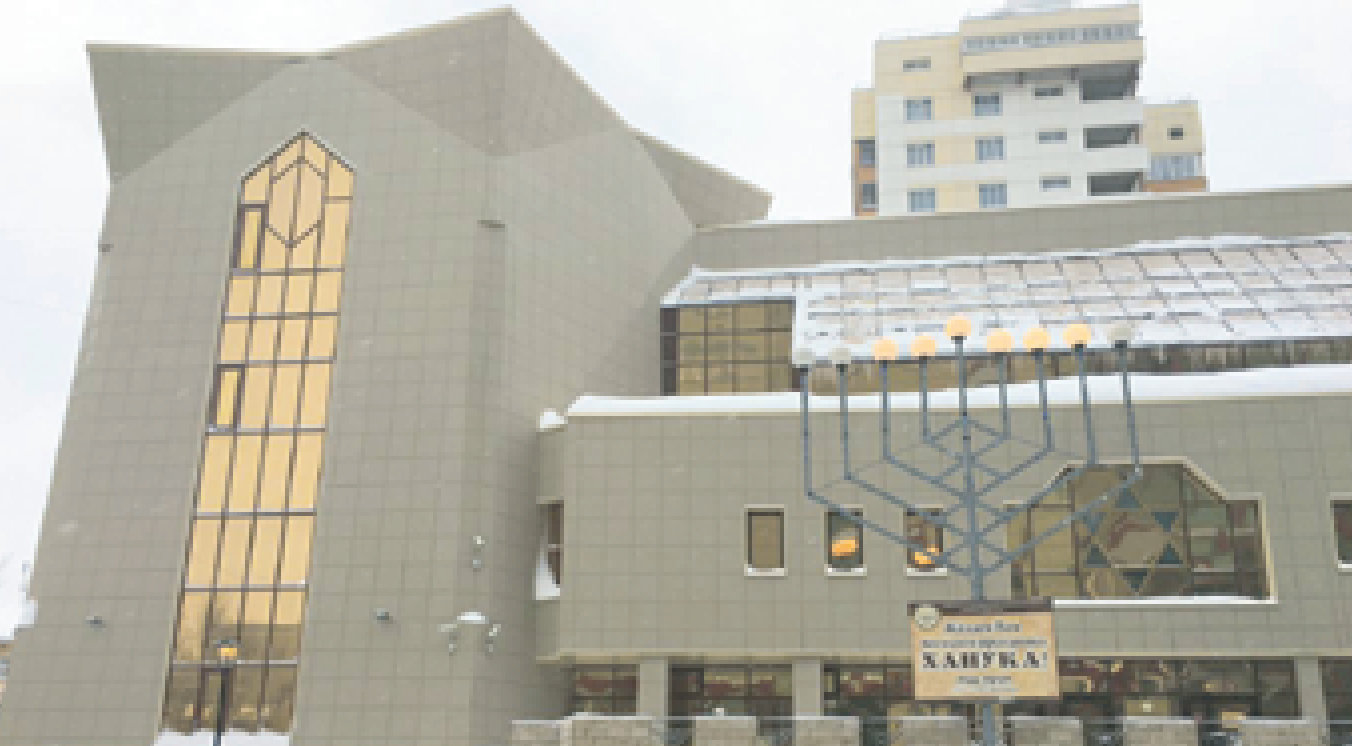
The obstacles were many: Siberian isolation, antisemitic sentiment, and most of all, their own fear. Yet it was precisely these setbacks that propelled the Zakloses to set about kindling Jewish life in the frozen city – including the 2013 construction of a gleaming 35,000 square metre Jewish centre, a far cry from the dilapidated structure they had been met with.
The Zakloses’ story is not unique. The Rebbe taught that God does not place an obstacle before someone if they cannot overcome it; the difficulty is itself a sign to dig deeper, persevere and transform the circumstances into a positive.
It’s what Rabbi Heshy Epstein spoke about, too, recalling his 1987 welcome when he arrived with his wife, Chava, to establish Chabad of Columbia, South Carolina. Lee Baker, an influential Jewish business leader, told him matter-of-factly to not bother unpacking his bags and go back to New York.
“What I said to him was ‘Thank you for the suggestion, I will take it under consideration,’” Epstein said. “What I should have said was thank you for your concern … But there’s a Rabbi in Brooklyn who thinks otherwise and cares too much about the Jews in Columbia for me not to give this my best effort. He has entrusted me to make his vision real.”
Seven years later, when Chabad of Columbia honoured Baker for his ongoing support for their school, Epstein thanked Baker for spurring him on.
“I reminded him of our first meeting and how he told me not to unpack,” said Epstein. “He smiled sheepishly and said ‘I’m so glad you didn’t listen.’”
But the truth, Epstein said, is that he did. “Whenever it felt like all this was too much, that unpacking those first few boxes was a big mistake, I think of those words, and realise that whatever problems I’m facing are because I still have more boxes that I need to unpack.”
The gathering also heard from Rabbi Mendy Sternbach, co-director of Chabad of Lagos, Nigeria, the first rabbi of Africa’s most populous city; Rabbi Ari Laine, co-director of Chabad of Panama; Rabbi Yehuda Krinsky, chairman of Merkos L’Inyonei Chinuch, the education arm of the Chabad movement; and Rabbi Moshe Kotlarsky, vice-chairman of Merkos and the evening’s master of ceremonies.
Kotlarsky himself shared how a few days after extensive surgery he lay in bed and thought to himself: “What would the Rebbe demand from me being in such a situation?”
The answer was clearly to do more. And so he announced a string of new projects to be launching this year: A new simcha fund, for emissaries making weddings, bar or bat mitzvahs, or celebrating births; a holiday fund to help them with their family’s expenses; a new fund to build 120 new mikvahs; 36 Torah scrolls for emissaries who don’t yet have one; and 360 new Jewish libraries. There will also be seed funding for 120 new emissary couples.
The push, Kotlarsky underlined, was so that the Jewish people can turn to God Almighty and say: “Look, the world is ready to be redeemed. That we should see the glory of God throughout the world.”
CHABAD.ORG
comments