



From athlete to ambassador
Paralympics champ, Matt Levy, backs accessibility app that helps to "open up independence for people with vision impairment and that are blind"
What if your phone’s voice navigation could help you find the loo inside a restaurant?
It’s not a question that might occur to most.
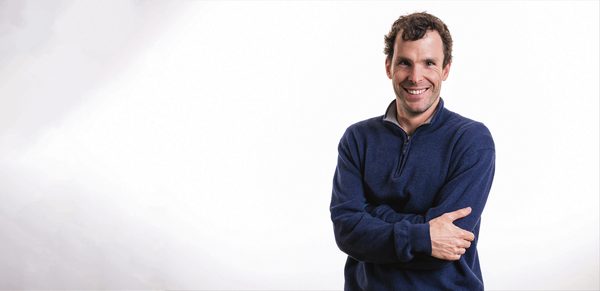
Yet it’s exactly the kind of question Israeli startup founders Gil Elgrably and Idan Meir had in mind, when creating their app RightHear. And now Australian swimmer Matt Levy, winner of three Paralympic gold medals, has joined their team to get the word out.
The work started in 2015, when Elgrably and Meir were exploring micro-positioning technology for shopping, and realised the potential the technology had for helping the blind and visually impaired.
They left the shopping project behind and created RightHear, a wayfinding app which – compared to other wayfinding apps such as Waze – works on a smaller scale, suited for interiors.
To work with RightHear’s technology, a venue is equipped with several beacons, which users connect with via their phones. The beacons allow for positional accuracy at smaller scales than traditional GPS technology, letting users know where they are in relation to more micro-scale landmarks such as entrances, exits, counters, aisles and seating areas.
In doing so, RightHear helps solve wayfinding challenges many people do not have to think about.
In the restaurant example, a user might hear that the counter where they can place an order is “three metres straight ahead”, or that the seating area is “one metre to your right”.
When the user is back outside, the app switches to regular GPS navigation.
Elgrably and Meir’s work struck a chord with Levy, who signed on to become a global ambassador after being introduced to one of the founders by a mutual friend.
“It … piqued my interest in being able to open up independence for people with vision impairment and that are blind, and … it was really close to my heart,” Levy, who is himself visually impaired, told The AJN.
RightHear is currently present in some 2000 venues across Israel, the US and Dubai – from cafés to university campus spaces – and is available in 26 languages. Yet it is only just starting to gain brand awareness in Australia.
Levy said he had wanted to “make a difference” locally, where services like RightHear were not “readily available”.
Thanks to RightHear, “going shopping at the mall” would now be something visually-impaired people could do with “independence … without fear”, said Levy.
Levy encouraged Australian individuals and businesses interested in bringing accessible wayfinding to their venues to contact RightHear via its website.
For more information, visit right-hear.com
comments