



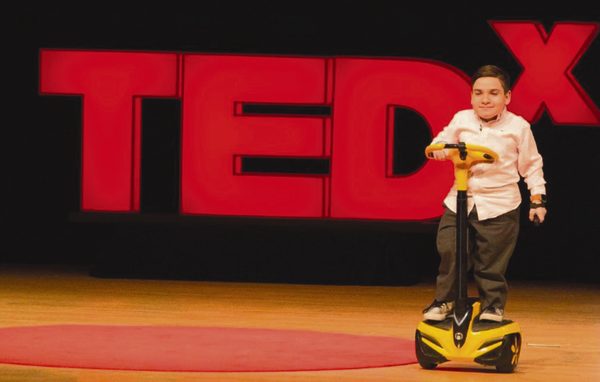
American disability advocate Brandon Farbstein found his calling at 15 years old, when he stood in front of an audience of 2000 people and gave a TedX talk.
“What’s just so cool is I can pinpoint everything back to that one talk, because it was then that I found this v, a mission that was so much bigger than myself,” Farbstein told The AJN during a recent visit to Australia. “To find that at 15 was such a blessing and now to have that be my calling, and know why God put me here in all of the circumstances that I deal with, is really special.”
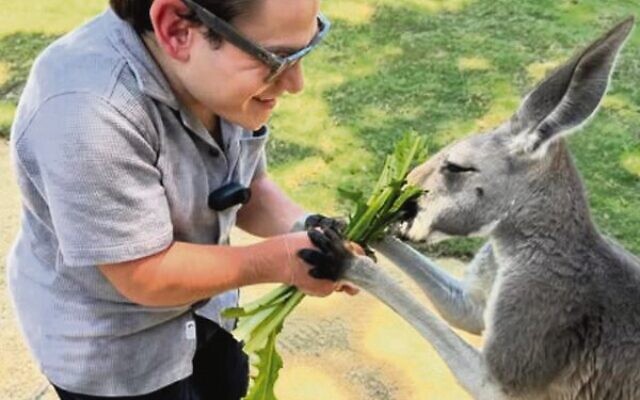
At the age of two Farbstein was diagnosed with an exceedingly rare form of dwarfism called metatropic dysplasia, which stunted his skeletal growth. To date, there are only 81 reported cases of his condition in medical history.
His school years were fraught with cyberbullying, teasing, targeted harassment and even death threats because of his appearance.
“Being a teenager and receiving some of the most vicious messages that you can imagine from your peers like, ‘You’re the ugliest human being that’s ever existed’, and ‘No one’s ever going to love you’, I learned very quickly that hurt people hurt people,” said Farbstein.
“Until that cycle is broken, it’s just going to keep perpetuating and getting worse.”
Farbstein, whose hometown is Richmond, Virginia, was also subjected to antisemitism when he was in high school. “It was something I vividly remember,” he said.
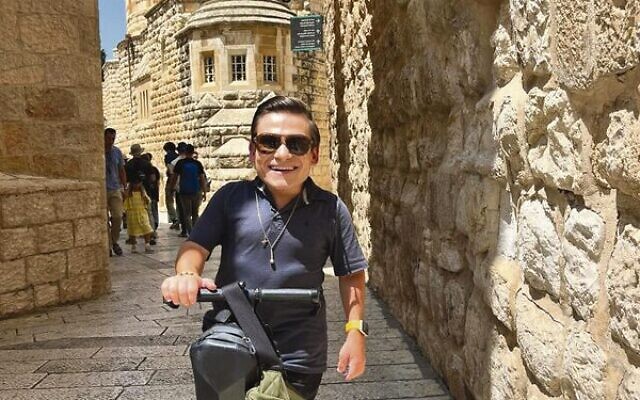
“An Instagram post in particular, that was a screenshot of my TedX talk, they manipulated it to make me look like Hitler, and the caption read, ‘He should have finished the job. This disgusting thing should have been gassed.'”
Despite reporting the post to the police, nothing was done about it. Farbstein and his family decided they needed to take action and so they testified in front of Virginian lawmakers, which resulted in two pieces of legislation being passed.
“I’m most proud, in particular, of the law that requires empathy and emotional intelligence to be taught in every single public school classroom across the state,” he said.
“I really try to put myself in the shoes of those kids that were sending me really awful messages and if they had just an ounce of empathy, knowing that their words had meaning and their actions had power, I think my experience would have been totally different.”
What Farbstein endured as a teenager has enabled him to stand confidently as a motivational speaker and advocate. He is a proud Jew, a proud Zionist, and has used his substantial platform to advocate for Israel and his community.
He had visited Israel for the first time just a couple of months before October 7, 2023, on a Birthright trip, which reignited his Jewish identity.
“When October 7 happened, the first reaction that I had was to double down on my Judaism and to stand very loud and proud as a Zionist,” he said.
“I knew in my heart what was right and I followed that and I immediately started speaking about the atrocities.”
In the immediate aftermath of October 7, Farbstein learned that he had a personal connection to one of the hostages taken by Hamas from the Nova music festival, Hersh Goldberg-Polin.

“Hersh and I went to preschool together and we would go over each other’s houses for dinner,” he said.
“Knowing that this was personal, it struck a chord. Obviously on October 7 there was the visceral gut reaction that every single Jew around the world had, but it almost was on a different level because I knew I had to speak about this.”
Farbstein returned to Israel and met with Rachel Goldberg-Polin, Hersh’s lioness mother, before the Beautiful Six – Hersh, Carmel Gat, Eden Yerushalmi, Ori Danino, Alexander Lobanov and Almog Sarusi – were murdered in captivity.
“What was so beautiful about that interaction was we hadn’t seen each other in 20 years and she walked into the room and I was the first person that she saw,” said Farbstein.
“And she said, ‘Brandon, oh my god, it’s so good to see you.’ She had the biggest smile. Then what really struck me was she said, ‘You probably don’t remember this because you were so young, but your family came over to our house for dinner and I made a homemade strawberry applesauce and your sister called it strapple sauce.’
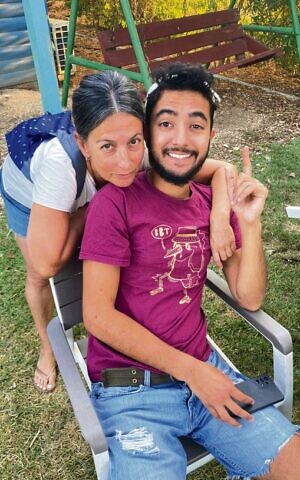
“It was just so remarkable. In her unimaginable pain and torment, she was able to embody light in a way that I’ve never seen before. And I will always remember a quote that she shared with us – ‘Hope is mandatory.'”
Farbstein said he could tell Rachel and Jon Golberg-Polin held onto hope “with every fibre” of their being that Hersh would make it home and he is in awe that despite their unimaginable tragedy, they continue to raise awareness for the remaining 50 hostages.
“I just find that to be literally the most remarkable strength that I’ve ever witnessed and something that we could all draw inspiration and strength from,” he said.
Farbstein has continued to use his platform to speak out for the hostages, but he said he is disgusted by the amount of hate he receives virtually on a daily basis for doing so. He is also dismayed by the reaction of the corporate world, with many companies opting not to invite him as a motivational speaker.
“I’ve been considered too controversial, too political,” he said.
“It’s not like I ever bring up Israel, or even being Jewish, in most of my speeches, especially to companies and conferences. But unfortunately, because I’m choosing to be outspoken, I have lost a huge plethora of opportunities.”
It hasn’t deterred him. On the contrary, Farbstein continues to speak out, believing that it’s more important than ever to equip young people with a sense of pride and confidence in their Jewish identity.
“Make the voice in your head louder than anyone else’s – that is the number one thing that we have to do,” he said.
“I know from personal experience that if you start to receive a great amount of messages that are telling you you’re a horrible human being, you’re worthless, you’re nothing, then you’re going to start believing it unless you have this incredibly strong sense of self and identity.
“We’re really tapping into this resilience that we’ve had for thousands of years. Sometimes it takes trauma and really horrible events to happen in order for us to realise we even have that resilience, that strength, inside of us.”
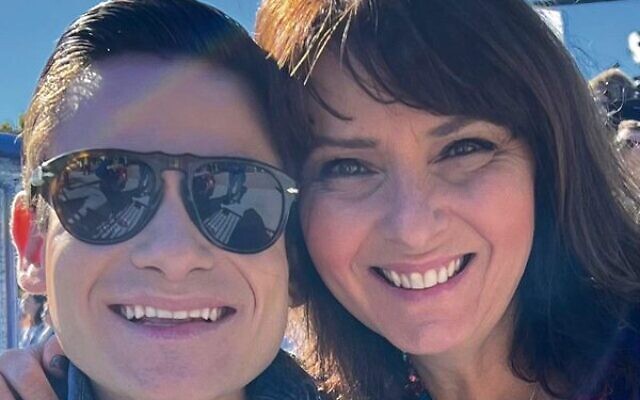
Farbstein said if there’s one source of comfort to be taken from the aftermath of October 7, it’s that Jewish communities around the world have come together.
“I think what’s special is seeing how connected we all are even if we come from opposite ends of the world or have totally different lived experiences,” he said.
“That’s kind of what it means to be a Jew and so any opportunity that I can get to have that sense of connection, I really revel in.
“We have to ensure that we are continuing to be beacons for as many people as we can. It’s really about the sense of tikkun olam – we have an obligation to make the world better in any and all ways that we can.”
comments