



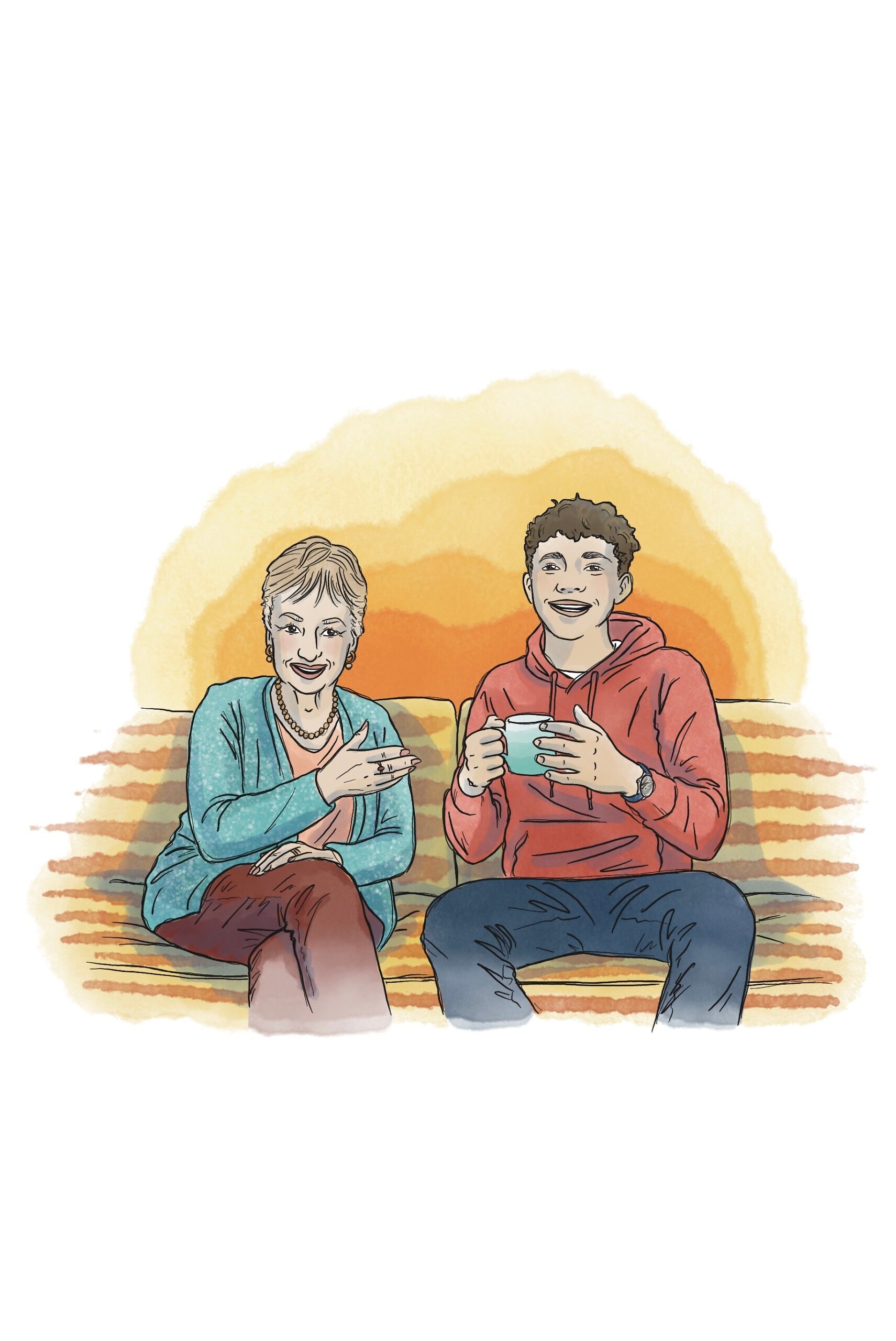
In 2020, with Sydney in lockdown, a letter arrived in the mail for Holocaust child survivor Eva Engel. It was from Gabriel, an 11-year-old schoolboy she had never met.
For Engel, who was 88 at the time, it was wonderful to think and see that someone was interested in her past.
That first letter was the start of something much bigger. The two began speaking by phone every week, and six years later their friendship has become a children’s book – A Letter to Eva, written by Gabriel’s mother, Lisa Miranda Sarzin, and illustrated by Giovanna Papallo.
The letters came through the Sydney Jewish Museum’s Pen Pal initiative, which was set up during the pandemic to bring young students and Holocaust survivors together at a time when so many people were cut off from one another. Students from Sydney Jewish day schools were paired with survivors who were isolated at home. Sarzin said the aim was to connect the generations and, in doing so, ease loneliness and build friendships.
For Gabriel, it did exactly that. Sarzin watched her son become deeply attached to Engel’s story and fascinated by the way she saw the world.
For Engel, it was just as special. She said it was a wonderful feeling to have a young boy so curious about a life that was nothing like his own. His was a peaceful childhood, she told The AJN, while hers had been filled with fear and turmoil.
“Young people need to know that we are all the same and we need to teach people about respect for all regardless of their religion” Eva Engel
Engel told Gabriel about escaping Austria in 1938, as a child saw it. Sarzin said the story deepened his empathy for Engel and her family, and gave him a new appreciation of history and the forces that threatened Jewish people at the time.
“Having seen the relationship between Eva and Gabriel strengthen and flourish through the power of story sharing, I was inspired to give Eva’s story a more permanent form,” Sarzin told The AJN.
She decided to tell it the way it had unfolded for her family, through the conversations between her son and Engel. The book, written for readers aged 10 and over, moves through Engel’s life before, during and after the Anschluss, with the details of everyday Jewish life in 1930s Austria told through a child’s eyes. It is a gentle way into a difficult history, and Sarzin said that was the point.
“The challenge but also the joy was to capture Eva’s voice in the telling of the story,” she said.
Sarzin said the conversations changed the way Gabriel met history. Engel’s story and the story of Europe ran together, and he came to understand that period through what she had lived.
“History wasn’t abstract, it had a personal dimension,” Sarzin said.
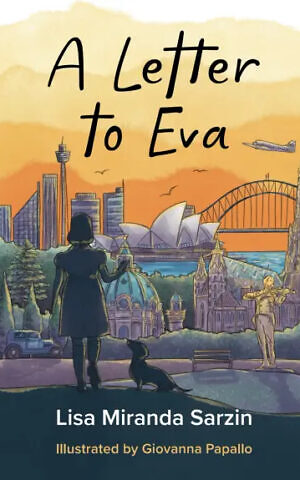
That personal touch carries through to the illustrations. Engel has kept wartime Red Cross letters, her parents’ passports with a red “J” stamped inside, and old family photographs, and all of them informed Papallo’s artwork. Sarzin said each keepsake is an opportunity for children to ask questions and learn about the past.
When Engel first heard her story would become a book, she was delighted.
“People are not aware of the post war migration journeys of Australians,” Engel explained, continuing to say that they’re also not aware of “how children suffer and the trauma that is caused by the refugee experience”.
For Sarzin, it was important that memory runs through the whole book, along with the idea that each generation looks after the stories of the one before. It is a theme that feels especially pressing now.
“In the face of Holocaust denial and distortion, these stories are ever more important,” she said.
Engel’s own message for young readers is about respect.
“Young people need to know that we are all the same and we need to teach people about respect for all regardless of their religion,” she said.
She also believes personal histories can help counter misinformation in the media and online.
Above all, she hopes readers take an interest in what life was like for a young person during the Holocaust.
As Sarzin pointed out, Australia is home to one of the largest Holocaust survivor communities per capita in the world, and she hopes the book helps children understand where unchecked, baseless hatred leads. She also hopes it sends them looking for conversations with their grandparents and elders, and the wisdom they hold.
“Eva embodies positivity, curiosity, and kindness and her life story shows the power of hope over fear.”
A Letter to Eva is published by the Sydney Jewish Museum. The book will be launched on October 18. For tickets, visit alettertoeva.com
comments