



Harmony Day: a reason for celebration
A HOLOCAUST survivor's memoir about life in Theresienstadt and Auschwitz, and then in Australia, Lolli's Apple, was launched as part of Harmony Day celebrations at the Art Gallery of NSW on Sunday.
JOSHUA LEVI
A HOLOCAUST survivor’s memoir about life in Theresienstadt and Auschwitz, and then in Australia, Lolli’s Apple, was launched as part of Harmony Day celebrations at the Art Gallery of NSW on Sunday.
Tomas Fleischmann said the book took him eight months to write after his family pestered him to put pen to paper.
“Because I was the first in my family to come to Australia in 1948, when I was only 10 years old, my family kept telling me to write my story, so when I retired I thought I would do it just to shut them up,” he said laughing.
“I’m 71-years-old and I have 12 grandchildren so I guess if they all have children then one day someone will want to read the story of how the family came to be in Australia.”
Fleischmann was born in Czechoslovakia and lived in a 50-room castle before he was taken to Auschwitz with his father during the Holocaust. At the Nazi death camp his father died, but he was moved to Theresienstadt.
National Council of Imams representative Sheikh Mohamadu Saleem, NSW Jewish Board of Deputies CEO Vic Alhadeff and executive director commission for ecumenical and interfaith relations at the Archdiocese of Sydney Sister Giovanni Farquer spoke at the book launch.
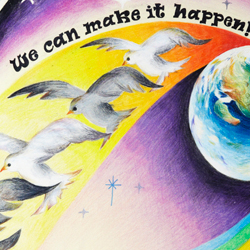
Also to coincide with Harmony Day, B’nai B’rith announced the winner of its fifth Harmony Day Poster Competition on Tuesday.
The competition attracted more than 3000 entries from primary and high school students across NSW and the theme this year was “Harmony — we can make it happen”.
“The calibre of entries received this year was exceptionally high,” organiser and B’nai B’rith stalwart Ernie Friedlander said. “We are delighted with the response and the obvious commitment by Australian youth to embrace and promote harmony in their communities.”
An exhibition of the winning posters will be on display at the NSW State Parliament until 29 March 2010, followed by an exhibition at the Bowen Library in April.
comments