




Across the Jewish world, tables will soon be set. Apples will be dipped in honey. The shofar will sound, prayers both ancient and familiar will fill synagogues, and families and friends will gather to welcome another new year.
Rosh Hashanah has always been a celebration of possibility. A chance to begin again. To reflect on the year behind us and look with hope to the one ahead.
This year, beginning again carries a little more weight.
“Od lo avdah tikvateinu.” Our hope is not yet lost.
They are among the most recognisable words in the Jewish world, sung with pride at ceremonies, sporting events and moments of celebration. But long before they became the opening line of Israel’s national anthem, they described something far greater than a nation. They described a people.
Hope, in the Jewish tradition, has never been about wishful thinking. It has never meant pretending that life is easy or that tomorrow will somehow take care of itself. Jewish hope has always demanded action. It asks us to plant a tree knowing we may never sit beneath its branches. To build a home after losing one. To welcome guests when our own hearts feel heavy. To keep choosing life, even when history gives us every reason not to.
The past three years have left an indelible mark on Jewish communities around the world. October 7 changed Israel forever. Here in Australia, the Bondi terror attack and the unprecedented rise in antisemitism have left many feeling unsettled in places that once felt safe. There have been moments of grief, fear and uncertainty that few could have imagined.
Yet if there has been one defining response, it has not been retreat.
It has been the quiet determination to keep showing up for one another.
That, perhaps, is what hatikvah looks like today.
Not one grand gesture, but hundreds of small ones.
Not one organisation, but countless individuals deciding to do something.
Sometimes, it begins with setting another place at the table.

Across Melbourne, initiatives such as Shabbat Club have reminded young Jews that community is still built the old-fashioned way. Around a shared meal, strangers become friends, conversations replace scrolling, and Jewish life is experienced rather than simply observed. In an age where so much of life happens online, there is something quietly radical about choosing to gather in person, to pass the challah across the table and to discover that belonging often starts with an invitation.
The same instinct to gather emerged in Sydney after tragedy struck.
In the months following the Bondi terror attack, Thread the Love was created as a space where creativity could become connection. People came together around tables scattered with tiny beads, not because anyone had all the answers, but because healing rarely happens in isolation. In creating something with their hands, they also created space for conversation, comfort and community. It was a reminder that even the smallest acts of creativity can help people begin to piece themselves back together.
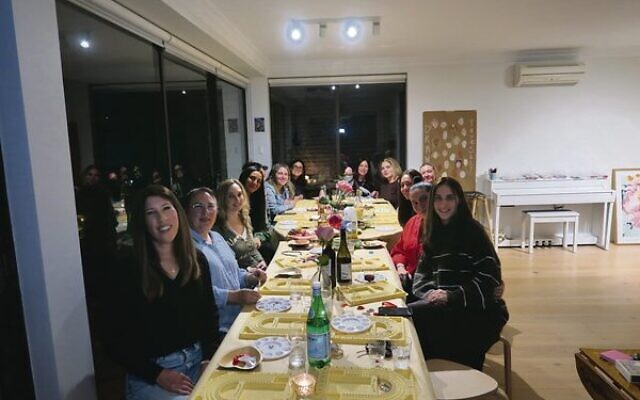
Across Australia, similar moments have quietly unfolded. Community challah bakes have filled kitchens with the familiar rhythm of kneading dough and sharing stories. Informal gatherings have offered companionship at a time when many people simply didn’t want to feel alone. None of these moments made front-page news. They didn’t need to. Their impact was measured in conversations, friendships and the reassurance that no one had to carry the weight of recent years by themselves.
The same spirit has been impossible to miss in Israel.
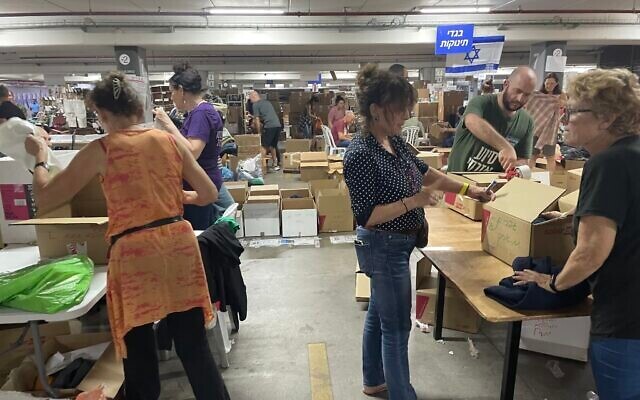
In the days and months after October 7, thousands of ordinary Israelis stepped forward to help in whatever way they could. Volunteers harvested crops for farmers whose workers had been called to reserve duty.
Others prepared meals, packed emergency supplies, drove evacuees, opened their homes to displaced families or simply asked one question: How can I help? There was no single movement that defined the response. There were countless acts of kindness, each one a reminder that hope is often built through action.
Hope, it turns out, is remarkably practical.
Hope has found a new audience online, too.
The digital world has become one of the most powerful places to celebrate Jewish identity, culture and resilience. Creators, educators and storytellers are reaching audiences that previous generations could never have imagined, sharing everything from Jewish history and humour to tradition, remembrance and everyday life. Voices such as Hen Mazzig, Montana Tucker and Eitan Chitayat have helped millions engage with Jewish stories in new ways. Here in Australia, creators such as Nate Buzz, who has spent considerable time in Israel, have used their platforms to proudly stand alongside the Jewish community, showing that solidarity can be just as powerful as identity itself.
Jewish history has never been defined only by what happened to us.
It has been defined by what we built afterwards.

That is why Jewish hope can be found just as easily in a bustling café in Tel Aviv as it can in a Melbourne dining room. It is there in children packing their bags for youth movement camps, in families preparing for another Friday night dinner, in volunteers giving up their time for people they have never met, and in communities continuing to celebrate births, weddings and festivals despite everything they have endured.
Life continues.
Not because the challenges have disappeared, but because choosing life has always been one of Judaism’s greatest acts of faith.
Which brings us, perhaps unexpectedly, to Mel Brooks.
This year, the legendary comedian celebrated his 100th birthday. For a century, Brooks has embodied something deeply and unmistakably Jewish. He has lived through war, witnessed hatred, transformed pain into laughter and spent a lifetime proving that humour is far more than entertainment. It is resilience. It is perspective. It is defiance. It is hope wearing a smile.
He did not simply survive history.
He kept creating.
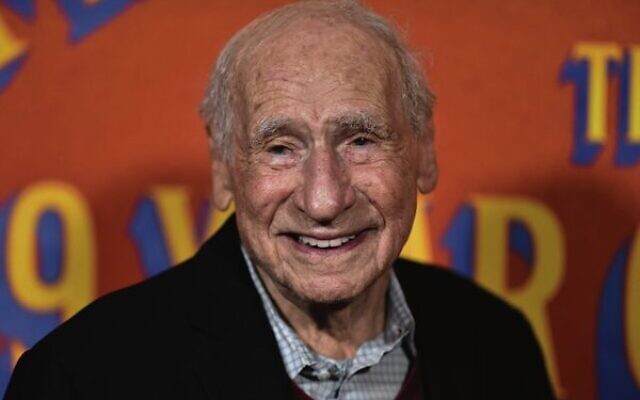
Photo: Richard Shotwell/Invision/AP
Film after film. Joke after joke. Generation after generation.
At 100 years old, he remains what every Jewish family hopes to raise. A mensch. Perhaps that is the many-faced nature of hatikvah. It is found in a young person accepting an invitation to Shabbat dinner. In hands carefully threading tiny beads in Bondi.
In volunteers harvesting crops or opening their homes to strangers.
In creators who proudly share Jewish life, and those who use their platforms to stand beside it.
And in a 100-year-old man who reminds us that even after a century, there is still every reason to laugh.
As another Jewish year begins, perhaps hatikvah is not simply something we sing.
Perhaps it is something we choose, every single day.
comments