



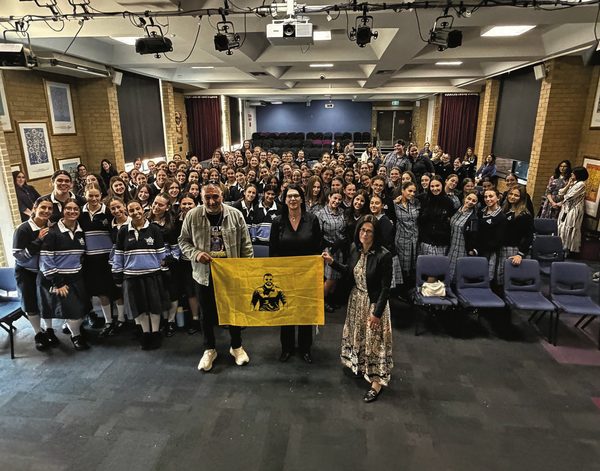
In the morning of October 7, 2023, Ran Gvili woke to the sound of sirens like every other Israeli.
But unlike most of his countrymen, he had no business being anywhere near a battlefield that day.
His shoulder was broken. He was due to have surgery two days later. He was at home.
He watched the alerts scrolling across his phone for 10 minutes. Then he put on his uniform.
“I said to him, where are you going?” his father, Itzik Gvili, recalled last week in Melbourne.
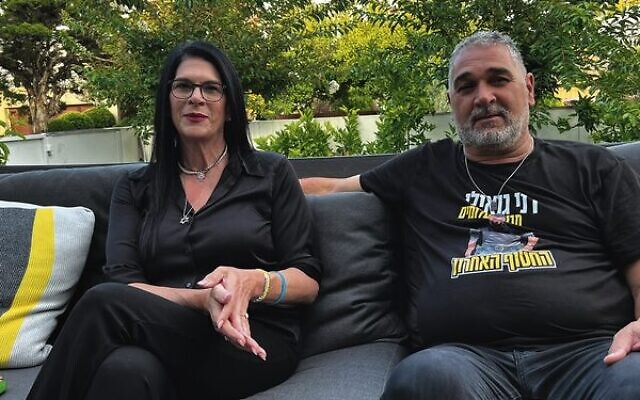
“He said, I can’t leave my friends to fight by themselves. But I told him, your shoulder is broken, what can you do? He said, you can see I can move my hands. Don’t be worried. I will be all right. He took my car and went to his unit.”
It was the last time his parents saw him alive.
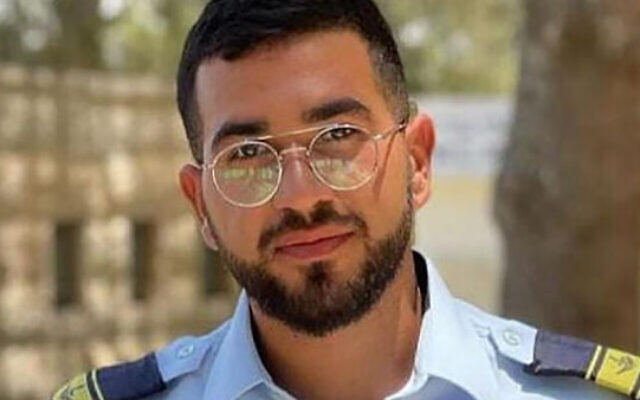
Ran, a police officer in a specialised motorcycle unit who had previously served in the elite Golani Brigade, joined six colleagues and drove toward the Nova music festival, where Hamas terrorists had already killed hundreds of young Israelis.
The team’s van came under fire. Ran was hit twice – once in the arm, once in the leg. His colleagues were either killed or forced to withdraw. Ran was left alone.
He sent his GPS location to friends. He told them not to say a word to his parents or his older brother. Then he opened fire. He killed more than 20 terrorists before his ammunition ran out. He held the line long enough to protect Kibbutz Alumim. He did it with a broken shoulder, two bullet wounds, and no prospect of reinforcement.
When Itzik tells this story, he does not lower his eyes. He raises them.
“He fought like Samson,” Itzik said. “He didn’t die like a sheep. He died as a hero. I don’t know of any soldier who would fight, wounded with a broken shoulder, in a situation like this.”
What followed was a particular kind of agony. For weeks, the Gvili family did not know whether Ran was dead or alive or somewhere in between. They went to hospitals. They rang everyone they could think of. After three days, the unthinkable possibility took shape: he may have been taken into Gaza.
After two weeks, Israeli intelligence confirmed it.
“Someone stole my kid, and you cannot do anything,” said Talik Gvili, Ran’s mother.
“You’re hopeless. Terrible thoughts. What happened to him? We knew he was wounded.”
The months that followed were unlike anything most Australians can imagine.
Every morning brought the possibility of news; every night ended without it.
Hamas, it emerged, had buried him alongside approximately 15,000 of their own dead.
Finding him required interrogating a captured Islamic Jihad operative, who eventually gave investigators four possible locations. Israeli forces took control of all four simultaneously.
They removed some 800 bodies from the ground. Ran was number 250.
“We had big luck from God and from everyone, from the army,” Talik said.
There is a long tradition in Jewish thought of finding meaning not only in how a person lives, but in how they meet their end. The Talmud’s accounts of martyrdom, the Maccabean literature, the prayers of Yom Kippur – all grapple with the question of whether a death can, in itself, constitute a kind of testimony.
The English poet Thomas Babington Macaulay captured something of this ancient instinct in his 1842 work Lays of Ancient Rome, in the voice of Horatius defending the bridge against an invading army:
Then out spake brave Horatius,
The Captain of the Gate:
‘To every man upon this earth
Death cometh soon or late.
And how can man die better
Than facing fearful odds,
For the ashes of his fathers,
And the temples of his Gods
The Gvilis did not cite Macaulay. But they did not need to.
When Talik was asked why she speaks of pride rather than grief, her answer contained the same thought.
“I really feel I heard him say to me, Mum, don’t cry. Be proud. And I saw him like he was glad to do what he did. He went to help Jewish citizens in Israel. For him, it was the best situation.”
Itzik was equally direct. “If you asked Rani which way he would want to die, he would say as a hero, protecting Kibbutz Alumim. He would be proud of this.”
This is not a family suppressing grief. It is a family that has genuinely metabolised loss through the oldest available framework: the idea that how a person meets their death can be the final and defining expression of who they were in life.
Ran was, by every account from his parents, someone who existed to help others.
The Gvilis were in Australia last week at the invitation of Yeladim Shelanu.
Their visit included meetings with families bereaved in the Bondi Beach massacre of December 14, 2025.
Among those murdered were Rabbi Eli Schlanger, who had organised the event, and Rabbi Yaakov Levitan. Community member Reuven Morrison was killed after heroically throwing himself at one of the gunmen to allow others to flee.
For Itzik Gvili, the pattern was instantly recognisable.
“He is a hero.” Itzik said, of those who ran toward the gunfire rather than away from it.
“He’s not a fighter, he’s not a soldier. And he went into the fire.”
The parallel was not lost on him: men who ran toward danger when everyone else was running away. Jewish. Killed. Mourned with something that looks, from the outside, more like awe than grief.
It is the same quality he sees in his son. And it is why, despite everything, he and Talik have chosen to travel to the other side of the world to sit with bereaved families they have never met, in a city they do not know, to talk about loss and pride and the obligation not to be afraid.
The Gvilis have a message for Australian Jews, and they delivered it without hesitation.
“On October 7, we understood that the Jewish people of the world, in Australia and the USA, were the backup of Israel,” Talik said.
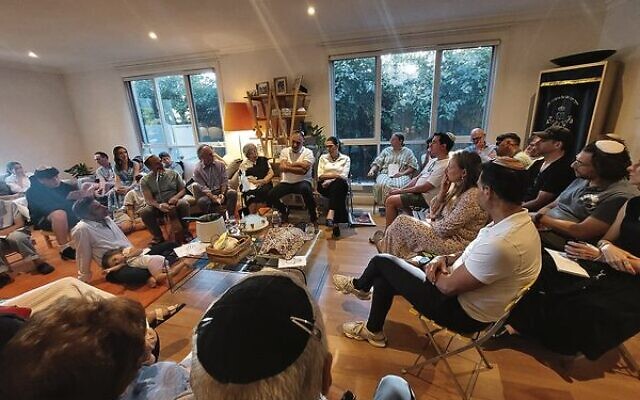
“We need you. We need you to support us. We need you to give us help. This is the first time we understood that there is a lot of power in Jews who live in another country.”
Itzik framed it in starker terms.
“You are like the ambassador for Israel and the war. Israel is your homeland, for all the Jews. And if Jews tomorrow in another country have a problem, they can come to Israel. So you have a home. This is the promised land.”
And their final message, for Australian Jews living through a period of rising antisemitism, anxiety and public hostility, was simple enough to fit on a placard, and hard-won enough to mean it.
“Be proud, be happy, be strong and don’t be afraid,” said Talik.
“Stand up and say, we are not scared of you,” said Itzik. “We are Jewish, we are Israel, and we have the right.”
They said it the way people say things they know to be true.
comments