



Shule attacked last Friday steeped in rich history
Much history lies behind the venue of last week’s attack on a Melbourne city shule.
Get The AJN Newsletter by email and never miss our top stories Free Sign Up
For last week’s AJN which was datelined Erev Shabbat Parashat Chukat I wrote about the significance of that date commemorating the horrific burning of 24 wagonloads of manuscript talmudic books in Paris in 1242. Since that event – after which a fast day was actually instituted and observed for generations – this day became one to commemorate destruction of Jewish property through the centuries.
I concluded my words about this matter and subsequent similar events destructive of Jewish books and property with the sentence: “Yes, history has repeated itself but may we never again experience such events.” Little did I anticipate that Erev Shabbat Parashat Chukat 5785/2025 – that very date – would once again be the subject of an attack which in this case, thanks to the alertness of a young boy, fortunately did not result in ultimate calamity but could well have so ended as it indicated that here in Australia in this very era practical, brutal antisemitism is alive and well.
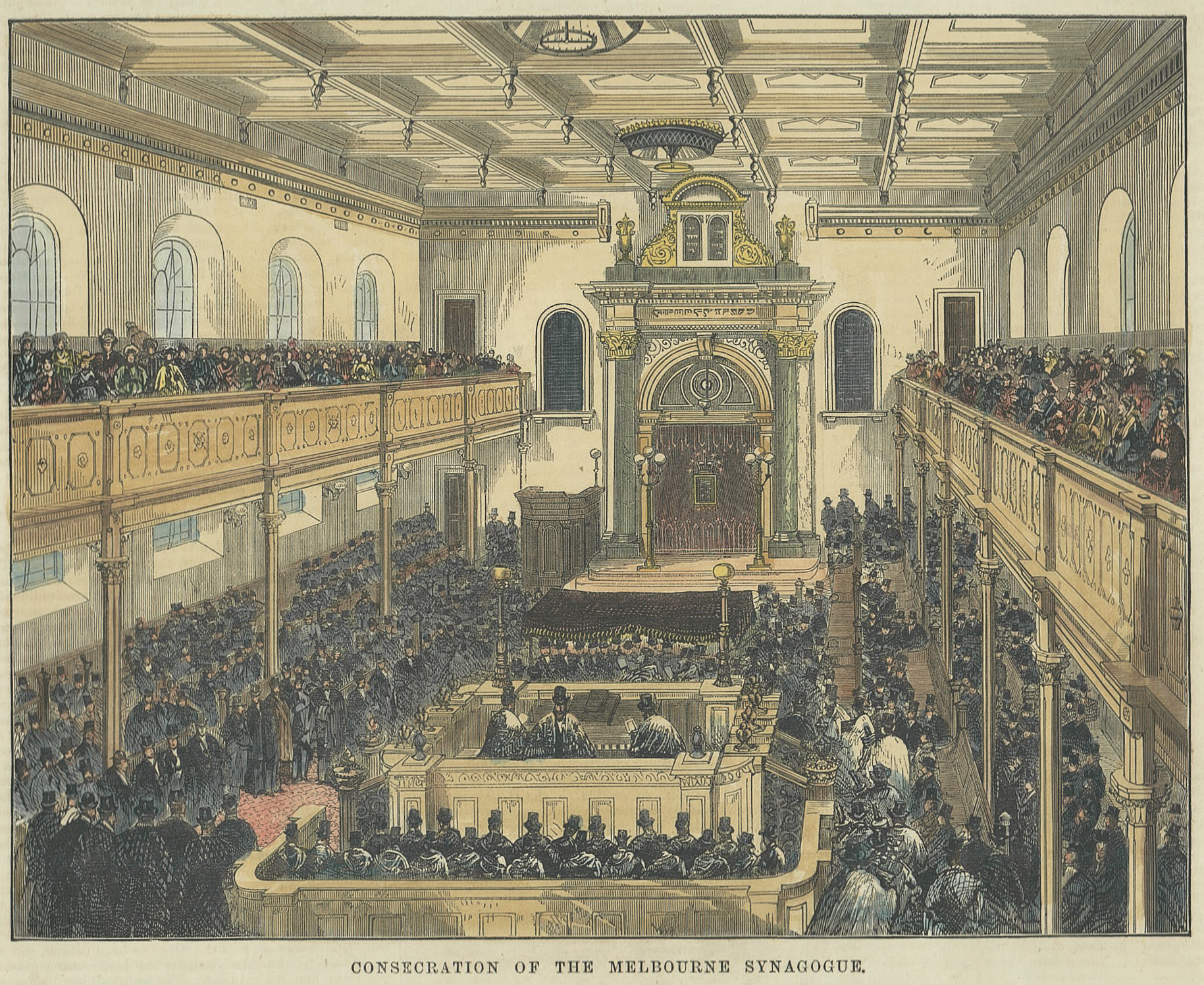
The East Melbourne shule was founded in 1857 by Reverend Moses Rintel following his departure from the leadership of the Melbourne Hebrew Congregation which commenced operation in 1841 and to which he was appointed as Melbourne’s first Jewish chief minister in 1849.
His departure was brought about because of differences between his views and those of his board, but in light of gold rush induced population growth, establishment of a second synagogue had justification. That aside, there were differences already then between the dominant established Anglo population and some new immigrants with more Orthodox European traditions who sought their one communal place of worship and affiliation.
Over time it became known as “the foreigner’s shule” – a reputation it kept until well into the 20th century but that was already enhanced by the arrival in Melbourne of Eastern European immigrants from the 1890s
Initially named Mikveh Israel (Gathering of Israel) Synagogue (the Hebrew name it still proudly bears), it was provided with a government land grant in 1859 on the corner of Little Lonsdale Street and Stephen Street (today Exhibition Street) in Melbourne’s city centre. A small shule was erected on that site in 1860. The congregation consisted primarily of Rintel’s followers, including German and Eastern European Jews who lived in Melbourne’s inner-city suburbs within walking distance of the synagogue (living within walking distance from a shule being essential for the Orthodox Shabbat observant). A decade later, seeking new and larger premises, that would serve a still further growing Jewish population (and also would be located away from what had sadly become a red light district where inter alia parents feared to send their children to Hebrew school) the congregation sought and received government permission to sell its granted property. However, still extant and largely maintaining its original form and appearance, the historic original shule building is now an Asian restaurant but with a main room named the Rintel Room to perpetuate the history of the building and its congregational founder.
comments