



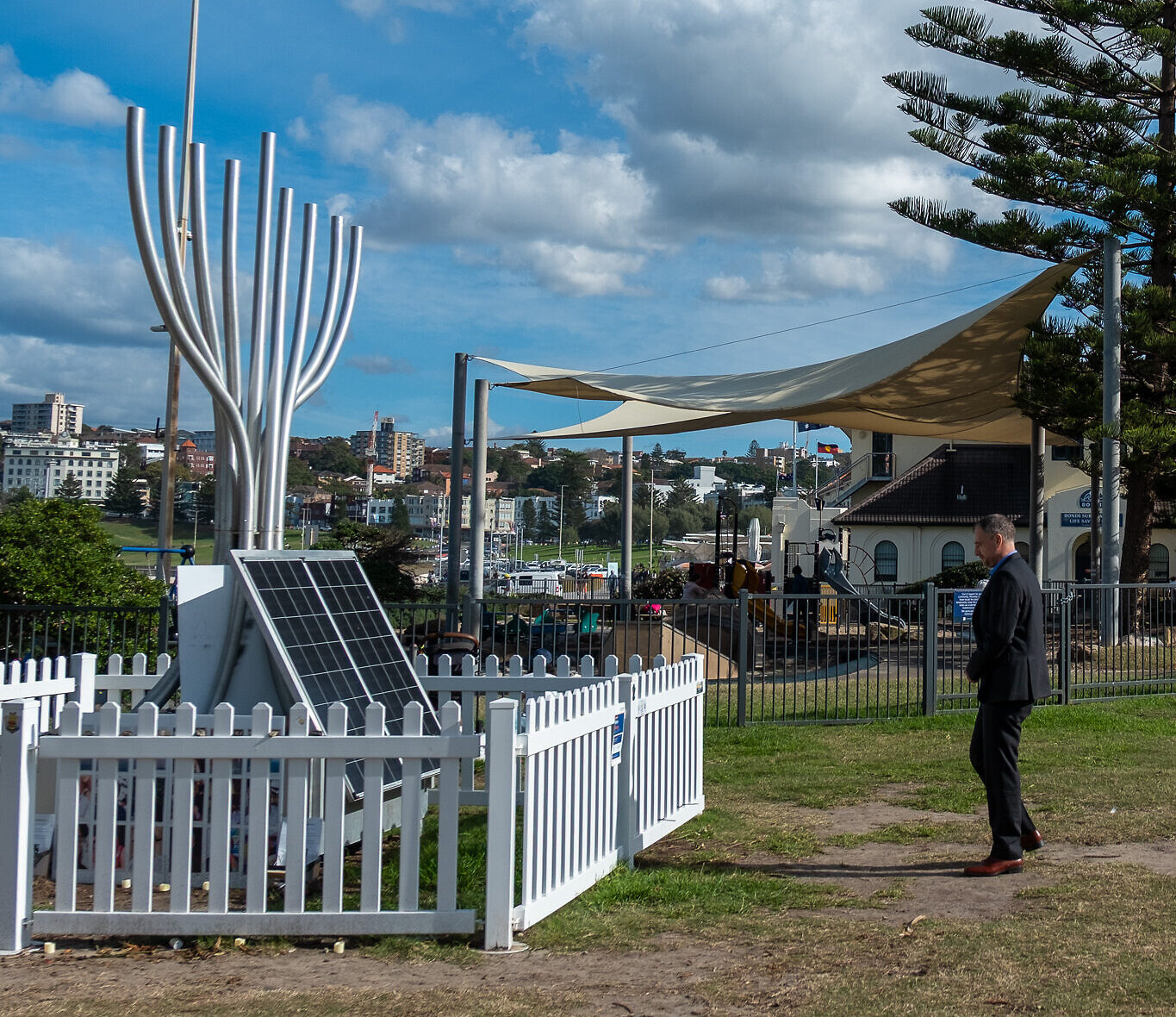
Seated metres from where 15 people were murdered at Bondi Beach on December 14, Sheba Medical Centre deputy director-general Itai Pessach had just been asked about the expertise Israelis, being “very used to” terror attacks, have developed in dealing with them.
“I’m a little bit uncomfortable with your question,” he said. “Because you do not get used to this. It doesn’t matter if it happens in Israel, in Australia, or anywhere else. Those are life-changing events for so many people – for the direct victims, of course, but also for the communities that surround them.”
Pessach was in Australia in June on a visit that took in Melbourne and Sydney, fostering research collaborations, raising philanthropic support through the Australian Friends of Sheba Medical Centre, and closing a circle that began the day after the Bondi attack.
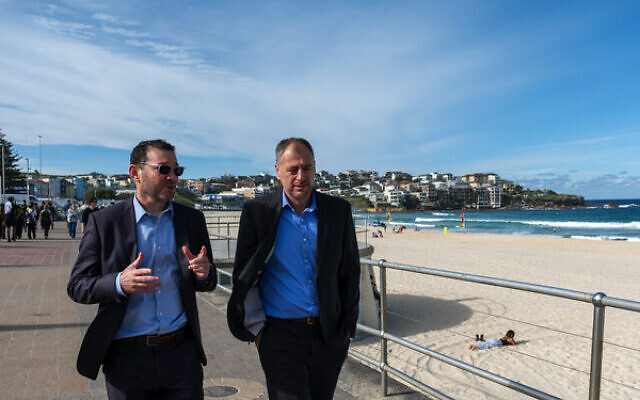
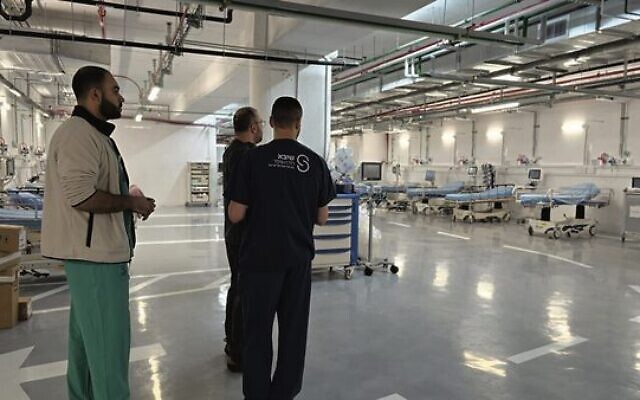
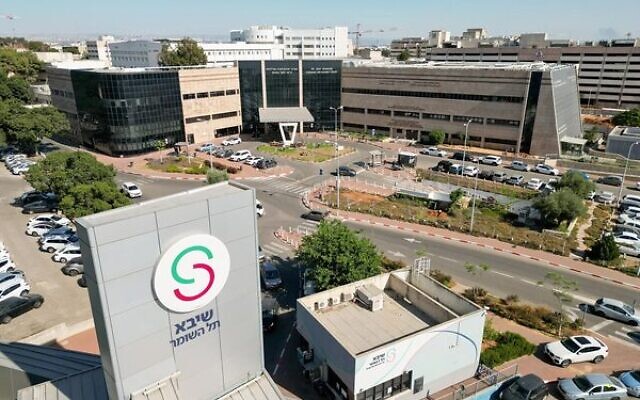
Located in Tel HaShomer, Israel, Sheba runs 2000 beds and 12,000 employees, and sees more than two million Israelis a year in a country of nine million. It now sits at number seven in the Newsweek global rankings – a position Pessach noted with evident pride, not least because the hospital climbed the list during three years of war, part of it spent operating underground.
“You would expect that within three years of war, where the hospital is underground, it would be very hard to maintain the high level needed to be rated that high,” he said. “But during these three years, we moved up. That is a good testimony to the excellence of the organisation.”
The underground operation he described almost casually was, in reality, an extraordinary feat of logistics.
When Iranian ballistic missiles threatened, Sheba relocated into its car parks, hurriedly cleared and converted each time the sirens sounded, “without affecting our services”.
While other institutions suspended some procedures, Sheba continued everything – emergency care, outpatient services, ambulatory programs and elective surgery alike.
“A patient waiting three months for a hip or knee replacement does not feel his surgery is elective,” Pessach noted. “It affects how he lives, his ability to function. Sometimes … [it] affects your health in the long term, because you move less, you exercise less, you’re depressed. We didn’t think we could put that off.”
The institutional confidence was matched by something Pessach was keen to reframe. Asked about the famous Israeli “chutzpah” that drives the country’s medical innovation, he gently pushed back on the word.
“We mistakenly call it chutzpah, because it’s very Jewish,” he said. “But the interpretation is daring to go places, or take risks, that others are not willing to take. It is based on the fact that we are not afraid to make mistakes.”
A company emerging from his hospital, he said, has perhaps a one in 100 chance of going all the way. “A lot of institutions are not willing to live in this risky environment, putting in a lot of effort and resources and ending up with failure.”
In healthcare, he argued, that appetite for risk was not recklessness but hope. “Sometimes you want your provider to be willing to take the risk for you, if you have a condition with no good solution. You would want your clinician to say: despite the fact your disease has no current cure, I’m willing to try and find it. I can’t promise it will help, but at least I’ll give you hope.”
That word – hope – is the motto of both the hospital and the man. “Hope without boundaries,” he said. “Without physical boundaries, without discrimination to anyone, but also without limitation. We would do anything we can, even a one-in-a-million chance, to provide hope to our patients.”
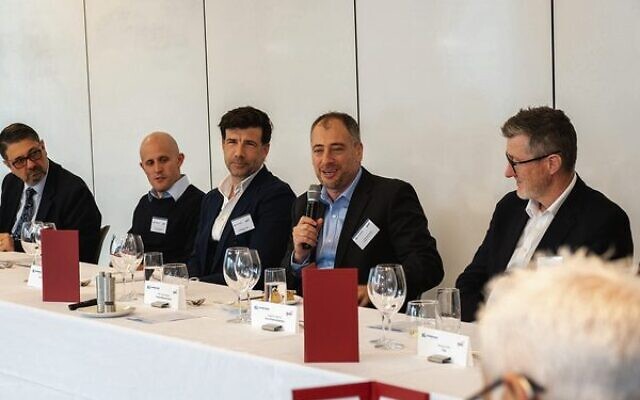
Pessach told a lunch in Melbourne that with more than 4000 active clinical trials, Sheba collaborates with technology giants including Nvidia, Microsoft, Google and Anthropic, with a particular focus on artificial intelligence (AI).
“We have a huge partnership with Nvidia to try and solve the genome,” he said.
The hospital also treats patients from across the region, including Palestinians and Syrian Druze civilians, and has deployed teams globally for humanitarian missions.
“Healthcare is something that is beyond conflict. When you see a child in need, it doesn’t matter where they come from,” Pessach said.
For more than 20 years he has practised as a paediatric intensive care physician, a profession he described as demanding and one in which he believed he had seen everything.
Then beginning in late 2023, Pessach took personal responsibility for receiving 57 of the hostages who returned from Gaza over three years – a role for which, he told The AJN, no textbook, guideline or prior experience existed.
Sheba began preparing within 48 hours of October 7, even as it absorbed the largest mass-casualty surge in the nation’s history. “By October 8 or 9, we already understood we needed to prepare for the hostages,” he said. The team assumed, wrongly, that they had only days – that even “the evilest of terrorists would not hold children”. They built their protocols from scratch, drawing on Sheba’s own world-class specialists and on expertise gathered from around the globe.
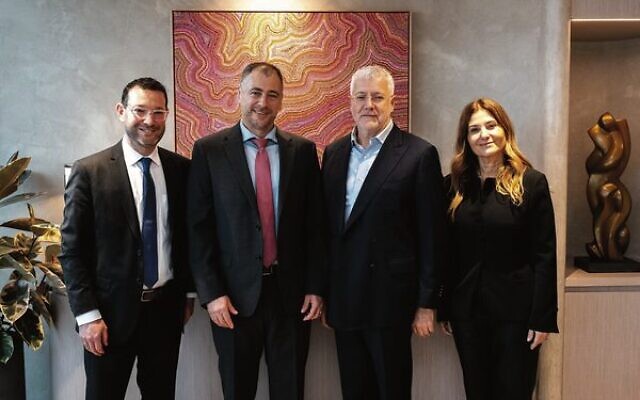
Among them was Dr Naama de la Fontaine, a world expert in paediatric mental trauma who treated victims of the September 11 attacks and worked on the federal response to American school shootings. She would later lead Sheba’s delegation to Bondi in January this year.
Another, Dr Mickey Pollack, is a psychiatrist who has followed Israeli prisoners of war since the 1973 Yom Kippur War. The team also consulted physicians who had treated girls abducted by Boko Haram, and victims of kidnappings by Russian mafia and South American cartels. Within roughly 10 days, Sheba had a method, and shared its protocols with every other hospital in Israel.
Nothing prepared them for the reality. “This was a completely different experience. The level of emotion, what it demanded from us as caregivers, was beyond anything we could have imagined, because the horrors and abuse these people endured is beyond belief,” Pessach said.
He described being present not only for reunions but for the moment hostages grasped what they had lost – entering a room, looking around, and finding only part of their family there. He paused, the sentence unfinished. “Nothing I say can explain that. To me this is the peak of my doing as a provider – not in the sense of being proud, but knowing you’ve been there for another human being in the most dire of needs.”
That work continues. Sheba has opened a clinic dedicated to the physical and mental health of returned hostages and their families, and Pessach spoke of what he called a hidden epidemic of trauma across Israeli society.
Eighty per cent of parents report their child’s behaviour has changed because of the war, he said, and 20 per cent of teenagers require psychiatric intervention. In a country with 2.5 million children, the scale is staggering.
It was this body of knowledge that Sheba brought to Bondi. Within a day of the massacre, the hospital was providing telemedicine. Sheba treated more than 90 people, children and adults, in those first days, before sending de la Fontaine’s delegation in person.
That instinct to deploy expertise wherever it is needed is, Pessach said, fundamental to how Sheba sees itself. “We’ve been to Ukraine, we’ve been to Samoa, we’ve been anywhere help was needed and we were able to make a difference.”
The hospital, he argued, carries a responsibility beyond its patients. “We feel we have a role that is not just to provide the best care possible to the patients we see in Israel, but to impact the world, to raise awareness of how we believe healthcare should be provided to everyone – and, as a government institution, to show what Israel is all about, what our core values and ideals are, and to maybe change a little the perspective of how Israel is perceived, especially in these times.”
Those times have made the work markedly harder. Pessach was candid that being an Israeli institution has, over the past three years, carried a professional cost. The hospital is a powerful research engine, almost all of its 4000 clinical trials international. Increasingly, that international dimension has become a point of friction.
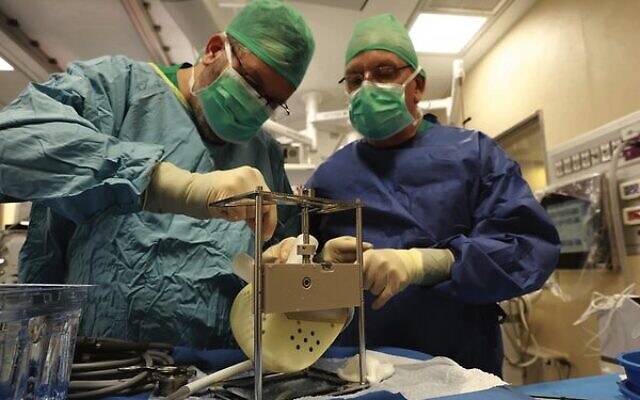
Photo: Courtesy/Sheba Spokesperson office
“It has been harder and harder for Israeli institutions, even Sheba, to take part in these trials, because people push back when they see this is an Israeli government institution,” he said.
He framed the loss not in terms of prestige but of patients. The trials exist, he said, precisely so that Sheba’s patients can access treatment that is new, experimental and at the frontier of science – and the reluctance of overseas partners to be associated with an Israeli hospital threatens that access.
Sheba is connected to several Australian institutions through joint research programs, training partnerships and clinical exchange. Israeli teams are teaching Australian counterparts how to build innovation from within their own health systems, and the two countries are working together in fields such as rehabilitation and mental health.
But the appetite for partnership was not what it was. “It’s becoming more and more difficult,” Pessach said. “It’s not that easy for Australian institutions to receive help from Israel, to come in and get challenged. Part of my being here is to try and push through that resistance.”
Everything, in the end, depends on resources – and increasingly, on visibility. The care Sheba provides to patients in Israel is paid for by the government. But almost everything else – the research, the innovation, the national mental-health programs, the collaborations with other countries, the humanitarian missions across the globe – depends on philanthropy and international goodwill.
Much of that comes from within Israel, but a significant portion relies on partners and friends abroad such as Australian Friends of Sheba Medical Centre.
In the current climate, Pessach argued, that support cannot remain discreet.
“I know that to some people, giving is something you do in peace and quiet, without showing off – that’s the Jewish way,” he said. “But now, in these days, where being a Jew and being an Israeli becomes an issue, it is even more important that we stand together.
“It needs to be declared. It needs to be clear to everyone that we stand together – that Israeli institutions should be in Australia, and Australian institutions should work with Israel.”
Pessach believes that visibility is an assertion of what he believes Israel’s medicine represents.
“It is recognising the good parts, the right parts, the just parts of what we are all about,” he said. “That all we care about is mankind, and doing good to one another. That is the best possible way to demonstrate what we stand for.”
More info: friendsofsheba.org.au
comments