




Adam Slonim: Many commentators still frame this as a regional Israel–Iran conflict. How do Israelis see this war?
David Horovitz: I think Israelis believe this is a fairly fateful resort to force. It affects us very directly. But there’s no doubt here that this is beyond Israel. Iran has attacked 12 countries in total since the war began.
In terms of who’s fighting it on the Israeli side, we’re not the mightier player here – that’s the United States. There’s been a lot of arguments in the States and claims from left and right that Israel dragged the US into a war, and Trump is adamant that’s not the case, and that he sees this as a vital American interest.
Israelis have an existential desire to see this regime gone. This is a regime that doesn’t just talk about wanting to destroy Israel – it tries to destroy Israel. If Hamas had coordinated more effectively with Iran, there’s no telling how much more catastrophic October 7, 2023, would have been.

AS: What are the chances of this war achieving its stated goal of destroying the military capability of the regime and regime change coming into play?
DH: There have been lots of goals stated, not always consistently, but broadly speaking, both the US President and Israeli Prime Minister have generally spoken about radically degrading the nuclear program and the ballistic missile program, and doing what they can to reduce the capacity of the regime to prevent the people of Iran from ousting them. But ultimately, if there is to be regime change – which I have no doubt the Israeli leadership and public would like to see – this has to come from the Iranian people.
In Gaza, most of the people loathe Israel more than they loathe Hamas. In Iran, the vast majority of the people loathe the regime and are very pleased that international players, including Israel and the United States, are trying to weaken the regime.
Israel and the US are immensely potent in the military action. Iran is still able to fire missiles – there were 12 yesterday – but they weren’t barrages. The real question is what preparation and framework is there for a new and better Iran, and what kind of work has been done behind the scenes in identifying who might fill the vacuum.
The history isn’t terribly good if you look at post-Saddam Hussein Iraq. You’d like to think that lessons have been learned. The key is, when the signal is given that it’s fairly safe to go and try and take over your own government – what organisational structure is there?
I imagine in Iran there are vast numbers of incredibly talented people. The answer to your question ultimately depends on how effectively they are able to organise and how much support they are being given.
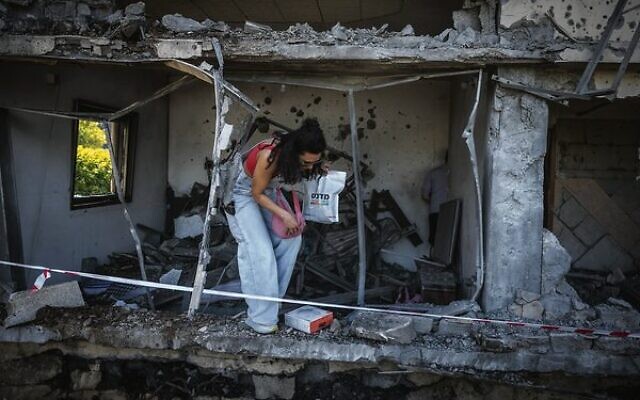
AS: Gulf countries have been attacked by Iran but don’t seem to be doing anything. There just does not seem to be pushback.
DH: I think their priority right now is trying to protect themselves. Behind the scenes for years there is an array of defensive partnerships in this part of the world under CENTCOM. Countries like Israel and Saudi Arabia who do not have any kind of formal relationship are involved in that network of defensive organisations.
Kuwait was not part of that deconfliction and early warning and defensive framework, and therefore you had Kuwaiti people with anti-aircraft capabilities bringing down three American planes because they didn’t know they were American planes.
The main focus – why aren’t the Saudis and Emiratis attacking Iran? Their main priority at the moment is protecting themselves from an enemy they didn’t really expect would be attacking them. Qatar was batting for Hamas, so was Turkey. These are supporters of Hamas, an Iranian proxy trying to destroy Israel, and Iran is attacking them.
AS: How is Israeli society holding up? You’re in and out of safe rooms and shelters. This is two-and-a-half years of war since October 7.
DH: People here are astoundingly resilient. We’re being attacked by really bad people. We live in a very dangerous region, and we deal with it. We deal with it on the back of more than two years of war with hundreds of days of reserve service from tens of thousands of Israelis, an incredibly divisive and contentious and largely dysfunctional government. The economy is pretty robust, but this is a nation suffering a great deal of psychological trauma.
And yet, this current conflict – I don’t think there’s been a conflict with higher levels of support. There was a survey with something like 93 per cent of Jewish Israelis backing the war. If this ends with the regime still in power, there will be tremendous dismay.
I don’t know how countries other than Israel would cope with what we routinely cope with. You’ve got Israeli airlines dicing with death to bring Israelis back home safely.
Gareth Narunsky: How might the Iran war affect the upcoming elections?
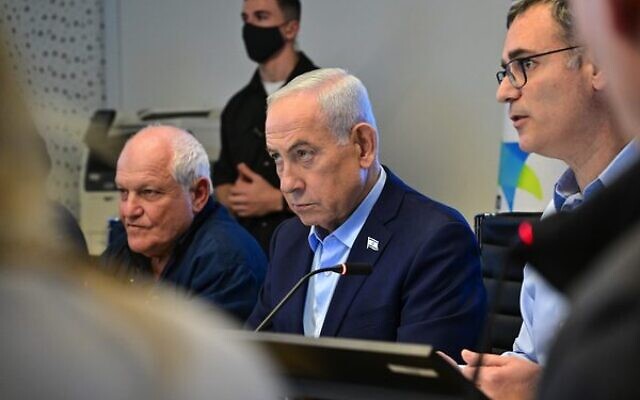
DH: Since October 7, Benjamin Netanyahu’s fortunes have risen somewhat, but he had been hoping he will survive the fact that he’s been in power for a decade and a half prior to October 7 and should not be ducking his prime culpability. He’s refused a state commission of inquiry that would establish what went wrong, because he knows its recommendations would bring the end of his political career.
And the more that time goes on, he has successes – which should rightly be ascribed to him.
If I blame him as the person most culpable for October 7, I must acknowledge that the assault on Hezbollah was extraordinary, Hamas has been radically degraded, and now we are hopefully massively weakening the regime in Iran. Before this war, I think he would have had a reasonable chance of getting reelected anyway. He’s by far the best politician in Israel and faces a very disunited and fairly poor opposition.
After this war, if the regime falls, he would have a very strong argument that only he could have partnered Donald Trump in achieving something that would eclipse the catastrophe of October 7, because it would usher in so much safer and better an era for Israel. If the regime is still in power at the end of this, he would have a weaker case.
GN: What would four more years of Bibi, the Charedi parties and Religious Zionists mean for Israel?
DH: I’m a little wary and uncomfortable to be too critical of the government, because we’re in the middle of a war. At the same time, we have a very divisive government. The Prime Minister didn’t take blame for October 7, but also he’s messing with our democracy. We don’t have a viable or potent legislature because if you have a strong coalition, the executive can get law through. We don’t have a constitution. The only break on abuse by the political echelon is the Supreme Court and the judiciary, and the coalition is working non-stop to discredit and weaken the judiciary.
We have a country where the fastest growing sector, the ultra-Orthodox, do not do military or national service on the whole. This coalition falls without their support, so it is insistently maintaining this unequal and egregious and divisive farce.
This is a distortion of authentic Judaism. It’s meant to be treating others the way you’d want to be treated, educating your children, taking responsibility. It is not having an entire sector living off the state and not contributing to its defence. Netanyahu is probably most vulnerable politically on ultra-Orthodox non-service, because Orthodox Jews are losing their lives like everybody else.
So those things are true, and he would be quite vulnerable if there was an effective opposition. But the polls are pretty unreliable, and the only one that matters is the one on election day itself.
AS: Netanyahu said the objective in Gaza was to destroy Hamas. Hamas is neither dismantled nor is Gaza demilitarised.
How do people see Gaza reflected through that prism?
DH: The two stated goals were to get back all the hostages and to destroy Hamas. Incredibly, all the hostages did come back. More than 40 had died in Gaza, but the fact that the last 20 living hostages came back in October was a near miracle. The kudos that goes to President Trump for achieving that is incredible.
Hamas thought releasing hostages meant Israel would no longer be attacking them in the same way and they would be able to survive. And that’s the case. In the polls, the people of Gaza seem to loathe Israel, not believe that October 7 happened, but if it did, still not have been alienated by Hamas because of it. Destroying Hamas is an incredible challenge. Degrading Hamas, lowering its capacity to do harm – Israel has done that, but it has popular support.
In Lebanon, you have a middle ground where you have a very powerful Hezbollah and a fairly weak government, but a lot of will in Lebanon to marginalise Hezbollah.
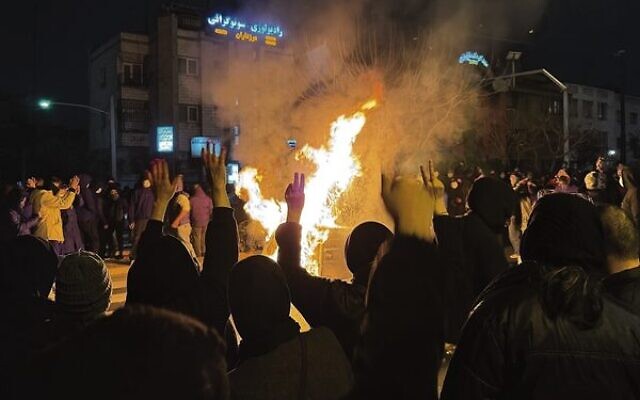
Iran is the most encouraging. After nearly 50 years of anti-colonialist propaganda, the Iranian public does not appear to have bought it. All the indications are that this public wants rid of this regime. The sight of Iranians in exile and Jews dancing together with original Iranian flags and the flag of the State of Israel – critics of Israel must have a really hard time getting their heads around this.
AS: Israel was founded to solve the vulnerability of Jews in a hostile world. Do Israelis still believe that promise is achievable, or has Israel entered a permanent condition of armed vigilance?
DH: Israel of late – you could be forgiven for thinking this is just the way it’s going to be, but it doesn’t have to be. I don’t know what’s going to play out in Syria or Lebanon.
October 7 in Israel killed, or very nearly killed, any optimism about reconciliation with the Palestinians and a non-war future, but it’s not totally dead. At the core of it is education. If people in this region are being educated to kill and to hate, then Israel is going to be defending itself for as long as that’s the case.
You have to educate people to the facts that God does not require you to kill all the Jews. There is legitimacy and history to Jewish sovereignty in this part of the world. You’re only going to get that when conventional education, spiritual leadership, potent social media is telling people that life is worth living and it is not the divine wish that you take it away from other people.
I don’t think it’s a lost cause. This has not been a very good period for people who have hope for reconciliation. But on day nine of a war aimed to liberate the Iranian people from a death-cult Islamic extremist leadership – they seem to want to be liberated and build a better country.
We could be speaking again in a week or two thinking what a fiasco. But we could conceivably be speaking again not so long from now about the fragile emergence of something better out of Iran, which changes many things.
comments