



How the Seder became the Seder
From communal, public events to family gatherings inside a home, how has the seder changed over the years?
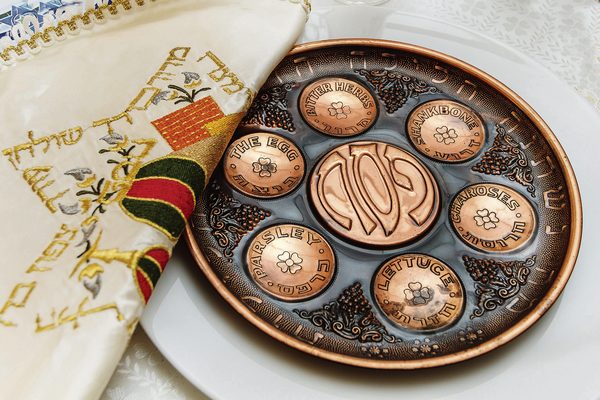
Every year, Jews around the world sit down to what feels like an ancient, unchanging ritual. The same four questions, the same bitter herbs, the same plea to open the door for Eliyahu. But the Pesach Seder as we know it is, in historical terms, a relatively recent invention, and one that has never stopped evolving.
The story of how we got here begins not in a dining room but in a Temple.
For most of ancient Israelite history, Pesach was a communal, public event. When the Temple existed, the holiday was one of three major festivals that required pilgrimages to Jerusalem to bring sacrifices. Families would bring a paschal lamb to be slaughtered by the priests and the Levites would chant Hallel while the sacrificial service was performed.
Then, in 70 CE, the Romans destroyed the Second Temple, and everything changed. After the destruction of the Temple, Pesach was transformed from a mostly communal, public festival to one centred in the home. The rabbis were forced to redesign a festival built around sacrifice for a world in which sacrifice was no longer possible. Among their ideas was the Seder we know and celebrate today.
Crucially, the Seder was not invented in a vacuum. Scholars in the first half of the 20th century drew attention to the fact that the forms of the Seder are based on Graeco-Roman table manners and dietary habits. The reclining at the table, the multiple cups of wine, the extended after-dinner discussion; these were all borrowed from the Greek symposium. The rabbis took a secular form of meal that people would immediately recognise, and embedded the story of the Exodus, filling the meal with sacred content.
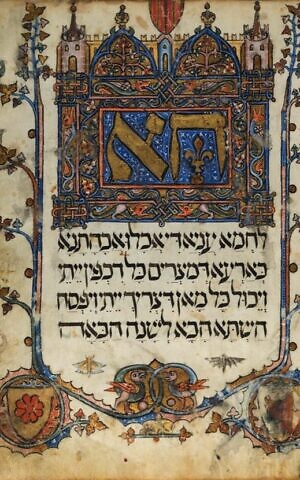
And it’s not just the Seder that has transformed through the ages. The Haggadah has its own complicated history as well.
The text of the Haggadah was never fixed in one final form, as no rabbinic body existed which had authority over such matters. Instead, each local community developed its own text. The earliest surviving Haggadot produced as independent books date to the 13th and 14th centuries, among them the Golden Haggadah, likely produced in Barcelona around 1320, and the celebrated Sarajevo Haggadah from the late 14th century.
Medieval additions to the Haggadah include liturgical poems and readings in response to the persecution suffered at that time. According to My Jewish Learning, there was a time when blood libel accusations even led to a rabbinic ruling that white wine be used at the Seder lest red wine be mistaken for blood. The Seder, in other words, has always absorbed the anxieties of its era.
This instinct to adapt continued into the modern period. In 1990, when nearly 182,000 Soviet Jews left the country for Israel, a Haggadah titled “The Exodus Haggadah, From Tyranny to Freedom: A Celebration” was created by the United Jewish Appeal Rabbinic Cabinet, weaving the drama of Soviet Jewry’s liberation into the ancient story of Egypt.
Additionally, the feminist movement left its own permanent mark on the Seder table. According to Miriam’s Cup, a website dedicated to how women can incorporate feminist ideals into traditional Jewish rituals, the first feminist Seder was organised by Esther Broner, Marcia Freedman and Nomi Nimrod in Haifa in 1975. From there, it grew. In the late 1980s, Jewish feminists introduced the idea of placing a Cup of Miriam filled with water beside the Cup of Elijah, honouring the prophet and sister of Moses who, despite her central role in the Exodus story, does not appear anywhere in the traditional Haggadah text.
The Haggadah and the Seder as we know them were mostly finalised around 500–600 CE, yet the text has never really stopped being written. Since ancient times, the Seder has continued to evolve and incorporate new practices reflecting the different times and communities in which Jews have found themselves.
That, perhaps, is the most radical thing about the Seder. The same ritual that once required a lamb and a Temple now requires a table, a book and a willingness to tell the story as if it happened to you. Which, according to the Haggadah, is precisely the point.
comments