



In praise of the Torah
If all the seas were ink and all who dwelt on earth scribes, the glory of God and the Torah could not be encompassed. (Akdamut)
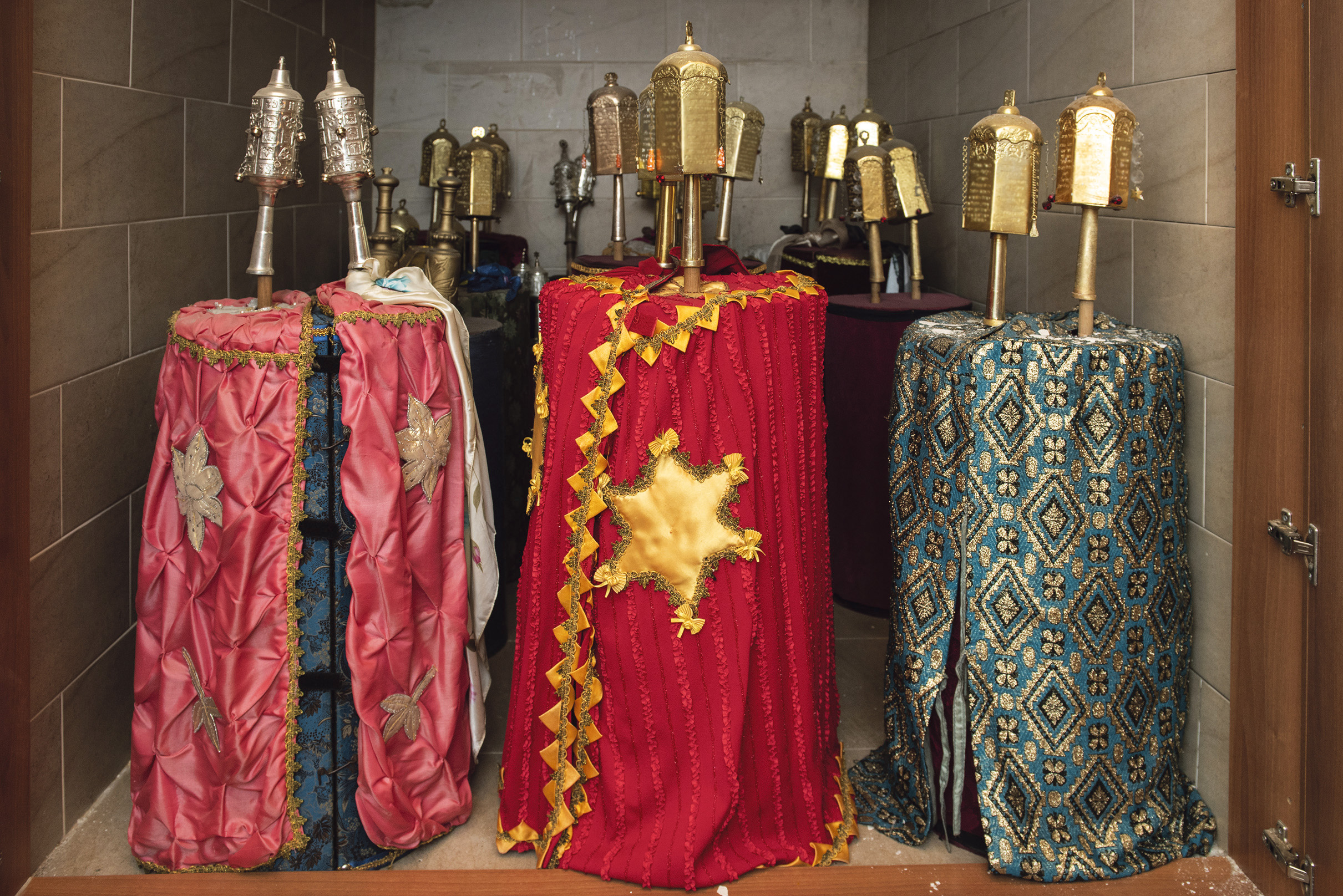
In almost all shules that follow European custom, a key feature of the service on the first day of Shavuot is the recitation of Akdamut, prior to reading the Torah portion that describes the giving of the Ten Commandments.
An allegorical poem in Aramaic describing the breadth and depth of Torah, Akdamut was composed in the 11th century by Rabbi Meir ben Isaac of Worms. Its standard tune is considered to be one of the most original forms of Jewish prayer recitation still extant today, despite the inroads of styles adopted from foreign sources on Jewish song. (An element of the same tune appears in one variant of singing “Ki vanu bacharta…” in the evening kiddush of Pesach, Shavuot and Succot.)
There are two customs regarding its recitation, which takes place in a responsive format led by the person who also reads the Torah or a colleague granted the privilege. Most widely accepted today is the custom of reading it directly prior to the Cohen – the first person called to the Torah reading – begins his brachot. An earlier custom was for the brachot to be recited by the Cohen, the first verse actually read, and then an interruption made for the reading of Akdamut before continuing the Torah reading.
Such an action – interruption of reading the Torah text to allow reading of a human composition – is unparalleled elsewhere in our liturgy. It is no surprise that the custom has fallen into disuse. Nevertheless, the concept of recitation of Akdamut even prior to the commencement of the Torah reading serves to remind us of another practice that formed the basis of that now superseded custom. Even to those of us well-versed in Hebrew as a literary or spoken language, Aramaic tends to be much less familiar.
There are a few Aramaic passages in the siddur such as “b’rich shemai” (an extract of the Zohar), recited when the Torah is taken from the ark, “yekum purkan” of Geonic origin, which follows the Torah reading on Shabbat, and various zemirot sung at Shabbat meals. We meet Aramaic when we study Talmud (and others of its contemporaries) and certain of the latter books of the Tanach. However, with the possible exception of some Talmudic scholars, contemporary Jewish familiarity with the language is limited (although, the linguistically related Syriac – not using Hebrew font – is still utilised in certain eastern Christian communities in Lebanon and Syria). That being so, it is interesting that most published Chumashim also include the Aramaic translation of the text prepared by Onkelos haGer – a convert of the Second Temple era. Right up to the contemporary era, even when publishing a new edition of the Chumash, perhaps with a newly written commentary, it was generally taken for granted that the basic work includes not only the Biblical text, but also Targum Onkelos and the commentary of Rashi (also, of course, of 11th century Worms). Additionally, custom prescribes that each week one should prepare for Shabbat by reading “sh’naim mikra ve’echad targum” – “twice the verses of the weekly sidra and once their Targum (the Aramaic translation of Onkelos)”. Some add study of the commentary of Rashi to this concept as well, on the assumption that knowledge of his commentary is essential to understanding of the text. Accordingly, whatever other commentary one wished to study, it was necessary to have the Targum and Rashi on the page.
However, if one goes back further, one finds another use for the Targum. Dating back to the era when Aramaic was the vernacular, it was customary for public recitation of the Targum to accompany the Torah reading. A meturgeman – translator – stood next to the person reading the Torah. As each verse was read, the meturgeman recited its translation for the benefit of a less learned congregation. Not surprisingly, except among some Yemenite communities, this custom fell out of favour over time. There was always ambivalence regarding the appropriateness of interrupting the reading of the sacred text itself. As Aramaic went out of use, reading the Targum served little of its original purpose; no other translation was considered equally acceptable in terms of holiness. In time, the sermon replaced the Targum as a way to familiarise congregants with the meaning of the weekly portion. Nevertheless, the recitation of Akdamut remained with us, describing in poetic form the beauty of Torah as well as the reward for the faithful who study it.
As you listen to its recitation this Friday morning, the first day of Shavuot, attempt to fathom its depths – at the same time as you ponder on the background of Jewish custom which, to utilise the imagery of Akdamut, is indeed as deep as the waters of the sea.
Chag sameach and Shabbat shalom, Yossi
Yossi Aron OAM is The AJN’s religious affairs editor.
comments