



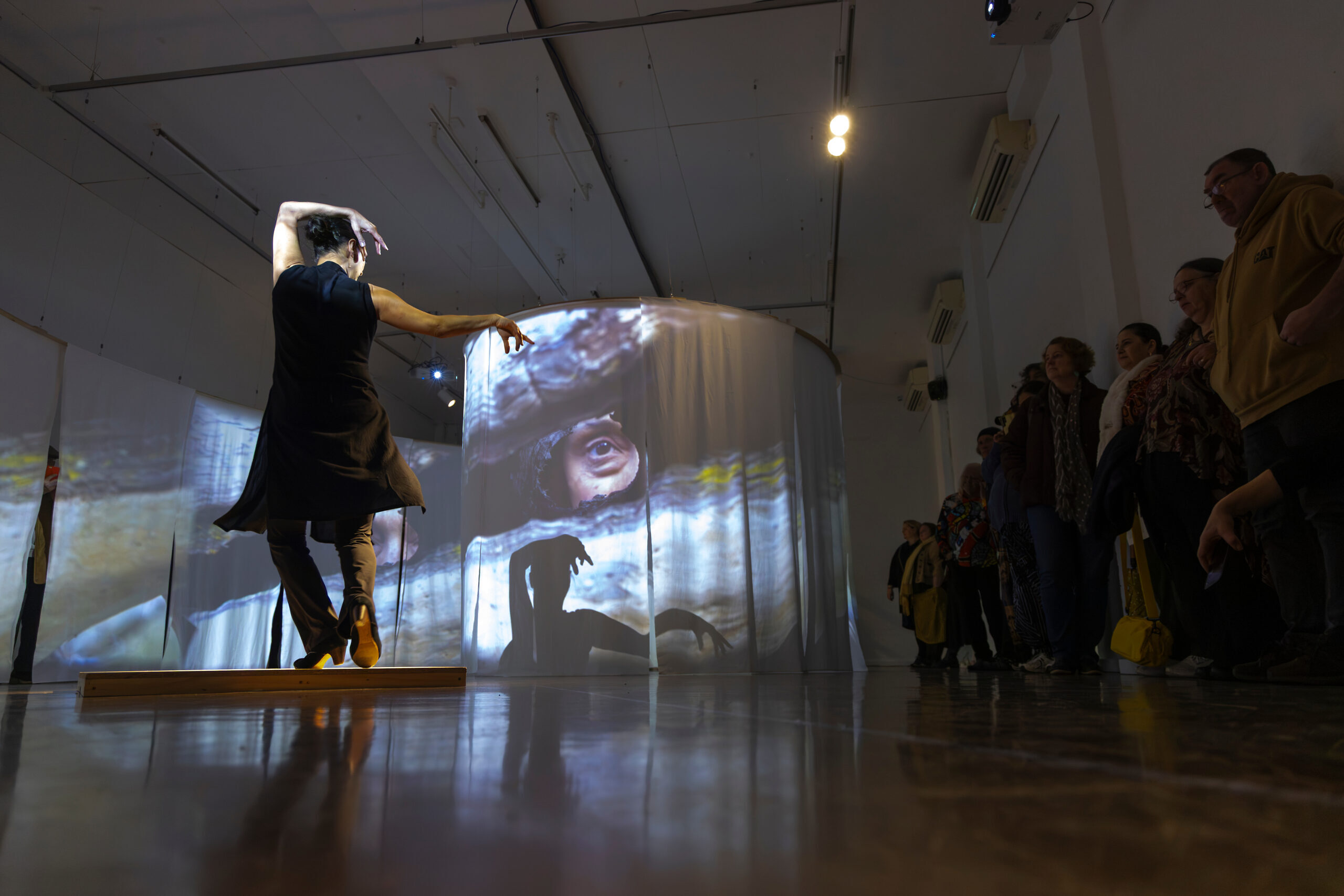
Step into the darkened gallery and the first thing you meet is a spiral.
Images move rhythmically around its curved walls. Bells, drums, voices and the sound of rivers fill the room. A dancer passes through city streets, desert dunes and bushland, while a poem in the film invites viewers to “listen with your eyes”.
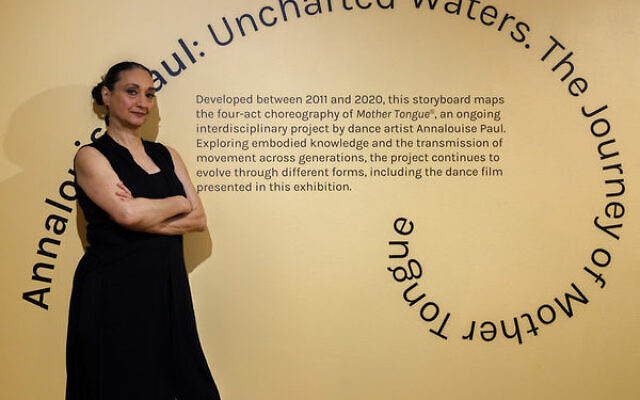
This is Uncharted Waters, the first contemporary art gallery exhibition by choreographer and dancer Annalouise Paul, staged at Walker St Gallery in Dandenong. It reflects on the unmapped routes that have opened up while she has been making Mother Tongue, an intercultural dance work that remains in progress.
“Mother Tongue is a life’s work, uncharted,” Paul told The AJN. “It has had an unforeseeable, unknowable future, filled with relentless intention.”
The seed was planted in 2005, when Paul was working with Albert David, a dancer from Thursday Island. She says the rhythms of the Torres Strait and her flamenco wove together so well that she couldn’t get them out of her mind for years.
Then came the harder part. It took another five or six years to convince arts funders that the project would be “more than a ‘fusion’ show, or even worse, cultural appropriation”.
Paul’s vision was to cross flamenco and Torres Strait body rhythms with Polynesian and north Indian vocals, shaping them into “a visual musical symphony”.
“No one had ever done this before or heard of anyone else who had,” she recalled. “There’s no map, no book for this, so how do we get there?”
Around 60 First Nations and culturally diverse artists, musicians and designers have collaborated on Mother Tongue at different stages. Paul says that meant creating cultural safety for each of them.
“That needs bravery and honesty and careful conversation. I haven’t always succeeded but I am much wiser for it now,” she admitted.
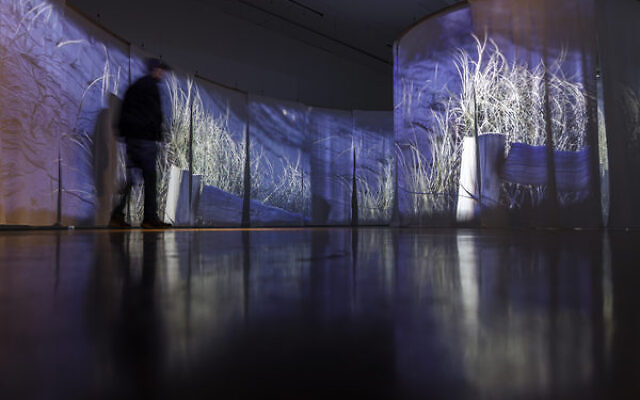
The work remains unfinished because the light-responsive technology needed for its kinetic light rods is still emerging. Paul is looking for a specialist designer, a festival and funding.
Paul’s heritage is both Sephardi and Ashkenazi, which she suggests may explain why she is comfortable expressing two sides of herself in dance.
“In the world of dance, there is orthodoxy and heresy,” she said. “A kind of purism of mind that denounces ‘unwanted’ influence. I love purity but I find it stifling at times.”
Her practice has been “bilingual” from the start, flamenco and contemporary together, and she says it drew criticism from both camps. Her answer was to develop Dance DNA, a somatic process that distils and shapes each dancer’s traditional movement.
She also has a view on the labels. Flamenco itself grew from Sephardi chants, Arabic melisma, Afro-Cuban and Indian rhythms and the folk dances of Andalusia. Modern dance, in rejecting the classical, drew on African, Indian and Native American traditions in its earliest years.
“Honestly, these identity labels drive me crazy,” she said. “Dance is dance.”
The Jewish threads run through the exhibition too. For the opening night performance, Paul used the 10 sefirot as a floor map for 10 dance phrases moving around the spiral wall. She calls the Tree of Life “a fascinating sacred geometry” and is considering how it could shape Act Four of Mother Tongue. In solo works including Self Portrait, she researches Sephardi chants found within flamenco songs.
“All this feels very much like Jewish thinking. We don’t forget our past, we consciously remember and in doing so our roots get deeper, the tree of knowledge grows stronger. That can only mean good things for future generations,” she said.
The centrepiece is Primordial, a newly commissioned dance film. Paul planned it around the four acts of Mother Tongue, assigning each to a location: an urban cityscape, sand dunes, river bushland and a shadow-filled tunnel. She created a dance phrase to travel through all four.
That’s not how it played out.
“Instead, nature asked me to adapt, to be silent, to listen before moving,” she said, explaining that her intricate contemporary-flamenco vocabulary fell away, and simpler movement took its place, echoing early modern dance.
The spiral wall that carries the film was inspired by Richard Serra’s sculptural work at the Guggenheim in Bilbao. Built to Fibonacci dimensions, it proved to be uncharted territory as well.
The mapping company had never worked on a structure like it, and special software was needed for four projectors to fill the wall. Visitors can follow the dancer’s story, or simply take in the choreography of images and the soundscape by sound designer Daryl Wallis. Paul says bodies slow down naturally when walking the spiral inwards and speed up on the way out.
It also looks striking from above, she said.
“I know this from helping the mapping guys who recorded it from a tall ladder when they were hanging projectors.”
Upstairs, a large wall display shows a mind map of the entire work, a hieroglyphic-like storyboard of marks, geometries, rhythms and ideas. There are audio loops of the artists singing rhythms, video of the creative stages, and a small room where visitors can make their own mark with clay or coloured pen.
Mother Tongue began as the third work in the trilogy Conversations in Rhythm and Dance, whose first two works, Isabel and Game On, toured India and won awards. It has since grown to include a public art installation and community and schools programs.
In June 2021, a curator from Walker St Gallery approached Paul about including Mother Tongue in the group exhibition HOME 2022, which explored the experiences of artists with a refugee background or those seeking asylum. In early October 2023, a new curator proposed a solo exhibition with a newly commissioned dance film, while still presenting archival media.
“I was very fortunate to work with two inspired curators over five years who have honoured my work and vision,” Paul said. “I am very proud also of this my first contemporary art gallery exhibition.”
Paul says audiences tell her what they take away.
After seeing Primordial on October 17, one woman asked whether it was about time travel. “The entire piece made me feel as though Annalouise’s ancestors were guiding her body, protecting her space, driving her movement.”
At the opening launch on September 5, another woman, starting to cry, said: “There are two wars; the war of leaders and politicians and the war of the people. When the people say they’ve had enough of war then there will be no more.”
A man who saw the 2014 Mother Tongue pilot show offered a third observation: “That bit where they’re all walking together in sync, we can’t do that yet. We can’t walk together.”
“This last one made me feel sad back then, but now I realise it’s the same observation more than a decade later,” Paul said. “That’s future thinking. It’s past, present and future all existing at the same time, and where hope and radical vision must exist too.”
Unchartered Waters is at Walker Street Gallery and Arts Centre, Dandenong until November 14.
comments