



Iran on agenda in China
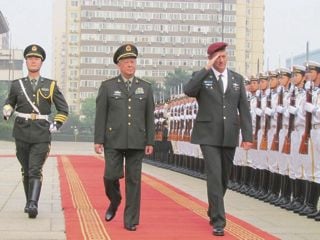
AS world leaders pushed Iran to negotiate on its nuclear program and reached an agreement to allow inspections of its faculties this week, Israel attempted to exert its own form of pressure on the Islamic Republic – via its best customer.
Israeli military Chief of Staff Benny Gantz visited China, the biggest buyer of Iranian oil, and met his counterpart there, Chen Bindnge.
Both leaders spoke enthusiastically of the improving Israeli-Chinese ties. There had been bitter tensions between the countries after Israel cancelled an arms deal with the communist state in 2005 under heavy pressure from the US – just several years after another deal was cancelled in similar circumstances.
However, in the past three years, there has been a thawing of relations as Israeli exports of civilian goods to China have more than doubled and as the two militaries have once again grown closer.
One major bone of contention, however, is China’s refusal to support sanctions against Iran for its nuclear activities. This issue was discussed – and not only with Bindnge. According to a statement released by the IDF, Gantz presented “a strategic overview of regional threats to a panel of senior Chinese officers”. IDF sources reported a positive atmosphere and promises to increase defence cooperation in this week’s meetings.
Ilan Maor, joint vice-president of the Israel-Asia Chamber of Commerce and a former Israeli consul-general in Shanghai, told The AJN that he views Gantz’s visit as important.
“Countries don’t wake up in the morning and say they are adopting sanctions – it comes from hard work,” he said. “As time goes by, China is convinced more and more and understands how Iran is a danger, and every opportunity to put the issue on the table helps make a change possible.”
Israeli politicians have been hoping for months that its growing trade relationship with China will prove the missing link in plans to reach consensus between the world’s large powers about the need to deal with Iran.
“China is a growing economic power,” Finance Minister Yuval Steinitz told Bloomberg in February.
“We do hope that if we are able to improve economic ties and connections between Israel and China, it will help us also to explain our positions with regard to the Iranian nuclear threat, with regard to the events in Syria.”
NATHAN JEFFAY
comments