



Israeli minister criticises Australian response
Diaspora Affairs Minister Chikli warns terror threat to Jews will continue without stronger government action.
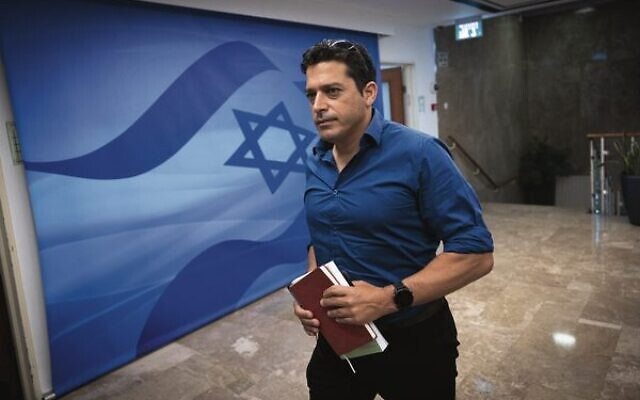
Israel’s Minister of Diaspora Affairs has delivered a scathing assessment of Australia’s handling of antisemitism, placing it among the world’s worst countries for Jewish safety alongside Canada, France and Britain.
Amichai Chikli made the comments during a Jerusalem Institute for Strategy and Security webinar held on Sunday night, exactly two weeks after the Bondi Beach terror attack that killed 15 people, including 12 Jews.
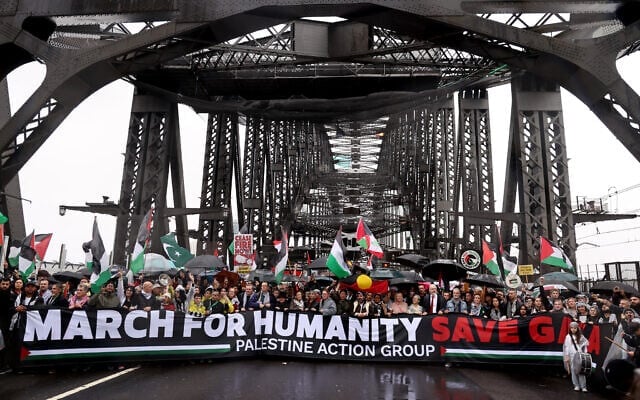
“When you have demonstrations on Sydney’s bridge with shouting to globalise the Intifada, and instead of pushing back and saying, this is unacceptable, and we do not accept the presence of al Qaeda flags, ISIS flags, Hamas flags on Sydney’s bridge, we do not accept the terms as globalised Intifada, you have the leaders of Australia and Albanese saying, this was a moment of unity in Australia. It’s insane,” Chikli said.
The minister, who flew to Australia immediately following the attack, identified three critical factors determining Jewish safety: immigration policies, government responses to jihadist incitement, and police capability.
“The writing was on the wall … [It was] clear that it is a very dangerous moment for the Jewish community in Australia. And still for 12 minutes in a big event on a public sphere, you had zero relevant response from the police,” he said.
Chikli revealed that Prime Minister Netanyahu had written to Prime Minister Albanese before the attack, using research from the Ministry of Diaspora Affairs, warning of the threat. “Unfortunately, they’ve done nothing with it,” he said.
Veteran Australian Zionist leader and President of the JISS, Dr Danny Lamm, who participated in the webinar, confirmed the inadequate security.
“It comes out today that the organisers of the event asked the police to provide more police, and that was simply ignored,” Lamm said.
He criticised the government’s response to ongoing demonstrations and incitement over the past two years.
“On October the ninth, the rotten demonstrations took place, and the police authorities, instead of subduing these cries for death to the IDF, for globalising Intifada and from the river to the sea, rather pushed away Jewish demonstrators who demonstrated for the rights of Israel and the rights of Jewish people in Israel to live peacefully,” Lamm said.
He noted that the Prime Minister “was incapable of mentioning the word Muslim, incapable of mentioning the word Islamic fundamentalism” in his statements following the attack.
Lamm said a recent survey of 1,400 Australians found 72 per cent believe a Royal Commission is needed “to properly assess what has taken place, so this side of thing cannot happen again.”
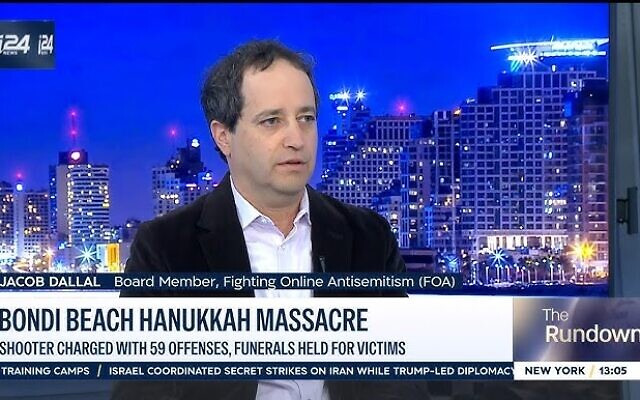
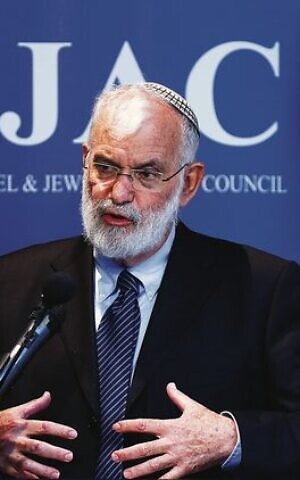
The webinar, moderated by former senior IDF intelligence officer Yossi Kuperwasser, also featured retired Major General Yaakov Amidror, a former Israeli National Security Advisor, and Dr Jacob Dallal from the University of Haifa’s Comper Centre for the Study of Antisemitism and Racism.
Amidror warned of a new form of antisemitism emerging from the convergence of Islamist ideology and far-left activism.
“It is coming from the far left and the Islamic movement; unimaginable. It’s two movements which do not have any shared values, no value that they can agree on. But in one area, they agree. It’s the hatred of Jews around the world,” he said.
He noted that while both groups contribute to antisemitism, “in 95 per cent of the cases, these are Islamists” who carry out violent attacks.
Dallal recommended that Australia focus on specific legislation, particularly anti-terror laws.
“If you can produce effective anti-terror legislation that is enforced, I think that’s a first step towards fighting this in the long term,” he said.
He referenced the 49 articles suggested by Australia’s special envoy for combating antisemitism, urging that key recommendations be translated into law.
Kuperwasser emphasised the need to treat antisemitism as terrorism, requiring greater funding and organisation. He advocated for legislation preventing incitement, noting his “popcorn theory” where “when you are allowed to incite uninterruptedly, eventually somebody is going to be affected by this incitement.”
Despite the criticism, Lamm stressed that “the majority of Australians were all shocked by everything that took place. The majority of Australians do not want to see the Jewish community suffering antisemitism at all.”
He said communal leadership has begun demanding the government respond “legislatively and by police action in blocking this sort of activity. And that has begun to take place.”
The full webinar can be viewed here.
comments