



Israeli pleas for missing soldiers
THE continued bondage of Israel's missing soldiers remains an open wound for their families and the Jewish State.
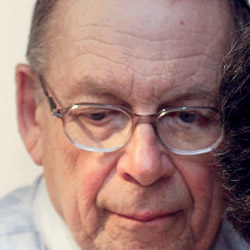
AHRON SHAPIRO
LATE one Saturday night last May, hundreds of mourners streamed towards Givat Shaul’s Har HaMenuchot cemetery in Jerusalem to pay their respects to an elderly man who had passed away the previous day.
Prominent Jerusalem Rabbi Benny Lau was on the way to officiate at the funeral when he received a call from a Jerusalem Post reporter, asking about the man he was about to bury.
“In the last month of his life, he understood that he was dying and it hurt him that he did not know what happened to his son,” Rabbi Lau said.
“He never gave up on his faith … not in God and not in the fact that his son had to be found.”
The man Rabbi Lau was eulogising was Yona Baumel, and the son he was referring to was Israeli soldier Zachary Baumel, who at that point had been missing for 27 years.
During the First Lebanon War, Zachary, together with Yehuda Katz and Zvi Feldman, was taken captive following a tank battle against Syrian forces near the Lebanese Bekaa Valley village of Sultan Yakoub.
The three, along with their tank, were seen by western news reporters paraded through Damascus the following day. That was the last confirmed sighting, although tantalising clues have been uncovered over the years.
When, as a confidence-building measure in 1993, Palestine Liberation Organisation chief Yasser Arafat gave then Israeli prime minister Yitzhak Rabin half of Zachary’s dog tag, hopes soared that more information would follow. The momentum, however, was soon lost.
Thirteen years later, following the kidnapping of Israeli soldier Gilad Shalit, Yona Baumel wrote how it felt to be the parent of a missing soldier.
“You can’t imagine what it’s like to wake up in the middle of the night thinking about your kidnapped son. All the time, when you’re not thinking about something else, you are thinking about your son,” he revealed.
With each passing day, hope fades ever dimmer for Israel’s missing soldiers. Only Shalit has recently been confirmed alive on video. And while his family has the benefit of dealing with captors who admit to holding him, for the families of Israel’s other missing soldiers, there is only faith that their unfinished jigsaw puzzle of clues and leads will one day yield a miracle.
Since 1948’s War of Independence, there have been thousands of Israeli prisoners of war (POWs), and more than 400 missing in action (MIAs).
Outright POW cases were eventually resolved in prisoner exchanges. All Israeli MIAs, with the exception of seven (see sidebar), involve soldiers that are missing but presumed dead.
Following the Yom Kippur War, the Israel Defence Forces (IDF) Missing Soldiers Unit was established. The unit’s original objective was to locate MIAs from that war — these were especially numerous on the Egyptian front.
Indeed, a large number of those MIAs were eventually located, with new remains recovered as recently as 11 years ago.
Regarding the matter of prisoner swaps, it bears mentioning that until the 1980s, most exchanges — with notable exceptions — saw a relative parity between the value of an Israeli soldier and their uniformed Arab counterpart. Furthermore, most of the POW cases were resolved within a few years of their capture.
However, since the First Lebanon War, the trading value of an Israeli soldier, it can be said, has increased.
The reason for this is simple. Recent MIA cases, initiated by militias such as Hamas and Hezbollah, were actually nothing more than planned kidnappings, executed with the intent of gaining a bargaining chip to free the maximum number of prisoners from Israeli jails.
And so, over the past 30 years, Israel has released about 7000 Palestinian and Hezbollah prisoners to secure freedom for just 19 Israelis and to retrieve the bodies of eight others.
As the cost for recovering MIAs has gotten higher, the internal resistance within Israeli society to such exchanges has increased as well, under the belief that massive ­prisoner exchanges encourage more kidnappings.
Six years ago, the Israeli government began a worldwide public relations campaign for Ron Arad — eventually extended by court order to all MIAs presumed alive — which guaranteed $10 million reward for information leading to an MIA’s recovery. Some leads did emerge from that campaign, although no breakthroughs.
And yet it has turned out to be Israel’s last major initiative for cold-case MIAs. In 2005, the International Coalition for Missing Israeli Soldiers — a nonpartisan, not-for-profit advocacy group — ceased operations due to financial difficulties after 11 years of keeping the issue on Israel’s national agenda.
Since that time, all the unresolved, “presumed alive” MIA cases, with the exception of Gilad Shalit, have faded from the headlines.
To be sure, the IDF and the Israeli government continue to publicly call for the soldiers’ safe return. As IDF Chief of Staff Gabi Ashkenazi told a gathering of the Friends of the IDF in New York City earlier this month:
“As Pesach — the holiday of freedom — is approaching, let us all remember that not everyone will be free to celebrate the seder with their loving families.
“Gilad Shalit was abducted by Hamas terrorists more than three years ago. Let’s hope that by Passover, Gilad and all other abducted and missing soldiers will be celebrating the seder at home with us,” he ¬≠continued.
However, Yona Baumel — who until his death continued to uncover information leading to his belief that his son was still alive — alleged the IDF and the government had, in reality, lowered the priority to resolve the cases of some MIAs, even early on.
Lieutenant Colonel Yona Tilman (res), a former head of the IDF’s Missing Soldiers Unit from 1986-90, confirmed to Hamodia last May that during his tenure, Israel “didn’t take [Yona’s leads] seriously … because they were operating under the assumption that Zachary was dead”.
It was this attitude that Yona said he found most hurtful in his last years.
“Personally, I feel let down and betrayed by members of the army and the government,” Yona wrote in an opinion piece for The Jerusalem Post in 2006.
He lashed out again three years later in a posting on the Ha’aretz ¬≠website.
“The IDF, with the collusion of the press, has found a painless way to relate to soldiers who are missing in action,” Yona wrote.
“Simply, relate to them as though they are dead, even if the preponderance of proof is otherwise.”
Yona concluded: “When the truth [about the Sultan Yakoub MIAs] will [come] out, it will make the Arad and Shalit cases pale by contrast. Meanwhile, as they languish in captivity, they are being ignored.”
Less than two months later, Yona’s family and friends stood at the edge of his grave and sombrely shovelled dirt into the pit where his shrouded body lay.
Not far away, an IDF insignia graced the tombstone of a soldier who had been killed in action. For his family at least, there is a grave to visit. For the families of the MIAs, closure remains elusive.
comments