




As the global stage prepares for the 2026 Eurovision Song Contest in Vienna, all eyes are on 28-year-old Noam Bettan, the artist chosen to carry forward one of the most successful and resilient legacies in the competition’s history.
Born in Israel to French immigrants, Bettan is set to perform Michelle, a multilingual entry featuring lyrics in French, Hebrew and English. While his journey is expected to face the familiar headwinds of protests and political noise, Bettan follows a long line of Israeli performers who have transformed the Eurovision stage into a platform for cultural bridge-building.
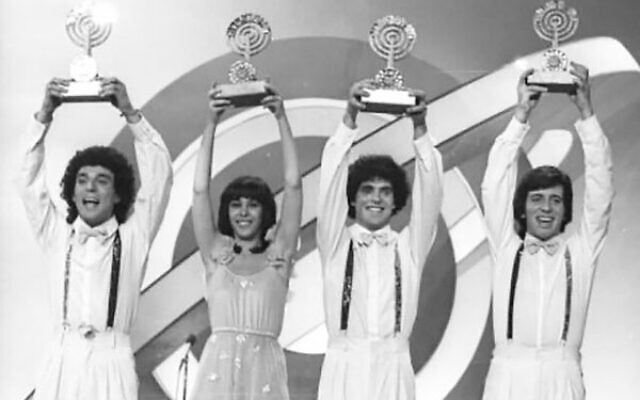
Photo: Instagram
Israel’s history in the contest is not just one of participation, but of consistent top-tier achievement. Since its debut in 1973 with Ilanit’s fourth-place finish, the nation has become a certified powerhouse, securing four wins and reaching the top five 11 times. This record is a testament to what past winners and composers describe as a unique Israeli brand defined by joy, ethnicity, colour and daring.
The nation’s first major triumph came in 1978, when Izhar Cohen and Alphabeta won in Paris with A-Ba-Ni-Bi. The victory was so unexpected that the Israeli broadcaster had not purchased enough satellite time to show the final moments of the voting, leaving the public to learn of the win via the radio. The win also highlighted the political tensions often surrounding Israel’s presence. As the story goes, when it became clear Israel would win, several Arab state broadcasters cut their feeds, with Jordan famously showing a picture of flowers instead of the winning performance.
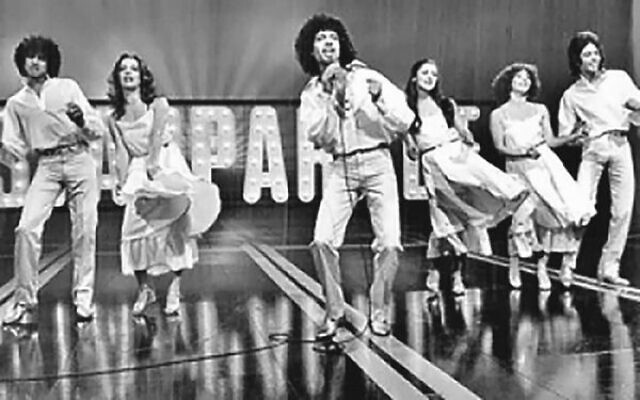
Israel proved its dominance by defending the title on home soil in Jerusalem the following year. Gali Atari and Milk and Honey captivated the world with Hallelujah, a song that has since been covered over 400 times in dozens of languages.
But, Israel’s Eurovision contributions have often gone beyond simple pop music. In 1998, Dana International made history as the first transgender artist to win the contest with her anthem Diva. Her victory in Birmingham was a landmark for the LGBTQI community and significantly shifted domestic and international perspectives on identity. Clad in an iconic Jean Paul Gaultier feather bolero, she became a global symbol of inclusion.
Two decades later, in 2018, Netta Barzilai brought the trophy back to Israel for a fourth time with Toy. The song, which earned a record-breaking 529 points, was a sophisticated, energetic addition to the #MeToo movement, focusing on female empowerment and self-esteem.
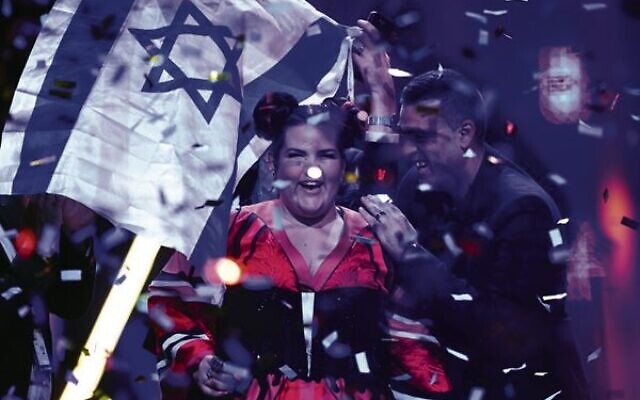
Like many Israeli entries, Toy faced an organised boycott campaign. However, the international public overwhelmingly chose art over politics, granting Barzilai a decisive victory. Her success reinforced the idea that a compelling message, paired with an addictive melody, unique vocal abilities and even those chicken noises, can unite a global audience.
In recent years, Israel has continued its streak of excellence despite immense external pressure.
Noa Kirel took third place in 2023 with the high-energy Unicorn, and Eden Golan braved intense protests in Malmö in 2024 to secure fifth place with Hurricane.
In 2025, Yuval Raphael soared to a second-place finish with New Day Will Rise, proving that the quality of Israeli music continues to resonate with voters worldwide.
Raphael’s story is unique in itself. A Nova festival massacre survivor, she hid inside a shelter near Be’eri with 50 other people during the Hamas onslaught. She was one of only 11 survivors, who hid under dead bodies for eight hours.
In November 2024, Raphael entered the HaKokhav Haba competition, the winner of which becomes Israel’s Eurovision entry. Prior to competing in HaKokhav Haba, Raphael had never performed or sung professionally.
Despite her personal story and her beautiful song quite literally calling for a “new day”, Raphael faced protests and security disruptions, including during her grand final performance.
While the effort to exclude Israel from the contest has gained a lot of traction in recent years, it has also been met with a powerful counter-movement from the global entertainment industry.
Most recently, an open letter organised by the Creative Community for Peace has been signed by over 1000 prominent figures, including Helen Mirren, Amy Schumer, Mila Kunis, Liev Schreiber and Gene Simmons. These artists argue that cultural events like Eurovision are crucial for bridging cultural divides and that “targeting Israeli musicians in this way tarnishes the unifying spirit” of the competition.
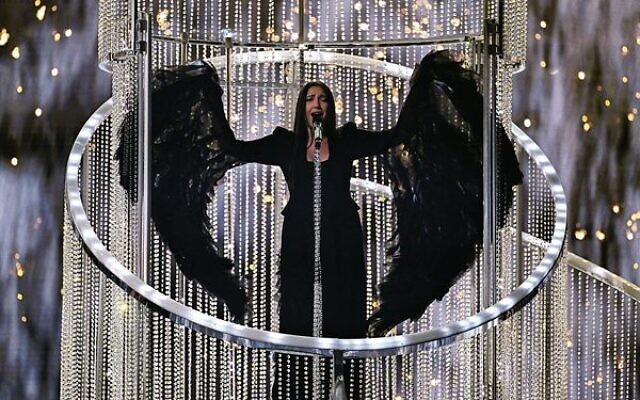
Photo: Fabrice Coffrini/AFP
Simmons noted that excluding an Israeli singer does not move the “needle toward peace” but only serves to further divide the world.
So, as Noam Bettan prepares for the first semi-final on May 12 (screening in Australia on May 13 at 5am), he carries the weight of a 50-year legacy. While some nations have announced they will not participate or broadcast the event due to Israel’s inclusion, the European Broadcasting Union has remained firm in its commitment to keep the contest as a non-political event.
The enduring secret of Israel’s success, as noted by composer Kobi Oshrat, lies in the combination of an excellent song, a talented performer, and “a lot of luck”.
For decades, Israel has provided the world with all three, rising above prejudice to share messages of peace. From the whimsical A-Ba-Ni-Bi to the soulful Michelle, Israel’s Eurovision journey remains a story of triumph and spirit, and a refusal to be silenced.
Eurovision semi final 1 featuring Noam Bettan is on SBS on Wednesday, May 13 at 5am, followed by semi final 2 on Friday, May 15 at 5am and the final is on Sunday, May 17 at 5am.
comments