




In the conference halls of a Gold Coast resort last week, an unlikely coalition was taking shape.
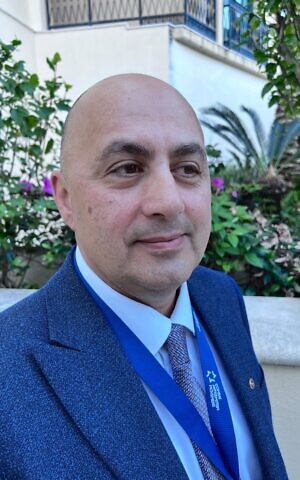
Lebanese-Australian councillor Eli Imad found himself explaining Zionism to curious colleagues who had never heard the term before.
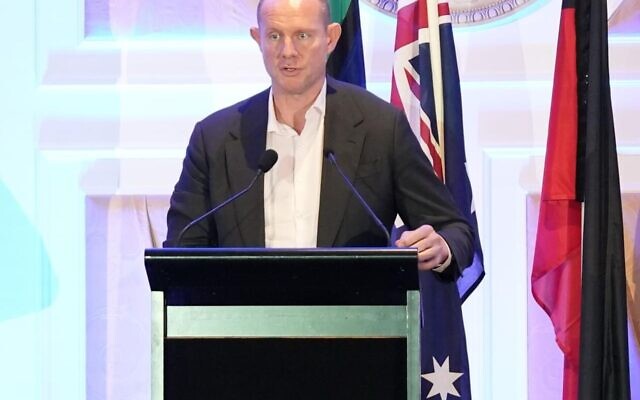
Melbourne’s deputy Lord Mayor Roshena Campbell compared notes with rural mayors who had never met a Jewish person.
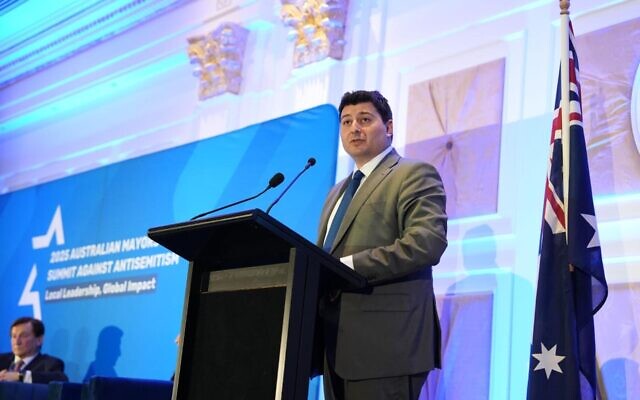
And Sydney’s Inner West mayor Darcy Byrne, who had marched for Palestinian rights, sat alongside fervent supporters of Israel, united by a shared concern about the fraying edges of Australian democracy.
They had come to the Mayors’ Summit Against Antisemitism from across the continent, many overcoming fierce local opposition to attend what critics had branded everything from a “neo-Nazi event” to a “Zionist propaganda exercise”.
What they discovered was something more profound: a recognition that the ancient hatred of antisemitism had become a contemporary test of Australia’s commitment to pluralism, tolerance, and the very foundations of civil discourse.
The courage to show up
The decision to attend had not been easy for many.
In the weeks leading up to the summit, coordinated campaigns bombarded council inboxes with demands that elected representatives boycott the event.
Pro-Palestinian groups published open letters listing what they labelled the “extremist” backgrounds of speakers and organisers.
For Campbell, Melbourne’s deputy Lord Mayor, the volume of opposition emails was unprecedented.
“I have received a very high volume of emails telling me not to attend,” she said, her voice carrying the weariness of someone who had spent weeks defending a decision she viewed as fundamentally about leadership.
The irony was not lost on her.
“If it was any other group, if it was a summit against racism, if it was a summit about Indigenous arts, we would all be applauded for attending. And yet, when you want to counteract what is perhaps the oldest curse facing civilisation, antisemitism, you are receiving a backlash.”
But perhaps nowhere was the pressure more personally complex than for Imad, the Lebanese-Australian councillor from Armidale.
As someone who had lived through Lebanon’s civil war and witnessed firsthand the sectarian divisions that could tear a society apart, he understood the stakes in ways his critics might not have expected.
“They played the card of not attending what they call a neo-Nazi event,” Imad recalled, his voice heavy with frustration.
“There were some hurtful comments about the IDF, which I take offence to.”
The opposition had the opposite effect of what was intended.
Rather than deterring attendance, it seemed to steel the resolve of those who came.
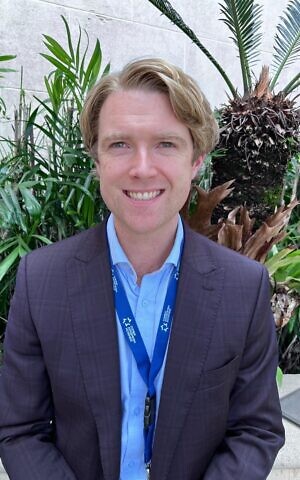
Tom Humphries, deputy mayor of Stonnington, put it simply: “I think that just shows the importance of this summit, and particularly other type events where we are looking at ways to combat hatred, and we’ve got to push past that noise.”
Unexpected educators
What became clear as the three days unfolded was how much Australia’s elected representatives, even those from multicultural communities, simply didn’t know about antisemitism, Jewish identity, or the complex web of contemporary hatred targeting Jewish Australians.
Imad found himself in the unlikely role of educator, fielding questions from fellow councillors who had never encountered these concepts before.
He described meeting one potential attendee who “did not understand what Jewish meant” and “mistook the Jewish people for the Palestinians”.
For many attendees, the summit provided their first encounter with the lived reality of contemporary Jewish life in Australia.
They learned about the attempted firebombing of Newtown synagogue, Jewish families afraid to send their children to school wearing identifiable clothing, about the monthly removal of hundreds of antisemitic posters from Melbourne’s streets.
Campbell was among those shocked by the scope of the problem.
“What has surprised me is just how prevalent it is across the nation,” she said, the revelation clearly weighing on her.
Building bridges across divides
Perhaps the summit’s most remarkable achievement was bringing together people who might never have found common ground elsewhere.
Byrne, the Inner West mayor, exemplified this complexity.
A progressive politician who had participated in pro-Palestinian marches, he found himself sharing panels with ardent supporters of Israel.
“Some people said that I had to choose between resistance to antisemitism and my opposition to what I consider atrocities that have been committed against Palestinian civilians,” Byrne told the gathering, “but I say that these two principles are not contradictory.”
His presence challenged simplistic political categorisations.
Here was someone who could criticise Israeli government policies while simultaneously fighting antisemitism in his own community; someone who understood that Jewish Australians deserved protection from hatred regardless of their individual views on Middle East politics.
The conversations happening in corridor huddles and over coffee breaks were revealing the emergence of an informal network of leaders united not by identical political views, but by a shared commitment to democratic values and community safety.
Rural mayors compared experiences with their urban counterparts.
Progressive politicians found common ground with conservatives on the fundamental principle that no Australian should face hatred because of their identity.
The Australian frame
Crucially, the summit’s organisers had deliberately kept the focus on Australian experiences rather than international politics.
While Israel and Middle East conflicts inevitably arose in discussions, the emphasis remained consistently on domestic antisemitism and its impact on Australian Jewish communities.
This framing proved essential for participants like Byrne, who could engage with the issue without feeling required to endorse particular foreign policy positions.
Imad noted this deliberate approach: “I was expecting more direction towards Israel, and I think that wasn’t the case. They wanted to keep it within an Australian context.”
By focusing on Australian experiences – the synagogue attacks, the harassment in council chambers, the fear in school playgrounds – the summit made clear that this was fundamentally about Australian values and Australian communities.
Participants repeatedly returned to the phrase that became the summit’s unofficial motto: “This isn’t about Jews, it’s about Australia.”
It reflected a growing understanding that antisemitism represents a canary in the coal mine for democratic breakdown more broadly.
Practical networks and solutions
Beyond the philosophical discussions, the summit provided concrete tools and established practical networks that participants could take home.
Waverley mayor Will Nemesh’s presentation of his council’s antisemitism framework became a highlight, with copies distributed to all attendees as a potential template for their own communities.
Melbourne’s initiatives became a case study in effective local government action.
Campbell detailed their one-hour removal policy for antisemitic material, resulting in 3000 pieces removed in the past year, and their investment in CCTV networks that had helped identify perpetrators of synagogue attacks. The networking aspect proved equally valuable.
Mayors and councillors exchanged contact details, established communication channels, and began planning follow-up meetings.
What emerged was the foundation of an informal but potentially powerful network of local leaders equipped with both knowledge and tools to combat antisemitism in their communities.
Humphries captured the collaborative spirit. “It’s been great connecting with councillors across the country and sort of seeing the varying levels of hatred that they’re experiencing, and understanding in greater detail new ways to help improve and tackle that, particularly at a council level.”
The hidden constituency
One of the summit’s most sobering revelations was the existence of what might be called a hidden constituency; elected representatives who privately supported Jewish communities but felt unable to express this publicly.
Imad’s experience recruiting attendees had exposed this uncomfortable reality.
“A lot of people came to me and said, ‘No, no, no, we support the Jews. We support Israel. We’re against antisemitism. But you know, for my work, I can’t be seen standing with the Jews at a conference against antisemitism.'”
The political calculations were stark.
As Imad bluntly explained, “Unfortunately, we don’t have enough Jews to try and sit there and influence MPs, while in the Arab community, they control eight to 10 seats federally. They literally now hold the balance of power.”
The democracy question
As the three days progressed, a deeper theme emerged: antisemitism as a stress test for Australian democracy itself.
Multiple speakers identified what Campbell called “a vacuum in leadership” at state and federal levels, leaving local government to address challenges that should be handled by higher authorities.
Campbell’s frustration was palpable as she described Melbourne City Council stepping into spaces abandoned by state government.
“The city of Melbourne, in our council plan, which is currently out for community consultation, calls for a protest framework to be established, for the council to work with the state and federal governments to develop a framework to regulate protests. Now that is leadership that should have been shown by the state government. It wasn’t.”
The implications extended beyond antisemitism.
If local governments are being forced to develop their own frameworks for managing hate speech, regulating protests, and protecting minority communities, what did that say about the health of Australian democratic institutions more broadly?
Humphries worries about this trajectory.
“There is a level that certainly feels like across my friends from a range of different groups, that level of intolerance is growing, and that’s something that we must nip in the bud now, otherwise it will probably get to a level that is quite bad,” he said.
Seeds of transformation
As participants prepared to return to their communities, many carried with them not just information packets and contact lists, but a transformed understanding of their role in protecting Australian pluralism.
The summit had achieved something more than education – it had created a sense of shared mission among unlikely allies.
The transformation was already visible.
Mayors from rural areas with no Jewish populations now understood how antisemitism could affect social cohesion even in their communities.
Perhaps most importantly, they had learned that standing against antisemitism didn’t require perfect agreement on Middle East politics or any other contentious issue.
It required only a commitment to the principle that Australians should be safe from hatred based on their identity – a principle that, once articulated, seemed almost too obvious to debate.
The informal network that emerged from the Gold Coast will face immediate tests.
Participants will return to communities where some constituents oppose their attendance, where political pressures remain intense, where the temptation to avoid controversial issues remains strong.
But they will also return with something new: knowledge, tools, contacts and perhaps most importantly, the understanding that they are not alone.
Whether this coalition can translate summit insights into sustained action remains to be seen.
But for three days on the Gold Coast, Australia’s local government leaders demonstrated that the country’s democratic traditions – tolerance, pluralism, respect for minority rights – still have champions willing to stand up and be counted, even when the political winds are blowing in the opposite direction.
comments