



Jewish voices soar high
'No matter what the world throws at us ... we survive and we do it in a way that's not combative, in a way where we allow the beauty of what we express to touch people.'
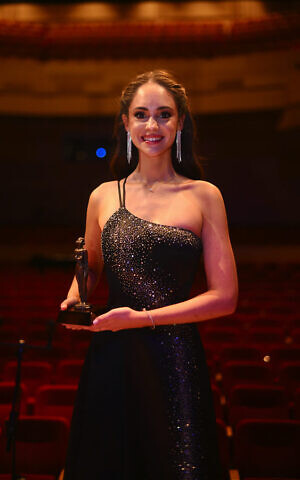
When mezzo soprano Sidra Nissen took the stage at The Concourse Concert Hall in Chatswood for the 2025 IFAC Handa Australian Singing Competition finals, she made a bold choice that would resonate far beyond the concert hall.
Alongside Mozart’s ‘Smanie implacabili’ from Così fan tutte, she performed Ravel’s ‘Kaddish’ from Deux mélodies hébraïques. It was a deeply personal selection that would ultimately help secure her victory.
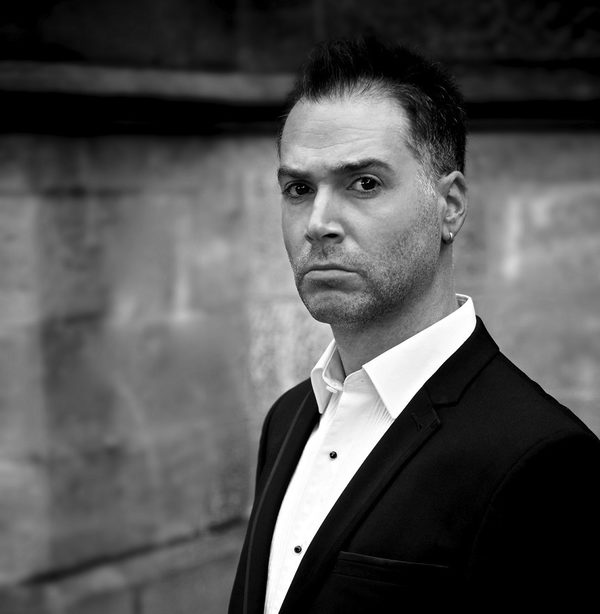
For Simon Lobelson, a full-time voice teacher at the Sydney Conservatorium of Music and semi-finalist panelist for the competition, Nissen’s win, as well as soprano Eden Shifroni’s in 2024, represents something significant for the Jewish community – Jewish singers claiming the top prize two years in succession.
The Australian Singing Competition traces its origins to 1982, when lawyer Roland Gridiger, as Trustee of the Mathy Estate, established the Marianne Mathy Scholarship. The scholarship honoured Marianne Mathy-Frisdane, a coloratura soprano and distinguished teacher who had taught at NIDA and the NSW State Conservatorium of Music for years before her death in 1978.
What began as a single scholarship has evolved into the IFAC Handa Australian Singing Competition, which is now recognised as Australia’s most prestigious competition for opera and classical singers under 26.
Over more than four decades, the competition has awarded nearly $3 million in cash prizes and grants while supporting almost 2,600 contestants. Gridiger told J-Wire after Nissen’s victory that having Jewish singers win consecutively after running the competition for over 40 years is “quite a coincidence, and I think it is extraordinary.”

Lobelson’s own connection to the competition is deeply personal. In 2003, he was a semi-finalist before departing for London to study at the Royal College of Music, where he lived for a decade as a freelance opera singer. Twenty years later, he found himself on the competition’s heat panel, and in 2025, on both the semi-finals and finals panels. It is “a nice kind of cyclical thing,” he told The AJN.
Two months after returning from London, Lobelson found himself teaching at the Conservatorium. While he started by teaching theatre studies, he now covers French repertoire, chamber music, opera history, singing teaching, conducting, and PhD supervision.
“In my role at the con, I find this very lovely symbiotic relationship between going out and performing it, but then also taking what you learned from that into the teaching studio and helping other people, but then also writing about it and researching about it, they all feed into each other very nicely,” Lobelson explained.
And his teaching philosophy has evolved even more with time. “I find the older I get, true happiness comes from a lot of sense of community, but also from actually helping people,” he said. “It’s not about standing in the spotlight and enjoying the accolades and having your ego boosted. Something shifts at some point; the happiness comes from just helping people be their best.”
For Lobelson, the success of Jewish musicians in the arts connects to something deeper, particularly at the moment.
“There’s an immense sense of solidarity and a kind of tribal pride when Jewish musicians really succeed in their fields. It’s no secret that Jews have been leaders in the arts, amongst many other things,” he said. “That’s not a new thing, and there are centuries of cultural and generational succession in Jews succeeding in the musical sphere. It’s very much a part of our heritage, and a part of our culture that is very important.”
Lobelson said something that he has noticed throughout his years working with young musicians is that Jewish singers in particular are very much able to connect to what they are performing.
“They very much are able to understand and connect with the emotional subtext of what they sing, and bring the words and the music, but more so the communication, the drama, the emotion of the page,” he said. “They’re able to often reach across the footlights with audiences, allowing audiences to feel the full weight of millennia of Jewish joy, of Jewish suffering, of Jewish experience. That’s certainly what I’ve experienced with top class Jewish musicians, whether they be violinists or singers or pianists. There’s something about the Jewish soul that is very open, very communicative, very, very raw, in a way I think possibly shaped by our cultural history.”
The timing of these victories carries particular weight. With antisemitism prevalent at the University of Sydney since October 7, where Lobelson works, the success of Jewish singers takes on added significance. “These two are extraordinarily talented singers. And I think it’s a huge win for our community, Jewish musicians, given what’s going on in the world and what the misguided population think of us, against all odds that this has been allowed to happen, and that Jewish singers have had such success in this competition,” he said.
“We have proven for millennia and millennia that we are survivors, we just keep surviving. And no matter what the world throws at us, whether it be the ancient Romans, the ancient Greeks, the Babylonians, the Nazis, we survive and we do it in a way that’s not combative, in a way where we allow the beauty of what we express to touch people.”
comments