



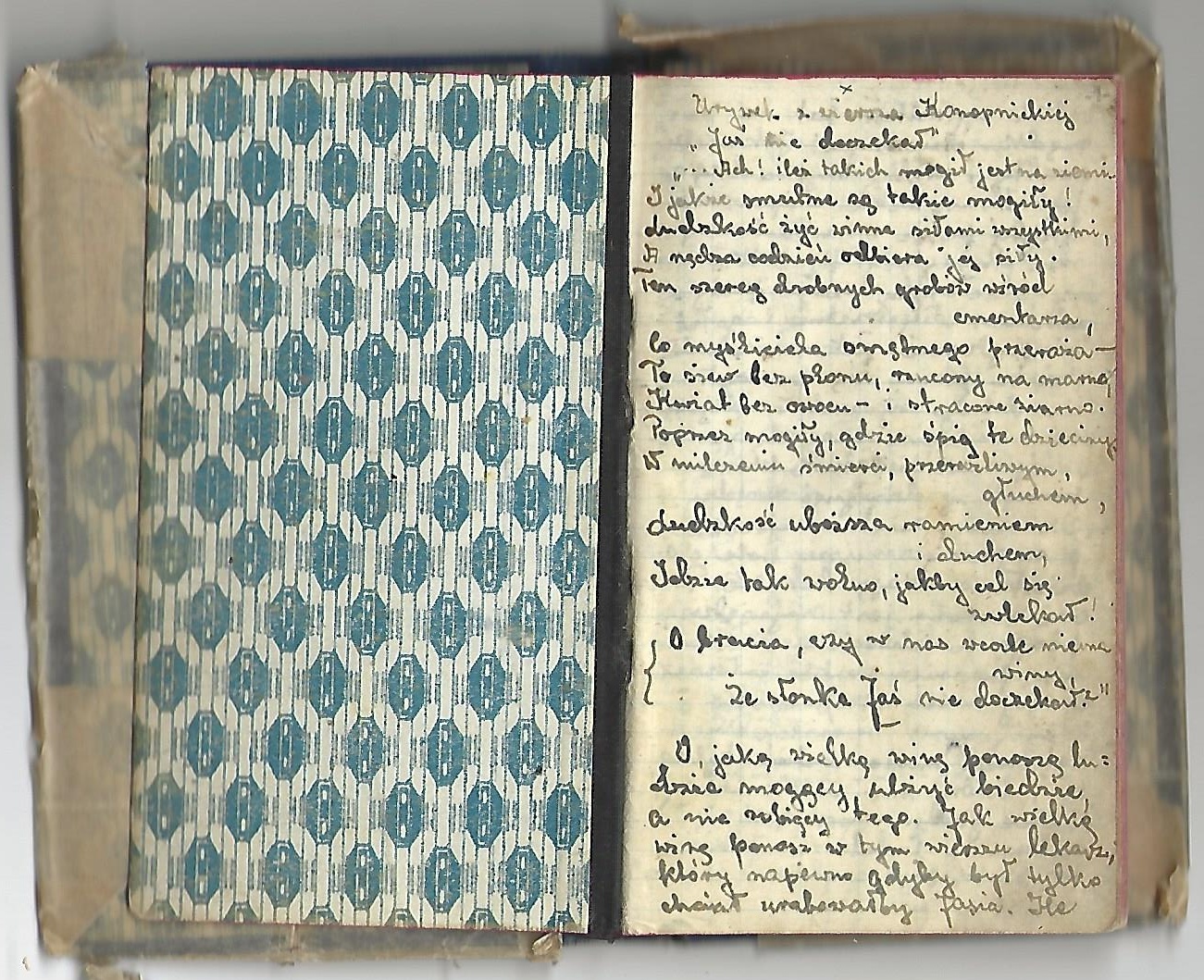
In August 1944, during the Warsaw Uprising, a teenage girl named Alina stood in a long line for water at one of the few wells in Żoliborz. Beside her was her 12-year-old sister, Dalusia.
Then the Stukas came. The girls took cover under an apple tree and watched the planes dive straight at them. Bombs fell three at a time, round after round.
Alina wrote: “we stand motionless… words can’t pass through the constricted throat.”
When it was over, she noted that the German pilots flew back to their bases for breakfast.
Author Avi Dobzinski said that page still stops him, no matter how many times he reads it.
It comes from the diaries Alina kept all her life, the basis of his debut novel, The Warsaw Diary Keeper.
The diaries passed after Alina’s death to her niece, Jola, who is now Dobzinski’s wife. The couple fell in love at 15, were pulled apart by life, and found each other again nearly 50 years later. When they began their life together, Jola asked him to help with the diaries.
Everything was handwritten in Polish, and he understood nothing at first. Only once the pages were translated into Hebrew did he realise what he was holding.
“These were not just old pages but whole lives, still waiting for a reader,” Dobzinski told The AJN.
Dobzinski is 73 and had never written anything before, but he felt the need to get Alina’s stories written down.
“Firsthand testimonies are disappearing, and I believe a novel can carry a diary into the reader’s heart in a way that lasts,” he explained. “A diary is bound to the moment of each entry. It has silences and gaps. Sometimes great pain is set down in a single thin line, and sometimes a tiny detail holds the weight of a world.”
The road to the finished book was long.
He scanned and transcribed the diaries, and they were translated into Hebrew by people, with no AI involved. That took two years. Yad Vashem asked him to prepare a timeline, which took another month, but six months later said the project was beyond its budget. Two leading writers each wanted two years and complete independence to ghostwrite it.
“Firsthand testimonies are disappearing, and I believe a novel can carry a diary into the reader’s heart in a way that lasts.”
Dobzinski worried he might invest so much work and money, only to set their version aside, so he decided to write it himself. It took two years and three editors.
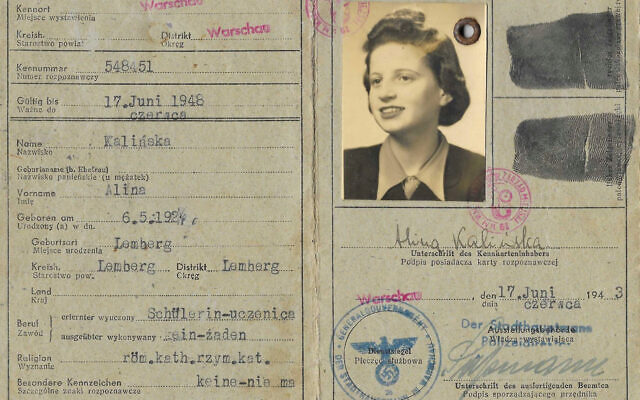
Through the research and writing process, Dobzinski said what surprised him most was Alina’s father, Oskar, a mathematics professor who became a Polish Catholic named Stanisław Kaliński.
“He was no storybook hero, and that is exactly what gripped me. He was a quiet, calculating man who refused to let the war swallow his family,” he said.
Oskar erased his own name and lived inside a borrowed identity, walking among the men sent to destroy him as if he belonged there. He worked for the underground and risked everything to carry false papers to the people he loved. He brought his wife and daughters out alive.
Some 80 years later, a one-page fax brought another branch of the family back into the story. As the book neared completion, Jola wanted a cousin from that branch to know about it. They had not been in touch for about 50 years, and she remembered only a name, a profession and a city in Germany.
Dobzinski found two doctors with that surname working in the same practice there and guessed they might be the cousin’s sons. They sent a one-page fax in German. Soon after, the cousin wrote back, naming her father, her grandfather and the city where the family’s story began. Her side had also survived the war under false Polish names. The papers Oskar carried had saved her grandfather and father.
For Jewish readers, Dobzinski has a clear hope.
“I hope they meet Jews who refused to be victims,” he said. “For six years this family fought for its life with no weapons but their minds.”
 Oskar and Wanda spoke flawless Polish and German and knew the culture, the prayers and the customs of the people around them. Many Jews on the streets of occupied Poland were caught simply because someone heard an accent in their reply. At the end of the book, Oskar tells his students that education is resistance.
“A diary written in real time, by a teenage girl who did not know how it would end, is one of the most honest witnesses we have,” Dobzinski pointed out.
Alina and Dalusia never spoke about those days. Everything Dobzinski knows, he learned from the pages Alina left behind. And Dobzinski said it’s crucial that families continue reading and listening to those who have come before.
“If any of your readers have family letters or diaries in a drawer, I hope they will open them,” he said. “They may hold more than they expect. And if they still have parents or grandparents who lived through those years, they should ask them, and keep asking, before it is too late.”
The Kindle edition of The Warsaw Diary Keeper will be released on November 22.
comments