




When Rabbi Mark Wildes opens his new book, The Jewish Experience: Discovering the Soul of Jewish Thought and Practice, he does not begin in the beit midrash. He begins in Cupertino.
The framing device is Simon Sinek’s now-canonical TED talk on what separates the Apple corporation from its rivals: not the elegance of the products but the clarity of the purpose behind them. “People don’t buy what you do,” Sinek argued, “they buy why you do it.” Wildes thinks the same applies to Judaism.
It could sound gimmicky in less reflective hands – a tech-marketing slogan dragooned into service for the world’s oldest monotheism. But Wildes, who has spent 27 years running the Manhattan Jewish Experience teaching young professionals whose Jewish education effectively stopped at their bar mitzvah, is making a more serious diagnosis. Jews, he argues, have been served plenty of the what and the how of our tradition, but the why has been badly neglected.
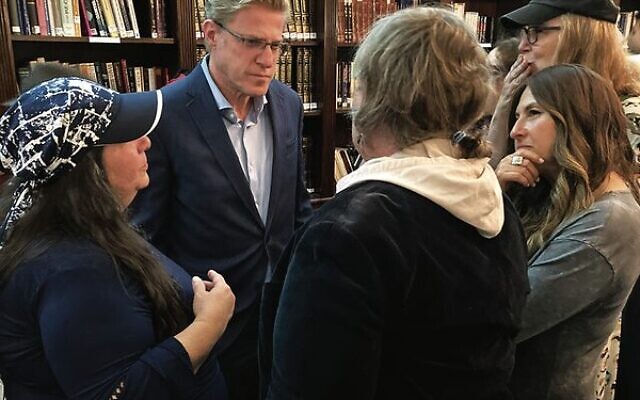
“Most Jews don’t really spend any time learning about this kind of thing,” he says, “and then they’re kind of expected to observe the rituals and keep Shabbat and eat this and don’t eat that. But if you don’t get the whole context, it’s just not interesting to people.”
Hence the book’s structure. Each of its six chapters – on God, Torah, prayer, kindness and charity, Shabbat, and tikkun olam – gives the why an unhurried 15 or 20 pages before turning to the how. Wildes is unembarrassed about the order. “The rituals only come alive when you know the why.”
He refuses to accept that the why can be skipped on the grounds that we are a religion of doing ahead of believing. “You can’t inspire somebody to be consistently committed to a tradition,” he says, “if you don’t buy into the basic premises.”
Whether the whys themselves can persuade a secular sceptic is a separate question. Wildes does not claim a conversion rate. He claims a respect rate.
He recalls a Soviet-trained mathematician who attended his classes in his rabbinic-school years and stood up at every session to launch torpedoes at the very idea of God. Wildes referred him to a senior mentor, Rabbi Joseph Grunblatt.

Afterwards, Grunblatt rang to relay what the man had told him: “Before I started coming to Rabbi Wildes’ classes, I was convinced that anyone who believed in God was a fool. I still don’t believe in God, but now I believe that there are intelligent people who do.” That, Wildes says, is a realistic target.
“Too many people look upon it as silly and mythical and magical, but nothing really compelling for them personally. I’ve devoted my life to dispelling that.”
The argument has acquired a new audience over the past three years. Wildes calls them October 8 Jews – those who walked into his programs not because they were searching for community, but because the world had forced them to.
He tells the story of a 24-year-old who showed up at his office the day after October 7, having just had a furious row with a non-Jewish girlfriend who had taken Hamas’s side. The young man had two questions. How do I forgive her? And, more searchingly, why am I feeling anything at all?
Wildes recounts him saying, “I go to Yom Kippur services once a year. I don’t particularly like it, and yet I’m all upset about this.” Wildes offered the Lubavitcher Rebbe’s image of the pintele yid – the irreducible Jewish spark that flares at moments of love or grief or threat. The student is still attending classes.
The most provocative chapter is the one on tikkun olam. Wildes is impatient with the way “repairing the world” has been peeled off from the Torah that supplied the phrase and pressed into service for political programs that often run flatly counter to halachic and ethical sense.
He returns to Sodom, where Lot – Abraham’s nephew, who had absorbed his uncle’s gospel of hospitality – offered his own daughters to the mob in order to honour the value of welcoming guests.
“That’s what happens when you blow one value up to the exclusion of all others. That’s unfortunately what happened with a lot of the social justice warriors. They took a certain value, blew it up, and negated everything else.”
He is not, he insists, surrendering the phrase. “It would be a shame if we never used the term anymore because it had been misused by some groups. We have to take it back and bring it back to what it was meant to be.”
Wildes is sceptical of denominational categories generally – Reform, Conservative, Orthodox, Reconstructionist – he is not against any of them in principle, but the young professionals walking through MJE’s doors simply do not carry the denominational loyalty their parents did.
“When you’re living in Manhattan, they’re not going anymore to the synagogue where they were raised. They’re going to whatever speaks to them and inspires them.”
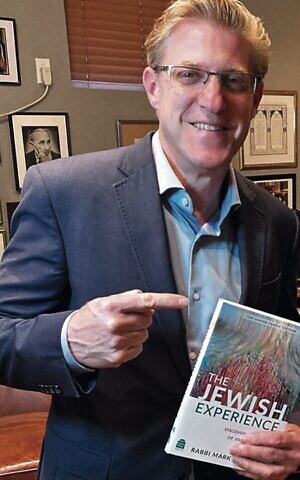
Photo: Susie Mendelsohn, Jewish Link News
The Judaism that wins their attention, he predicts, will be the one that addresses their lives, the technology detox of Shabbat, or the meditative architecture of prayer, not the one that wins denominational turf wars.
But he closes on the most quietly persuasive note of the interview, on the perennial complaint that Judaism is a religion of nos. The nos, he insists, are not refusals but redirections – parents saying no from love, because they know what their child needs in order to flourish. “It’s like playing soccer on a roof without a fence. The boundaries are there for very specific reasons. When you say no to one thing, you’re saying yes to something else.”
Wildes writes from and for Manhattan. Whether his diagnosis fits our smaller, more tightly woven community at the other end of the world is a separate question – and one we put to two of Australia’s rabbis, from opposite ends of the denominational spectrum.
The Jewish Experience: Discovering the Soul of Jewish Thought and Practice is published by Maggid Books, an imprint of Koren Publishers. It is the first volume of a planned trilogy.
An Orthodox view
Rabbi Moshe Kahn heads Chabad Youth in Melbourne, leads DaMinyan and Young Jewish Professionals, and chairs the Rabbinic Council of Victoria.
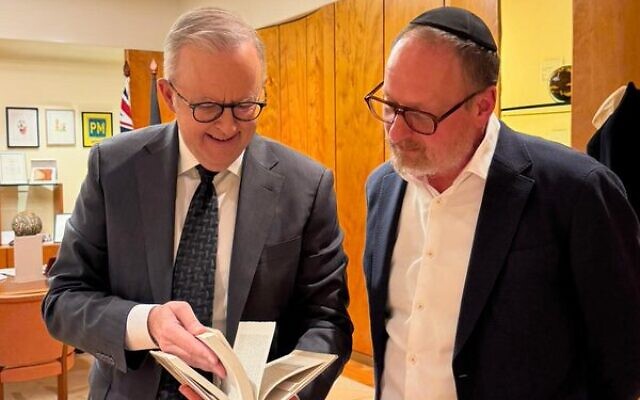
Rabbi Wildes is identifying something very real, but I wouldn’t say it’s new. He is articulating a shift that has been underway for some time: Jews today are often less motivated by obligation, denomination or institutional loyalty, and more by meaning, identity, purpose and authenticity.
What is new is the urgency, especially post-October 7. There has been a profound awakening among many Jews who previously felt distant from Jewish communal life. Suddenly the questions “Who am I?”, “What does being Jewish mean?” and “Where do I belong?” feel existential rather than theoretical.
There is truth to the idea that we have sometimes overemphasised the what and the how at the expense of the why. Orthodoxy in particular has done an excellent job transmitting practice, standards and continuity, but not always the inner meaning behind them. Younger Jews are looking not just for information, but for inspiration – for Judaism explained not only as a system of laws, but as a compelling framework for a meaningful, elevated and connected life.
That said, we should be careful not to oversimplify. Judaism has always contained both dimensions. Torah and mitzvot are not merely symbolic ideas detached from action. The challenge is to connect the practice to the purpose in a way that resonates.
Some of his observations are more applicable to the American landscape than the Australian one. Australia is smaller, more communal and less denominationally fragmented. There is more crossover between communities here, and a stronger sense of collective Jewish identity even among people with different levels of observance.
But the broader trends he describes exist here too. Younger Jews are less interested in labels than previous generations, asking more basic and personal questions: “Is this meaningful?”, “Are these my people?”, “Can I belong here?”
In that sense, authenticity matters more than branding. People are drawn to sincerity, warmth and depth. A great deal of positive work is already happening in the Australian Orthodox community – initiatives focused on engagement, learning and accessible spirituality. DaMinyan has resonated with young adults precisely because it combines authentic Orthodox Judaism with warmth and community; YJP because young professionals are searching for connection as much as programming.
October 7 has left many once-disengaged Jews actively searching. The challenge is whether we are prepared not only to welcome them, but to speak to them in a language they can hear. The hunger is real – and when Judaism is presented with depth and warmth, people respond.
A Progressive view
Rabbi Allison Conyer chairs the Progressive movement’s Assembly of Rabbis and Cantors of Australia, New Zealand and Asia and is senior rabbi at Melbourne’s Temple Beth Israel.
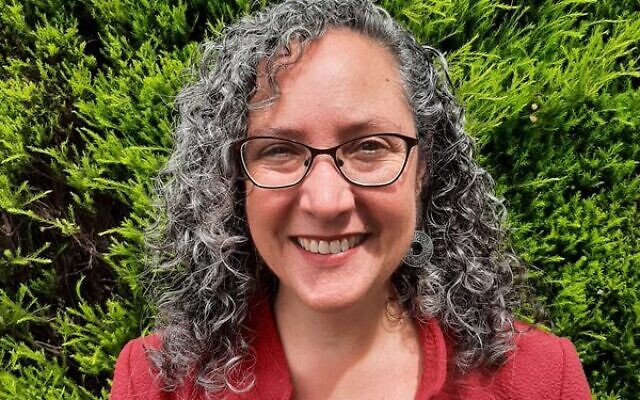
As a progressive rabbi, I actually totally disagree with his central thesis. The progressive movement has, for literally two centuries, focused on the why and not the what and the how – quite the opposite of what he describes. We’ve always said: figure out what it means, make an informed choice, know why you’re doing what you’re doing. Even the psychology supports this. The more meaning you make out of something, the more likely it is to stick with you.
On denominational labels, though, I completely agree with him, and I think it’s a move we’d been making even before October 7. People are going to events, to speakers, to activities in the Jewish community because it interests them – – of who’s speaking, who’s performing, who’s going to be there.
That’s what brings people in, not the ideology. We’re past the era of ideological Jews. We’re moving into a time when Jews just want to connect, for whatever reason.
Will the labels wither away? I think there are pros and cons. They’re weakening, because they’re not as necessary, but I also think they’ll be around for a long time, because they bring people together and help them find like-minded people.
You go to a progressive synagogue, you know there’ll probably be musical instruments and tunes you recognise. You go to an Orthodox shule, you recognise the hum of davening. The label prepares you for what you’re walking into.
I’d actually say we’re further behind America, not ahead. American Judaism has been on this path much longer. In Melbourne in particular there’s a tribal loyalty – people have their footy teams, and they’re loyal no matter what. America now has generations of unaffiliated Jews birthing unaffiliated Jews; we’re growing in that direction, but it’s not the same.
As for the post-October 7 surge, whether it lasts depends on what we do with it. People are coming because they want to feel safe, to get away from being told they’re bad and wrong and being attacked. But if it’s only about refuge – defining ourselves by antisemitism, by the sense that they’re out to get us – that’s short-lived.
We seek refuge, and as soon as the threat goes away, we go back our merry way. The real challenge is to help these newcomers connect to something more: a living, joyous, meaningful community. If they connect to that positively, they’ll stay involved. If it’s only refuge, they’ll go back to normal once the world lets them.
Labels can help people find their own and know what to expect, but they become harmful when they’re used to judge – to say someone isn’t doing it right or isn’t good enough. It’s all a matter of what we do with them.
comments