



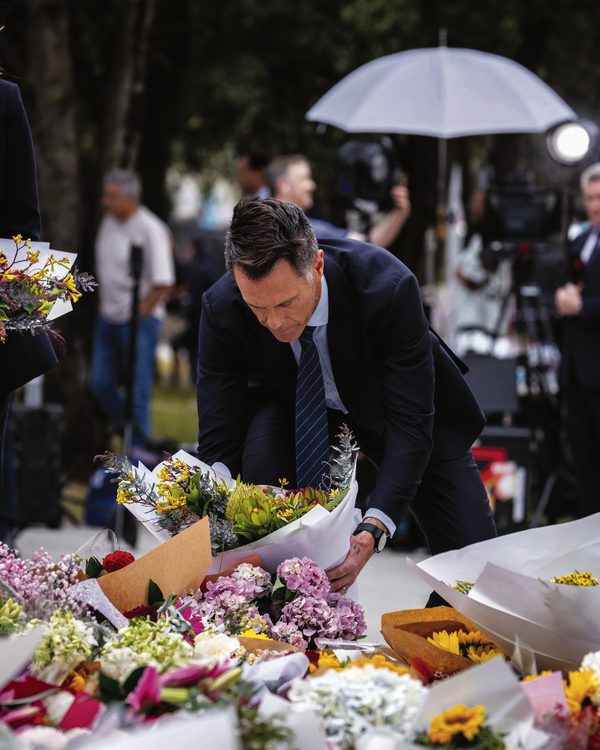
Since December 14, when 15 innocent people were murdered in the Chanukah terror attack at Bondi Beach, NSW Premier Chris Minns has been on a journey through grief alongside the Jewish community – attending nine funerals, visiting synagogues, schools and Jewish institutions, and bearing witness to both unspeakable loss and remarkable resilience.
“I think it’s taken a toll on me and many people in the community, but I do get a lot of strength from seeing members of the Jewish community and NSW police officers and public servants who stepped up in a difficult time to do an incredible job,” Minns tells The AJN.
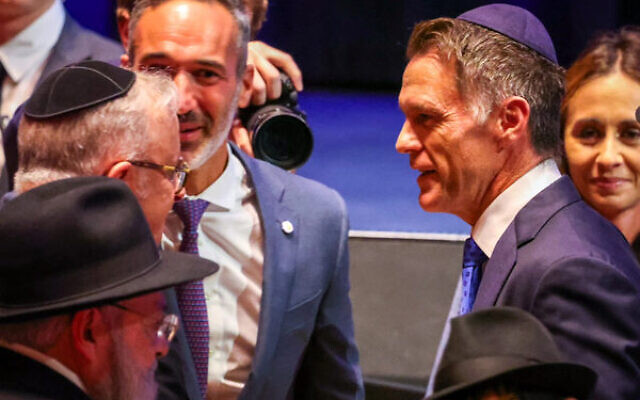
He makes special mention of Chabad of Bondi Rabbi Yehoram Ulman, who lost his son-in-law Rabbi Eli Schlanger in the attack yet has continued to lead his devastated community with dignity and strength.
“I’ve often spoken about Rabbi Ulman, who personally lost so much during that period, and other friends of mine – people who are my friends, people like Benny from the same Chabad community and Rabbi Ulman’s son who is also a rabbi. I’ve seen them do their duty, even in the face of unimaginable stress and devastation, and I think that’s given me and a lot of other public officials the motivation to keep going.”
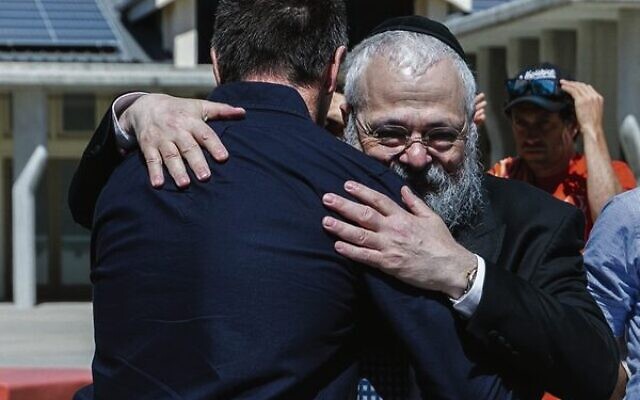
It’s this resilience and determination to bring light over darkness that has moved Minns. Rather than being crushed by grief, he has witnessed a community that continues to hope, to pray for peace, even as they mourn.
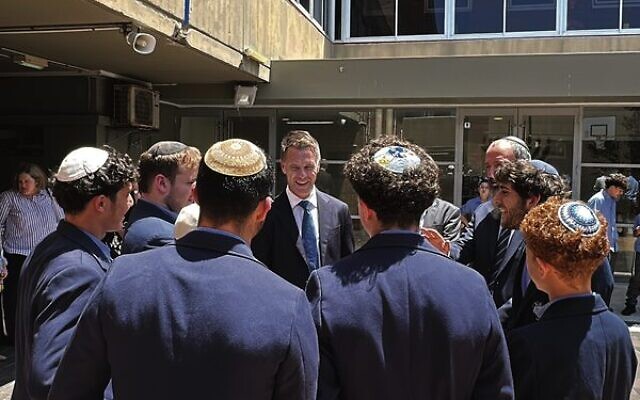
Minns quietly visited Kesser Torah College on the Friday students returned to school after the summer holidays. The visit provided what Minns describes as his “biggest lift” in weeks.
“A Jewish school, incredible leadership, wonderful president, wonderful principal, and the kids there were just optimistic, hopeful, focused on the future,” he says.
“And again, that gave me a massive lift. I can’t tell you what a big lift they gave me going into that weekend.”
Attending nine funerals
Minns attended nine of the 15 funerals, a choice driven by his role as the state’s leader, but also by a deep sense of personal responsibility.
“My sense was that, as the Premier of the state, I was representing millions and millions of people. I’m just one person, but representing millions of people to show public support, community support for those that lost their lives,” he says.
What struck him most powerfully at the funeral services was how Rabbi Ulman managed to honour each individual life even in the shadow of such horror.
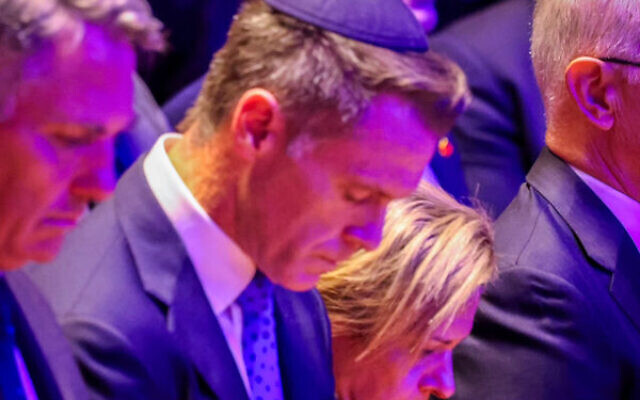
“One of the incredible things that happened during those funerals was that even though there was a shocking crime, and it was the worst terrorism event the country’s ever seen, Rabbi Ulman was able to not lose the sense of that person’s life or their impact on their community or their family,” Minns says.
“So the impact of the crime didn’t wash away the impact of the life, which I thought was a incredible thing to pull off. Not an easy thing to do, but you were really drawn into the lives that were lived by those people that were killed, and I’m really grateful for that.”
Taking responsibility
While Minns draws strength from the community’s resilience, he has also acknowledged that the state failed to protect its Jewish Australians that day.
“It is the highest duty of any government to protect its citizens, and it is my sad duty to report that on that day, in that community, we did not do our job,” Minns said in Parliament in the weeks following the attack.
Asked what could have been done better, Minns says, “At its basic level, it’s direct security and support for the Jewish community to protect Jewish life.
“We need to make major changes in relation to safety and security. We’re working up those plans as we speak, and we’ll announce them soon,” he says.
“The Jewish community has got every right to feel safe, and I think most people would accept that today that’s not the case. In order to rebuild Jewish public life, we have to get to that point. So that’s number one, I think, and then it goes down the line.
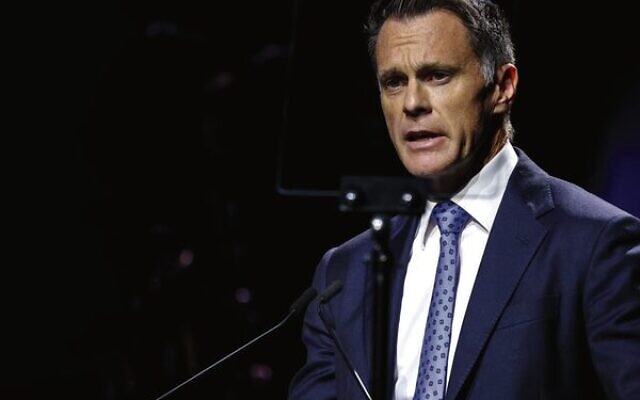
“These things don’t start with bullets on a beach in Bondi. They start with antisemitism and hate and treating the Jewish community as an ‘other’; trying to ostracise them, vilify them, be bigoted towards them, and then it grows into an act of violence that is devastating. So my sense is change needs to be driven in a comprehensive way so that we’re confronting racism and antisemitism when we see it, not when it’s too late.”
The Premier is adamant that this moment cannot be wasted, that the response cannot be to simply return to the way things were before December 14.
“I think I would regret, and I think the community would regret this missed opportunity, if we just stopped and said, Oh, look, things are the same as they were before the 14th of December, nothing needs to change. That’s not true,” he says. “It’s that kind of head in the sand approach to this horrible, violent crime that means you’re not doing everything you can to protect our community, our Jewish community, or any member of our community. So that’s really important, and we need to progress it.”
His second greatest fear – after another terrorist attack – is that over time, people may believe change is not necessary.
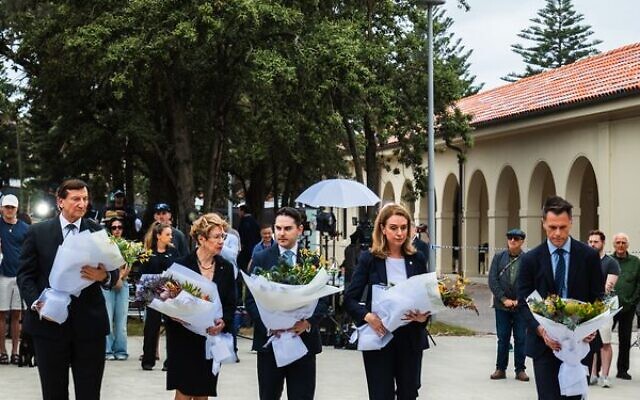
“Other than having another violent terrorist event, my second greatest fear is that in six months, 12 months, two years from now, there’s a sense from the majority of people who say, Oh, we’re back to normal now, we don’t need to change. We do need to change,” Minns says.
“The grim reality is that these people who are responsible for this horrible crime live here in our community.”
Standing with the Jewish community
When asked about his unwavering support for the Jewish community, Minns’s response is both personal and principled.
“I’m an Australian, and I think my job is to protect every Australian in all circumstances,” he says.
“I personally have been amazed by Jewish Australians’ contribution to Australian life. It’s incredible. It’s one of the most amazing human stories that we have in our country – people that have come from bigotry, violence and genocide in Europe to the other side of the world, to start all over again, often with their families completely killed and eliminated, and to begin again with nothing and build these amazing communities. I’m not talking just about the businesses or the enterprises, I’m talking about their contribution to Australian civic, public, legal and business life. It’s incredible.
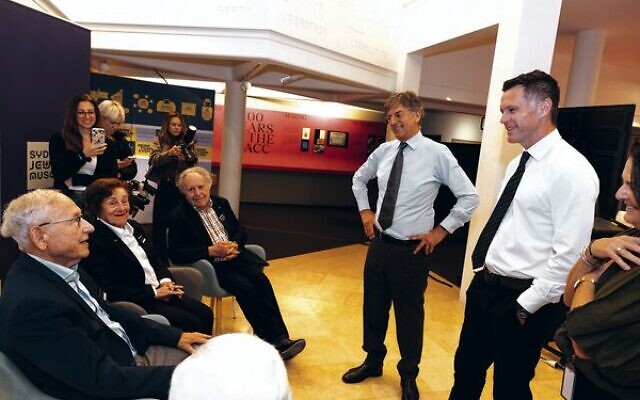
“But I would do this for anyone. What I’m resolutely of the view of, and I will never change my mind here, is that racism is racism. When you see bigotry in our community, it is wrong for people to turn a blind eye because it applies to the Jewish community, or because somebody is a Zionist, or because they’ve got a passionate belief in Israel – that is wrong. And as soon as we start saying there are categories of racism and some don’t apply, well that’s a slippery slope to racism and bigotry in Australia.”
Hope for the Royal Commission
When asked what he hopes will emerge from the Royal Commission into Antisemitism, Minns says “answers”.
“I think we know bits and pieces of the jigsaw puzzle, but for the country’s worst terrorism event, we need to have a comprehensive understanding of exactly what happened and what led up to it, so that’s what I’m hoping for.”
Confronting online hate
The Premier is clear that hate speech, whether shouted in the street or typed on a keyboard, must have equal consequences.
“Our hate speech laws apply whether they’re screamed in Pitt Street or someone posts something online, it doesn’t matter. I think that there is a bit of a modern malady that suggests that if you’re typing it in your bedroom or in your basement, somehow it doesn’t count. It does. And maybe that’s an education piece for young people or old people or whoever’s online. But it doesn’t matter, if you push that rhetoric into the world, then you’ve got to be held accountable for it.”
Education
Minns sees education in schools about the Holocaust and antisemitism as crucial to countering hate.
“I remember going to the Sydney Jewish Museum in Darlinghurst when I was in year 11 or year 12, and it was a very moving but really important part of our school curriculum,” he says.

“We’re determined to ensure that continues, so that the history of the creation of the State of Israel, the history of the Shoah, what it means in terms of Jewish identity and how this ancient religion has been, for most of its existence, a minority group within a country [is taught]. I think they’re empowering and important stories.
“That’s on one level. On another level, we have to be really unambiguous about what it means to live in Australia. We’ve got people from around the world, different races, different religions, different cultures and backgrounds, but they’re all here for a reason. We’re happy that people have come to our country, but it comes with certain responsibilities.
“We shouldn’t tolerate a situation where we’re separating or vilifying one group or another. If we allow that to happen and allow it to stand, it will be a race to the bottom in our country.”
comments