



Life after the Dubai passport affair
WHETHER or not the forged Israeli passports uncovered by Dubai police belonged to Mossad operatives, Israel's intelligence gathering network may now be hindered.
 AHRON SHAPIRO
IT sounds like something out of a spy movie. Hamas arms smuggler Mahmoud al-Mabhouh checks into a Dubai hotel on January 19, supposedly in town to finalise an arms deal.
According to Dubai police, waiting for him that afternoon are a team of 11 assassins who themselves arrived a few hours earlier, and checked into a number of hotels in the area.
Dressed for business meetings or for tennis, they blend in easily with other tourists in the bustling city. Some spend some time at one of the United Arab Emirates’ (UAE) famous shopping malls. Others take steps to disguise their appearance.
Police have a great deal of footage from surveillance tapes covering the alleged assassins’ movements, but none capture the actual moment when one or more agents gain access to Mabhouh’s room and smother him with a pillow. His body is discovered the following day.
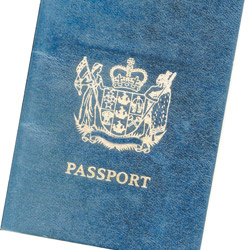
An investigation is launched and, on February 15, Dubai police reveal a number of passports — apparently forged — belonging to suspects they believe were actively involved in the assassination. Most of these are passports belong to immigrants in Israel with dual citizenship, including six Britons, one French, one German and three Irish nationals.
Nine days later, on February 24, the UAE’s Information Ministry releases 15 new names of suspects that were not in Dubai at the time of the assassination but, they allege, are part of a¬† logistical planning team.
Among those in the latter group are, as we now know too well, three Australians, as well as six more British, three Irish and three French nationals.
The police add that more suspects might yet be revealed in the days ahead.
The circumstantial conspiratorial picture that Dubai police are trying to paint would have us believe that up to 30 different Mossad agents were involved in this particular operation, and that the advance visits in order to arrange the assassination went back almost a year.
Such a scenario has been soundly rejected by Israeli commentators familiar with the modus operandi of the Mossad, on the grounds that no commander would put so many different agents at risk for one target.
Going along with the hypothesis that the Mossad was indeed the party responsible for the hit, a much more plausible explanation for the huge number of suspects would be that Israeli spies had used Dubai — a Middle Eastern travel hub, after all — for intelligence gathering and spy trafficking that extended far beyond this particular mission to kill Mabhouh.
It would appear that in the days following the assassination, the UAE somehow worked out a litmus test to identify fraudulent passports in its border control database, and then simply decided to tie all of them to the killing, regardless of whether they were the ones actually present for the operation.
Indeed, this would explain the nine-day delay between the announcement of the first round of suspects and the second.
The net they cast using this method hauled in evidence of many more spies than they bargained for.
Whether or not the Mossad was involved in the assassination, there are at least two things that can be learnt in the aftermath of this affair.
Firstly, it’s fairly obvious that at least one technique used for conducting international espionage under a false identity has been exposed. Whatever method the Dubai authorities are now using to uncover the fraudulent passports, it stands to reason it can be used to detect any false passport for any spy that uses this technique.
Secondly, it is clear that border police throughout the Middle East are now going to be doubly vigilant about screening international travellers. This means that it’s going to be harder for western intelligence, including the Mossad, to conduct operations in the Persian Gulf.
Both of these outcomes have negative consequences for the Israeli intelligence community, at the precise moment that their services are needed the most.
Jerusalem needs every single pair of its covert eyes and ears on deck in order to feed it the most reliable information about Iran’s nuclear program.
The reason for this is simple. Israel could have the best air force — flying the best planes and flown by the best pilots — but in the event of a mission to disable Iran’s nuclear capability, all that would be worthless if the planes could not pinpoint a target.
No doubt, Israeli Prime Minister Binyamin Netanyahu holds in his hands today the precise location of Iran’s nuclear material, its centrifuges, its active nuclear development sites — even the hidden ones — and its key nuclear planners and scientists.
However, there is nothing more useless than old intelligence reports, and if the Mossad has come out of the “Dubai Affair” in any way hobbled — either by its direct implication or indirectly as a result of a more difficult environment in which to conduct intelligence gathering — then Netanyahu might not have that crucial information tomorrow.
What does this mean for Israel? It could force the country to act sooner against Iran than it would have considered doing otherwise, on the assumption that its intelligence window is closing on the operation.
Conversely, it could take an Israeli military option against Iran entirely off the table and put all of Israel’s eggs in the sanctions basket, hoping and praying that western efforts to convince Teheran to curb its nuclear program, spearheaded by US President Barack Obama, will succeed.
In the latter scenario, Israel would continue to maintain outward appearances that it is considering¬† a pre-emptive strike in order to maintain an air of deterrence, but in actuality, it would become nothing more than a bluff.¬† Unfortunately, the ramifications of the Dubai Affair may go even further than the short-term problem of Iran. Mossad agents do important intelligence gathering work in Syria, Lebanon and elsewhere, which has a holistic impact upon Israel’s security. Moreover, Israel’s spies are an integral part of the intelligence community among all the western powers.
This means that a hindered Mossad instantly translates into a stronger Hezbollah and Hamas — but also a stronger al-Qaeda.
This is bad news for Israel, naturally. But even if it is not yet readily apparent, it is also bad news for the war against terrorism in the United States, Europe and Australia.
Mossad: through the spyhole
The Mossad is the Institute for Intelligence and Special Operations — the national intelligence agency of Israel.
It is one of three main entities in the Israeli intelligence community, along with Aman (military intelligence) and Shin Bet (internal security), but its director reports directly to the Prime Minister.
Established in December 1949 by David Ben Gurion, the Mossad is charged with collecting information, analysing evidence and performing special covert operations beyond Israel’s borders. The organisation’s motto is taken from the Book of Proverbs: “Without guidance do a people fall, and deliverance is in a multitude of counsellors”.
Current director Meir Dagan states that the organisation’s role is “to identify and block threats to the state and its citizens, and to reinforce the country’s security and safety”.
The Mossad Charter states: “We uphold the values of justice, integrity, morality, humility, personal responsibility, reliability, discipline and discretion.”
The following are just a few notable dates in the history of the Mossad — dates that correspond with some of the group’s successes and failures, as well as Israel’s internal debate regarding its mandate:
May 11, 1960 – A team of Mossad agents abduct Nazi war criminal Adolf Eichmann, widely regarded as the architect of the Holocaust, from Argentina and transport him to Israel. Subsequently, Eichmann is put on trial, found guilty, and executed.
September 1972 — Following the murder of 11 Israeli athletes at the Munich Olympics by Palestinian terrorists, prime minister Golda Meir authorises a deterrent response, that includes the targeted assassination of all the terrorists involved in the operation — a broad campaign that takes up to two decades to complete.
July 21, 1973 — Ahmed Bouchiki, a Moroccan waiter in Lillehammer, Norway, is killed by Mossad agents posing as Canadians in a case of mistaken identity connected with the Munich-linked assassinations.
September 25, 1997 —¬† In a failed operation, Mossad assassins posing as Canadians squirt poison into the ear of Hamas official Khaled Mashaal in Amman, in an operation thought to be a reprisal for suicide bus bombings in Jerusalem. The Mossad agents are captured. In a deal with Jordan, Israel is forced to turn over the antidote, as well as release Hamas’ spiritual leader, Sheikh Ahmed Yassin, in order to recover its agents.
February 17, 1998 – A commission investigating the failed Mashaal assassination produces findings that absolve the prime minister, Binyamin Netanyahu, but that criticise the head of the Mossad. The report does not challenge what it identifies as an established policy of successive Israeli governments that no place in the world should be allowed to serve as a safe harbour for those who plan to carry out murders and acts of terror in Israel. However, the commission proposes that the government discuss this policy, define its scope, and establish firm rules for its implementation.
comments