



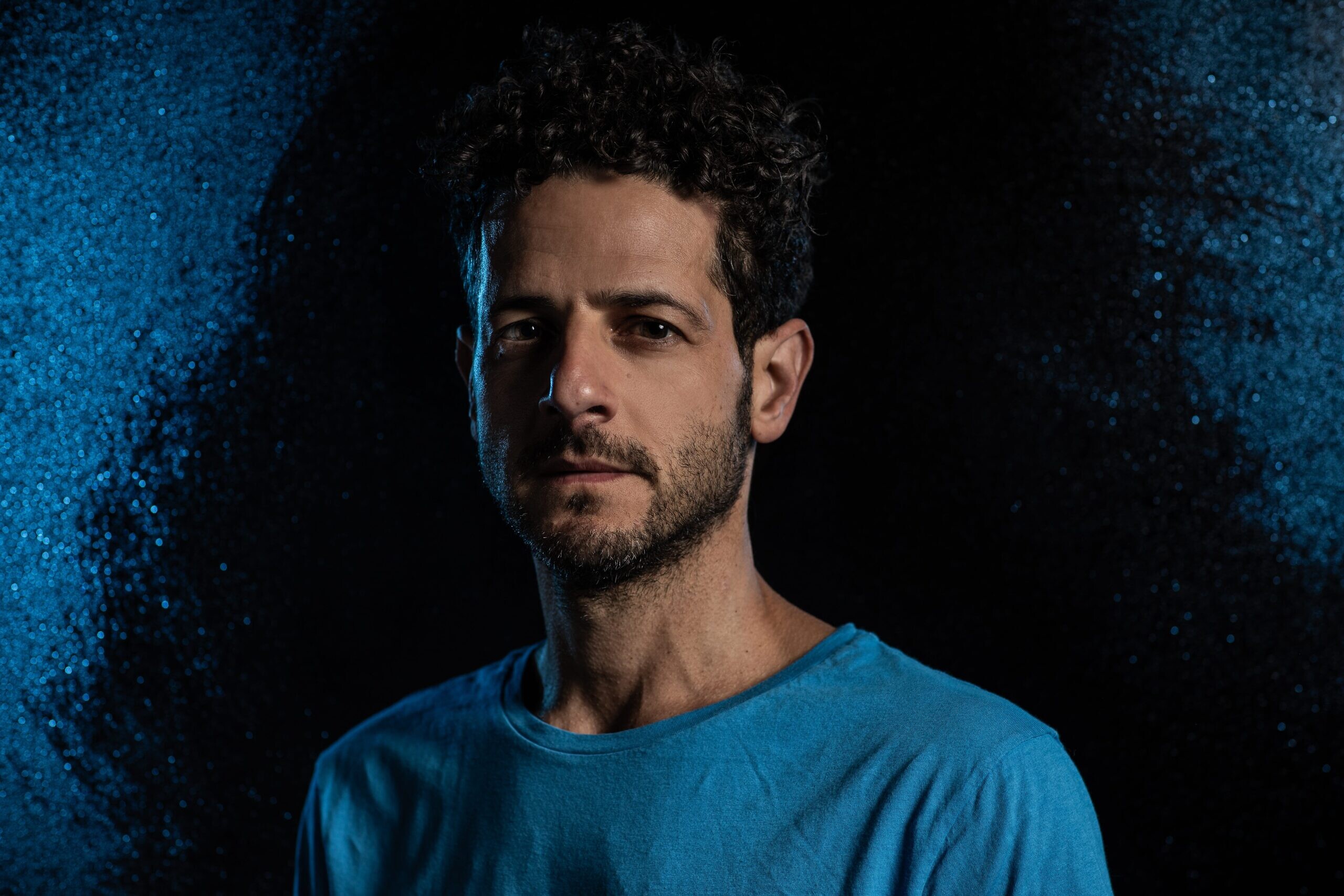
Twenty years is a lifetime in the world of music, yet for singer-songwriter Lior, the melodies of his debut album, Autumn Flow, still carry the scent of youth.
And now, he’s preparing to step back onto the stage where it all began, celebrating a milestone that neither he nor his audience could have truly predicted when the first notes were written and sung way back in 2005.
As Lior has explained in the past, he was simply hoping to sell a few thousand copies. Instead, he found himself driving home late one night to the sound of Triple J announcers marvelling at an inundation of listener calls. Within months, he was standing at the ARIA Awards, nominated for best male artist alongside legends like Paul Kelly.
“I looked at it and thought, if people hear this and love it, it’s a bonus, but I just wanted to do it as a life experience. And the fact that it resonated with so many people was just so wonderful.”
Reflecting on those early days, Lior describes the period as one of beautiful innocence.
“It was a beautiful time, because it was very innocent. I obviously had no idea that it would resonate with so many people in the way that it did,” he told The AJN during a candid chat about his upcoming anniversary show.
“I just always dreamed of writing and recording an album of my songs. And so I spent the greater part of my early 20s writing songs towards this album. And that was it for me. I looked at it and thought, if people hear this and love it, it’s a bonus, but I just wanted to do it as a life experience. And the fact that it resonated with so many people was just so wonderful.”
Harking back to 2005, Lior explained that the record was made independently and organically without a record label. The musician worked closely with a band and producer and made all the artistic decisions. He said the fact that people fell in love with Autumn Flow validated the choices and decisions he had made.
Now, Lior said, listening and indeed performing tracks from Autumn Flow is like reading old diary entries that still ring true.
“I go back to it once in a while and listen to it, and I have these really mixed but deep feelings about the album. On one hand, I hear the voice of this young man who is fresh into adulthood and there’s a little bit of naivety and idealism to it. There’s an optimism about it, even though several of the songs have a bittersweetness to them,” he said, saying so much of it still resonates.
“It’s like reading a diary and feeling good about the diary entry, and thinking, well, I’m really glad I captured that period of my life, or that way I was feeling back then in such a succinct way.”
“…the beautiful trills and inflections that run through Jewish cantorial music and Arabic music came so naturally to me.”
While hits like ‘This Old Love’ and ‘Daniel’ often take the limelight, Lior finds himself drawn to the more shadowed corners of the tracklist. He notes that ‘The Art of Cruelty’ and ‘Grey Ocean’ have perhaps aged the most gracefully.
Lior’s journey has always been anchored by his heritage. Born in Israel, he moved to Australia at age 10, carrying with him the melodic inflections of the East. His father, an Iraqi Jew, was instrumental in helping him embrace these roots, particularly when collaborating with composer Nigel Westlake on the landmark project, Compassion. What began as an a cappella performance of ‘Avinu Malkeinu’ at a memorial for Westlake’s son grew into a full orchestral commission that spent more than 10 weeks at the top of the ARIA Classical charts.
For Lior, the Jewish identity is not something that can be separated from the art. It is a values-based foundation and a musical “melting pot” of East and West.
“Judaism has obviously shaped me as a person, in terms of the family life and values. And that’s something you can’t quantify. But also, having grown up in Israel, I think you can really hear that in songs like ‘Bedouin Song’,” he said. “Israel is this beautiful melting pot of music from the West and the East. And I vividly remember, on Friday nights they used to play Egyptian movies on TV, and I remember the soundtracks of those and being drawn to the really exotic music that I was hearing. And even though I didn’t play it at the time, when I started singing, the beautiful trills and inflections that run through Jewish cantorial music and Arabic music came so naturally to me.”
Lior explained that he hand-picked what he was drawn to and formed his hybrid style of music to make it uniquely his own.
While Lior acknowledged the difficulty of the current landscape for Jewish creatives, he said he’s fortunate to have a very kind, supportive audience, although, he admitted that the treatment of some of his close friends in the arts has been deeply disappointing.
“It certainly feels different just being a Jewish artist at the moment,” he admitted. “I’ve been very disappointed in the way much of the creative sector has handled such disrespect. I think greater society can do much better than this.”
Despite these challenges, Lior remains focused on remembering where he has come from and looking towards the future.
The upcoming Melbourne concert will be a recreation of the album that started it all, played back-to-back with his full band.
“I always like to throw in a little bit of improvisation and deviate, but really, in its essence, we’re sticking to the album,” Lior explained, saying audiences may even be in for a little treat with a few more songs from his catalogue at the end.
For those who have followed his 20-year journey, the evening promises to be more than just a performance. Rather, it’s a moment of collective nostalgia, and a celebration of a career that continues to flow with grace.
Lior will be performing Autumn Flow at the Corner Hotel, Richmond on June 6. For more, visit lior.com.au
comments