



Looking ahead to the day after
I know the road remains long before we will truly see the conclusion of this seemingly endless war.
To watch the return of the remaining 20 living hostages and to begin to imagine a day after the war, was an exuberant moment. Of course, I know there are still too many bereaved parents and families – an entire nation even – waiting for the bodies of loved ones to come home. And I know the road remains long before we will truly see the conclusion of this seemingly endless war. But it was exuberant, nonetheless.
Yet even in celebration, a nagging thought pressed at the back of my mind. How do we begin to ready ourselves for the day after? Not only as a society marred and plagued by antisemitism, but as a Jewish community stretched to its natural limits.
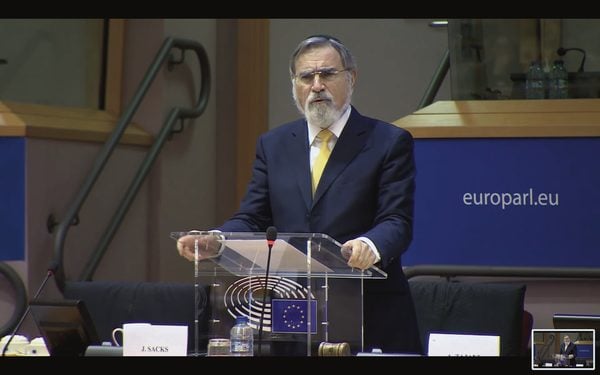
The Talmud hints at the perpetual nature of antisemitism in asking why the Torah was given at Sinai. Its answer: because at that moment of revelation, hatred (sinah) descended on the nations toward the Jewish people. Rabbi Lord Jonathan Sacks, addressing the European Parliament in 2016, observed: “The appearance of antisemitism in a culture is the first symptom of a disease, the early warning sign of collective breakdown.”
We Australian Jews have seen our society deeply shaken by antisemitism. But perhaps the greater concern is what it signals, namely that our broader society itself is fraying. The urgent question now is not simply how to stop antisemitism, but how to piece society back together.
• How do we preserve spaces for storytelling and culture that invite difficult conversations from a place of learning?
comments