



Louise Adler’s War on Jews and Jewish Grief
Would Adler dare tell First Nations groups that complaints of racism are “relentless campaigns”?
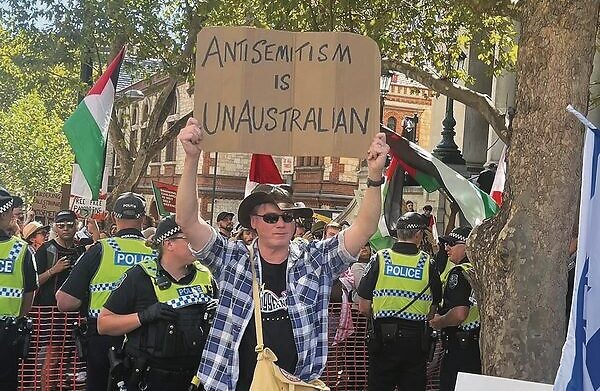
Louise Adler’s latest piece in The Guardian (12/7) accusing the Jewish community of “weaponising Antisemitism” and “over-reach” is not merely wrong. It is corrosively dishonest, intellectually lazy, and morally incoherent. And at this time in this place, where Synagogues are burning, her piece is shameful as it is disgusting.
Cloaked in the high-minded rhetoric of pluralism and free expression, it performs a sleight of hand familiar to anyone who has studied the rhetorical architecture of gaslighting: accuse the accused, invert power dynamics, and weaponise progressive language to delegitimise legitimate pain.
To accuse Jewish communities—just months after the worst massacre of Jews since the Holocaust—of weaponising antisemitism is not just insensitive. It is an act of ideological vandalism. It reduces real trauma to strategic theatre and implies that Jews, uniquely among the world’s minorities, must ask permission to define their own oppression. Adler, who feels she is the victim, once again is turning the Jewish community into her need for a scapegoat.
Would Adler dare tell First Nations groups that complaints of racism are “relentless campaigns”? Would she accuse Muslim Australians of “lobbying too effectively” against Islamophobia? Only with Jews is the assertion of communal safety reframed as coercion.
Let us be clear: Adler’s critique is not new. It is the latest iteration of an old, toxic pattern—accusing Jews of too much power, too much influence, too much voice. It recasts collective defence against a rising tide of global antisemitism as some sinister, manipulative project. It takes the IHRA definition, adopted by 1,200 institutions worldwide—including dozens of democracies—and presents it not as a consensus safeguard, but as a censorship tool. Why? Because it dares to name the thing Adler refuses to confront: that the overlap between anti-Zionism and antisemitism is no longer theoretical. It is empirical, bloody, and undeniable.
What is Adler to make of the little Jewish girl walking near her father’s Shule, who is accused by a passer-by of being “a genocidal killer”? By Adler’s warped logic, it must be the girl’s fault for provoking the stranger because she was wearing that most ‘Zionistic’ of emblems, a Magen David.
What draws Adler so instinctively to the pro-Palestinian cause is not simply politics — it is the seductive mirror of shared victimhood. The Palestinians, in her telling, are not agents but permanent casualties, as if history happened to them, not through them. But victimhood, untethered from responsibility, becomes a trap. The Palestinians are victims, yes — but of their own decisions. Decisions to reject peace offers that would have delivered them a state, not once, but repeatedly. Not everything they demanded — which has always, in part, included the eradication of Israel — but the realistic possibility of statehood alongside it. That rejection was not imposed upon them; it was chosen.
comments