



Fifty years after he stepped off a Hercules onto a runway in Uganda, Rami Sherman is worried. But the IDF veteran’s anxiety is not related external threats to Israel.
“The most I worry, it’s not from the surrounding countries,” he says. “I ask myself, how could we finish the internal conflict?”
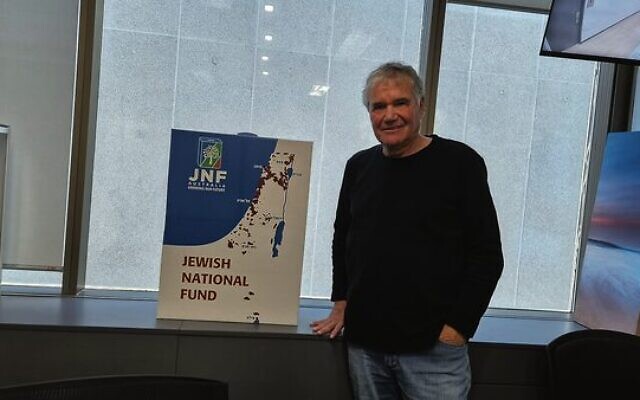
Sherman was Operations Officer at Entebbe, under the command of Yoni Netanyahu. Sitting down in Sydney during a visit coinciding with the mission’s 50th anniversary, the thing he keeps returning to is not the enemy outside.
The internal conflict, he says, could take Israel “to such a darkness, I wouldn’t like to describe” – a darkness in which the existence of the state becomes very difficult.
“Not because of Iran. Not because of a nuclear project. Because of us.”
He describes it as a process rather than a rupture, one in which people have gradually stopped listening to each other. The questions he wants asked are not about who was right.
“How do we live together? Accept different views? Do we know how to live together?”
The question may seem unrelated to a conversation about Entebbe. But for Sherman the two are connected, because what Entebbe gave Israel in 1976 was precisely the clarity he thinks it now lacks.
Sherman was 23 when the plane took off, a kibbutznik from Ma’agan Michael. He had first met mission commander Yoni Netanyahu three years earlier as a 20-year-old soldier on the Golan Heights in the Yom Kippur War, when Netanyahu arrived from the United States as the war opened.
“I wasn’t in a conflict before,” he says. “It’s the first time I met Yoni, and see a brave man. Very clear. He knew how to give an order, to be in the front, to stand and understand the situation very clear. And I said, lucky me, Rami, that in front of you there is a commander like Yoni.”
Fast forward to July 1976, the hijacked flight had been seized at the start of the week. On his own nine-hour flight south, Sherman recalls he kept worrying if there was something he had forgot.
“Maybe I have to tell this one, and I haven’t got time to tell. Maybe I should talk to someone and to inform him something because in my position I was very much connecting the unit with the air force, with other battalions who took part,” he says.
“So always I felt maybe I forgot something, and it was a feeling that I couldn’t fall asleep, even though I was so tired.”
His position gave him one small privilege. “I was lucky because in my position it was easier for me to cross to the cockpit, while most of the soldiers in the back they hardly could see something.” He walked in and out, asking the pilots what was ahead.
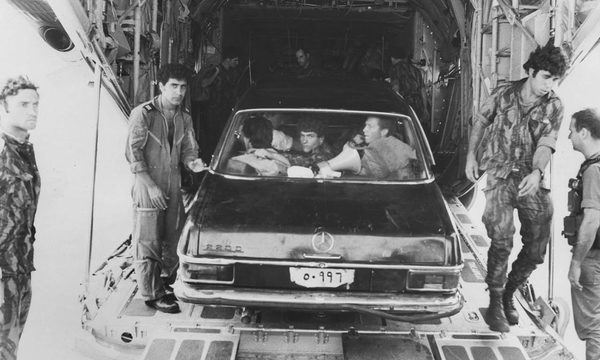
Once they landed, the ramp came down. Thirty-three soldiers exited the aircraft. Sitting in a Jeep, for a moment, Sherman simply enjoyed being outside.
“After almost nine hours in a very difficult flight, to be outside, fresh air, quiet,” he says. “It’s green all over. I enjoyed it. It was a short period of almost forgetting why I am there.”
He remembers the sky full of stars, a little wind, the quietness. No sirens, no running soldiers.
“I really enjoyed, for a short time.”
Two hundred metres from the terminal, two Ugandan soldiers signalled the convoy to stop. Sherman was not in the front Israeli vehicle, and says he knows what happened next from talking to those who were: Netanyahu fired a silenced pistol, one sentry fell, the other escaped, and soldiers from Sherman’s own vehicle spontaneously opened fire.
“That moment was a transformation moment,” he says. “From enjoying Africa, to understanding this is what you’re here for.”
And in that instant, something else surfaced. In May 1974, terrorists had seized a school in the northern Israeli town of Ma’alot. The unit had fought there. Twenty-five teenagers were killed.
“Many things change in our unit since then,” he says. “And I thought to myself over there, we are going to fail again.”
The shooting had begun, the terrorists in the terminal would be awake, and the unit’s experience was that hostage-takers killed their hostages the moment they realised a rescue was underway.
“Four thousand kilometres from Israel. How that will happen? We’re going to fail,” he says.
“And then it transformed, again, to another chapter. In a very short time, the hostages walked out from the terminal to where the planes were waiting to take them back home.
“So it’s a transformation of all the time – practical, emotion, memories, everything,” Sherman says. “You’re alive by thinking what we have to do and how to bring the hostages alive, home.”
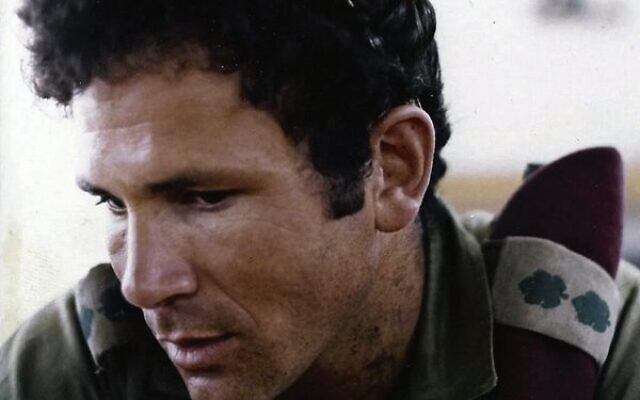
As is known, Netanyahu was killed in the operation. He was 30. Asked what set him apart, Sherman does not begin with tactics.
“Not very often you see a commander in Yoni’s position holding a book by his bedside,” he says. “Usually maybe they study something, maybe they are reading something at home. But Yoni held a philosophical book or a poem book almost everywhere.”
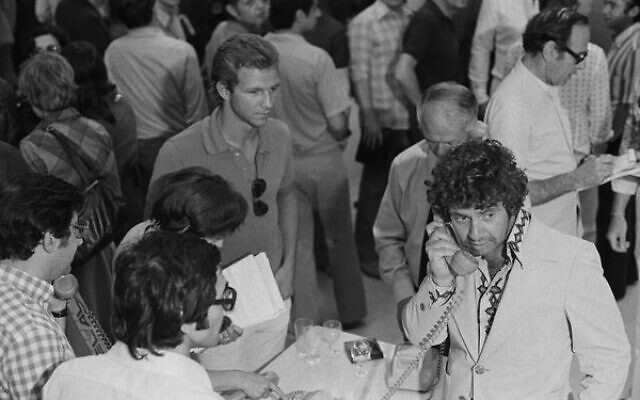
Those books, he thinks now, were the man. “Behind everything, a military field, there is something we should not forget: the way of life, the meaning of life, and why we are doing what we are doing.”
He offers a second observation that has stayed with him for 50 years.
“Not very often a commander puts a highlight, important focus, on the cost of any victory. Usually commanders talk about victory, how to beat the enemy and how to get the medal,” he says. “Yoni, in many cases, talked about the cost of victory.
“When you are 23 years old, you don’t think about these things. You are thinking on practical things. But then, after 50 years, you remember something. You understand something more.”
Asked why the story has stayed so alive, Sherman divides the afterlife of Entebbe into three parts.
For Israelis, he says, it is a military achievement – an operation completed in under 48 hours, with the hostages brought home almost all alive.
For Jews outside Israel, the meaning arrived more slowly but ran deeper. “There is a reflection of something that they understand, the important existing of the state of Israel,” he says. “It’s not a story. It’s a reality. It is there. We were that low … and the State of Israel did something.”
That, he argues, is why the story still explains something. “There is a reason why we support Israel. Why we send our children to Israel,” he says. “Israel, it’s not only a spiritual place. More than that, it’s an existing place.”
The third strand is spiritual. “A miracle, for some people, it’s another word to say God,” he says. “It’s just a different way to describe something above rational action.”
And there is the world. “On July 4, 1976, the world looked at Israel and hugged Israel,” he says.
“We are in difficult years now.”
When 251 people were taken hostage on October 7, Sherman found the comparison people reached for immediately – 4000 kilometres then, four kilometres now – unhelpful.
He had felt the same during the Gilad Shalit crisis. “For most of the people they said, it’s a piece of cake, four kilometres into Gaza. Why couldn’t Israel do something there?
“But Shalit was one soldier. October 7 produced hundreds of hostages, held by different militias in different places, underground and in houses, moved from one to another, in the middle of a war.”
In 1976 the choice was clear and Israel chose a military action, and it worked. Now the picture is mixed with too many other things.
What he draws from it is not tactical. It is that a state has to know what it stands on.
“Every country stands on some structure, some belief, some understanding which the majority of the people stand on,” he says. From the beginning of the Zionist movement the reason for the state’s existence was clear. He is not sure it is clear now.
“At ’76 it was very clear for the Jews as well as for Israel. What is the meaning today?”
The hostage question, he says, reflected that lack of clarity – and the answer follows from what Judaism values.
“The State of Israel exists for all, standing on the value of Jews saving life. So that means the most priority thing is to bring the hostages, by negotiation.”
He is blunt about where this leaves the Diaspora.
“The Jews who live overseas have a much bigger duty to take part to solve this issue in Israel,” he says. They understand why Israel exists, he argues, sometimes better than Israelis do, and that understanding carries an obligation.
“Not just send money. It’s so important, but it’s old-fashioned.
“You should work end by end, using the money to bring the message from the Diaspora Jew to take part in creating the State of Israel as a homeland for every Jew … Jews who live in Sydney, Melbourne, whatever – it’s our home as a Jewish people.”
There is one more thing, and it is the argument he most wants made.

Photo: GPO
“If the reason of the existing of the State of Israel is only having F-35s, the best air force, and tomorrow we will hit Iran again – we fail. Because we fight for existence, not for something higher.”
The something higher is what the Jewish people brought to the world in the first place.
“We should come to the original, the important part of being Jews. We create values of positive,” he says. “It’s not a religious message. It’s something higher.”
A human message, I suggest.
“It’s a human message,” he agrees. “And the Jews, for some reason, hold it with the two ends.”
comments