



Mitzvah or mutilation?
Discussions about the pros and cons of circumcision are back on the table after a recently released Tasmanian report suggested there could be serious legal implications in carrying out the procedure. NAOMI LEVIN reports.
By Naomi Levin
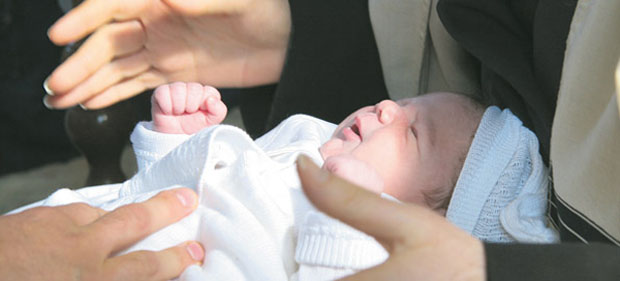
IT has been variously called a mitzvah and a mutilation. Circumcision, or brit milah, was in the news again recently after the Tasmanian Law Reform Institute raised questions over the legality of the age-old practice.
The report questioned whether parents were able to consent to their son’s circumcision — a medical procedure that is considered, in most cases, to be elective and non-therapeutic.
“The crux of the uncertainty is whether the consent of the parent of a male infant being circumcised can provide protection from criminal and civil action brought against a person for performing a circumcision,” Tasmanian Law Institute’s Professor Kate Warner said.
But Jewish medical professionals, including a mohel and a senior rabbi, have rejected the report’s findings. Criticism ranged from calling the report ignorant of religious practice to saying the Tasmanian Commissioner for Children, who requested the report, has a “bee in his bonnet about circumcision”.
All warned that circumcision was not a risk-free procedure, but agreed that if performed responsibly by an experienced practitioner, there were few concerns.
Dr Robert Lewin, a Sydney Jewish doctor, who has performed more brits than he can count over the past 15 years, said that parents of newborn baby boys were often anxious about a brit. This is why, he said, the role of the mohel was also one of part-
counsellor.
“Parents are constantly anxious because there is always a tension between knowing a baby has to have a brit and putting themselves through the process,” Dr Lewin said. “Part of the job of the mohel is to carry the parent through it.”
According to Rabbi Meir Shlomo Kluwgant, president of the Rabbinical Council of Victoria, parents do ask from time to time about the procedure. “But brit milah is so deeply entrenched and cemented in the very essence of the Jewish identity, that as a general rule, mothers and fathers participate unquestioningly,” Rabbi Kluwgant said.
Professor Frank Oberklaid, director of the Centre for Community Child Health at Melbourne’s Royal Children Hospital and professor of paediatrics at The University of Melbourne, said circumcision certainly had medical benefits. However, these benefits were not remarkable enough in Australia for circumcision to be widely used as a preventative measure.
“It has been shown to prevent sexually transmitted diseases. That is particularly relevant in communities that have very high incidences of HIV-AIDS, not in Australia, but in sub-Saharan Africa for example,” Prof Oberklaid.
“There you could make a case for routine preventative circumcision, but not in Australia.”
In fact, a 2007 United Nations World Health Organisation (WHO) report recommended parents circumcise their baby boys. The WHO report indicated circumcised men were 60 per cent less likely to contract the HIV virus than their non-circumcised counterparts.
In terms of the negative aspects of circumcision, Prof Oberklaid said complication figures remain relatively low for the surgical procedure. The most common complications relate to infections or excessive bleeding. However, the most overlooked element of circumcision is the baby’s pain.
“It is not a procedure you undertake lightly, it is not like cutting your hair or cutting your nails,” he said.
Prof Oberklaid, one of Australia’s foremost paediatricians, said the view that the baby is fine because he only cried for a minute is no longer acceptable.
“There are recognised ways of minimising the pain,” he said. He listed a dose of paracetamol before the procedure, local emla anaesthetic cream or having baby suck as tried and true pain minimisation techniques.
“The sucking action itself seems to decrease the amount of distress the baby feels, as does giving them high levels of sugar -— and that’s why traditionally you put sweet wine on your finger or a dummy dipped in honey.”
As well as complications from the actual procedure, the Tasmanian report suggested circumcised males could find they were unhappy with the procedure, which they did not request for themselves.
“The significance of the impact of feeling acted upon against your wishes, or best interests, is particularly important in the context of infant circumcision,” the report reads.
“The high profile cases of attempted suicide and suicide around the world, including in Australia, of men forced to live with lasting complications of circumcision performed on them as a child, are an extreme illustration of the possible devastating consequences of circumcising infants.”
But mohel Dr Lewin said he had never come across any grown man who was unsatisfied or ashamed of having been circumcised.
“I think the contrary is very clearly the case,” Dr Lewin said. “I think that when you talk to Jewish adult males, they all identify very strongly with a brit.”
Rabbi Kluwgant was in agreement, saying he had never come across a Jewish male either who regretted having a brit milah.
“In fact quite the opposite. Brit milah has been occurring for thousands of years, and today, I believe that it is actually quite the norm that children of all faiths and backgrounds are circumcised,” he said.
Dr Hugo Gold, a leader in the Children’s Bioethics Centre at Melbourne’s Royal Children’s Hospital, is currently assisting the Royal Australasian College of Physicians in preparing a review into infant circumcision in Australia.
While the report has not been released, Dr Gold believes the college will retain the status quo when it comes to male circumcision. He added that with the new report from Tasmania, the college would likely revisit the legal implications of circumcision.
“In light of the Tasmanian Law Reform report we may need to have another look at the legal implications because what we were thinking was that the legal implications were not particularly strong and that the law wasn’t likely to be changed in this country,” Dr Gold said.
According to the report, there are three broad possibilities when it comes to the future of circumcision in Australia: doing nothing and leaving the law vague, regulating, or legislating.
“The regulation option is of significance to the Jewish community in that it talks about setting standards for non-medical performance of circumcision and registration and licensing,” Dr Gold said. “That then would carry some obligations on the part of circumcisers, most of which are quite sensible and in accordance with standard practice.”
“It could be beneficial, the problem with any regulation is that it involves a certain amount of restriction of freedoms, but overall it may be in everyone’s best interest if it were regulated.”
comments