



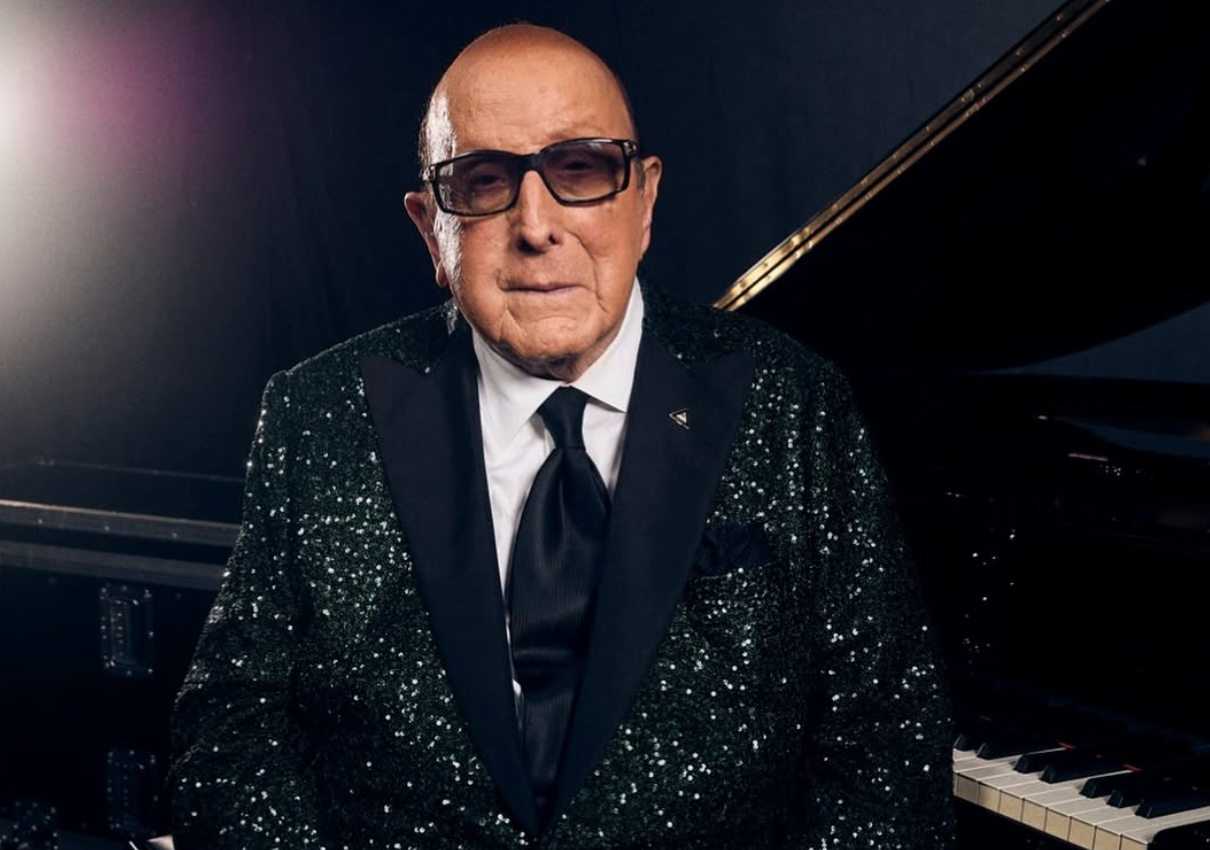
Clive Davis, the record executive whose instinct for talent shaped the sound of popular music for more than six decades, has died at the age of 94.
The Brooklyn-born son of Jewish parents who lost both of them as a teenager, Davis rose from a law firm clerk to become the most influential figure in the American music industry, discovering Whitney Houston, signing Bruce Springsteen at 22, and building Arista Records into one of the most storied labels in history.
The announcement of his death prompted an immediate outpouring from the music world, with artists whose lives and careers Davis shaped describing him as a mentor, a friend and a giant.
Born April 4, 1932, Davis was raised in Crown Heights, Brooklyn, and grew up Jewish. He was a gifted student who attended NYU on a scholarship and graduated magna cum laude before earning a law degree from Harvard. A seat at a law firm with CBS as a client eventually led him to Columbia Records, where he became president in 1967 at just 35 years old.
It was there that Davis first demonstrated the ear that would define his legacy. After attending the Monterey Pop Festival in 1967, he immediately signed Janis Joplin. Columbia went on to sign Laura Nyro, Santana, Bruce Springsteen, Chicago, Billy Joel, Aerosmith and Pink Floyd.
Fired from Columbia in 1973, he wasted little time.
“His annual Grammys party was the stuff of legend.”
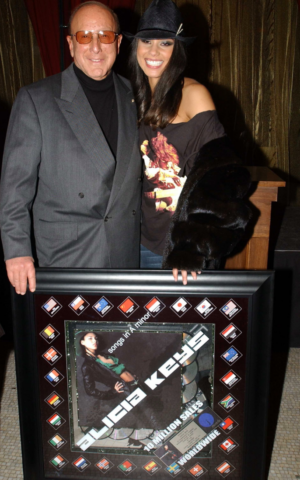
He founded Arista Records in 1974, and the label became home to Barry Manilow, Aretha Franklin, Dionne Warwick, Patti Smith, the Grateful Dead, Lou Reed, Kenny G and Alicia Keys, among dozens of others.
His most celebrated discovery came after he spotted a young Whitney Houston performing at a New York nightclub with her mother, gospel singer Cissy Houston. She was immediately signed, becoming one of the biggest selling artists in music history under Davis’ guidance. Their bond endured until Houston’s death in 2012.
Davis won five Grammy Awards across his career and was inducted into the Rock and Roll Hall of Fame in 2000. According to Yahoo Entertainment, he was the only non-performer ever to receive that honour, with some arguing the institution itself might not exist without him.
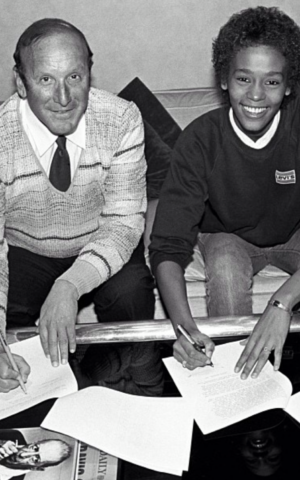
His legendary annual pre-Grammy gala was an institution unto itself. A star-studded event where A-listers competed for invitations and careers were made from its stage.
Piers Morgan captured it simply: “His annual Grammys party was the stuff of legend.”
Beyond the hits and the honours, Davis carried his Jewish values into his philanthropy, most visibly in his tireless work in the fight against AIDS. He began that work in 1985, at a moment when much of the entertainment industry was looking away. That year, as president of Arista Records, he coordinated the release of the charity single That’s What Friends Are For, featuring Dionne Warwick, Elton John, Gladys Knight and Stevie Wonder, committing all distribution profits and proceeds to HIV and AIDS research. The song became Billboard’s best-selling single of 1986, generating more than AUD 4.5 million from American sales alone.
In 1990, he turned Arista’s 15th anniversary celebration into a star-studded AIDS fundraiser at Radio City Music Hall, famously calling it “a party with a purpose.”
In 1998, the American Foundation for AIDS Research bestowed its prestigious Humanitarian Award upon him.
In 2013, at 80, Davis publicly came out as bisexual in his memoir The Soundtrack of My Life.
Writing in Yahoo Entertainment, journalist Gregg Shapiro described the moment as remarkable. “For someone from his generation to do that, it couldn’t have been easy,” Shapiro wrote.
Davis revealed he had first come to understand his attraction to men in his 50s, was clear that his two prior marriages had been entirely genuine, and was unequivocal about his identity.
“To call me anything other than bisexual would be inaccurate,” he wrote.
His stature lent validation to one of the most misunderstood segments of the LGBTQ+ community. But long before that, Shapiro noted, Davis had been building space for queer artists at a time when being queer could end a career overnight, championing Janis Joplin, elevating Barry Manilow when his sexuality was an open secret the industry preferred buried, and backing Patti Smith precisely because she didn’t fit the mould. He was recognised in 2015 by Equality Forum as one of its Icons of LGBT History Month, and in 2018 was honoured at The New Jewish Home’s Eight Over Eighty Gala.
The tributes that flooded in following his death reflected the breadth of his impact.
Bruce Springsteen wrote, “Over here on E Street, we mourn the death of the great record man and close friend Clive Davis. At 22 years old, he changed my life when he signed me to Columbia Records. He treated me with the same respect and kindness as a 22-year-old nobody as he did after all my success. A great man. All our prayers and love.”
Billy Joel said Davis “recognised the talent of great musicians and understood the power of contemporary music,” adding that he “undoubtedly enhanced the stature of the music industry during his tenure as president of Columbia Records.”
Rod Stewart said he was lost for words. “A giant of a man in the music business. I owe Clive so much. The force behind J Records, he was the only one who believed a rock singer could sing the standards with conviction. Other labels rejected the idea, and so The Great American Songbook was born, selling close to 40 million copies.”
Carlos Santana described Davis as “a true light” who understood music’s power to heal. “He encouraged artists to trust their own voice and step into their destiny. Because of his vision, countless musicians were able to reach hearts across the planet.”
Alicia Keys, whom Davis signed at 18, wrote on Instagram, “Clive Davis changed my life forever.
He believed in me from the very beginning, when I was just 18 years old, and very few saw what I was capable of! He has stood beside me through every chapter that followed. Not just in that fake industry way but in a way that was full of love for how unlimited I could be! He called me a renaissance woman! It’s one of my favorite descriptions. It reminds me to be boundless. His impact reaches far beyond music. It lives in the countless artists he championed, the dreams he helped bring to life, and the love he poured into so many!”
Jennifer Hudson, who called Davis family, wrote, “I needed a moment. This was a huge blow to wake up to. I know nobody lives forever, but Clive’s impact and legacy will always live on.”
Patti Smith offered her tribute in the form of a poem.
“This is thanking Clive Davis for transforming music, and on a very personal note, for believing in me, shepherding my efforts, and a half century of your love and support.”
Barry Manilow reflected on 50 years of friendship.
“My heart is heavy with the loss of my friend Clive Davis. For fifty years we worked together, created together, argued together, and celebrated together.”
Davis is survived by his four children, Fred, Doug, Mitchell and Lauren, as well as his eight grandchildren and two great-grandchildren.
From Crown Heights to the Rock and Roll Hall of Fame, Clive Davis leaves behind a catalogue of careers made, masterpieces shaped and lives changed. It’s a legacy as sprawling and enduring as the music he loved.
comments