



My Father’s Italian Garden
Tracing her father’s wartime escape, a daughter explores Italy’s Jewish history.
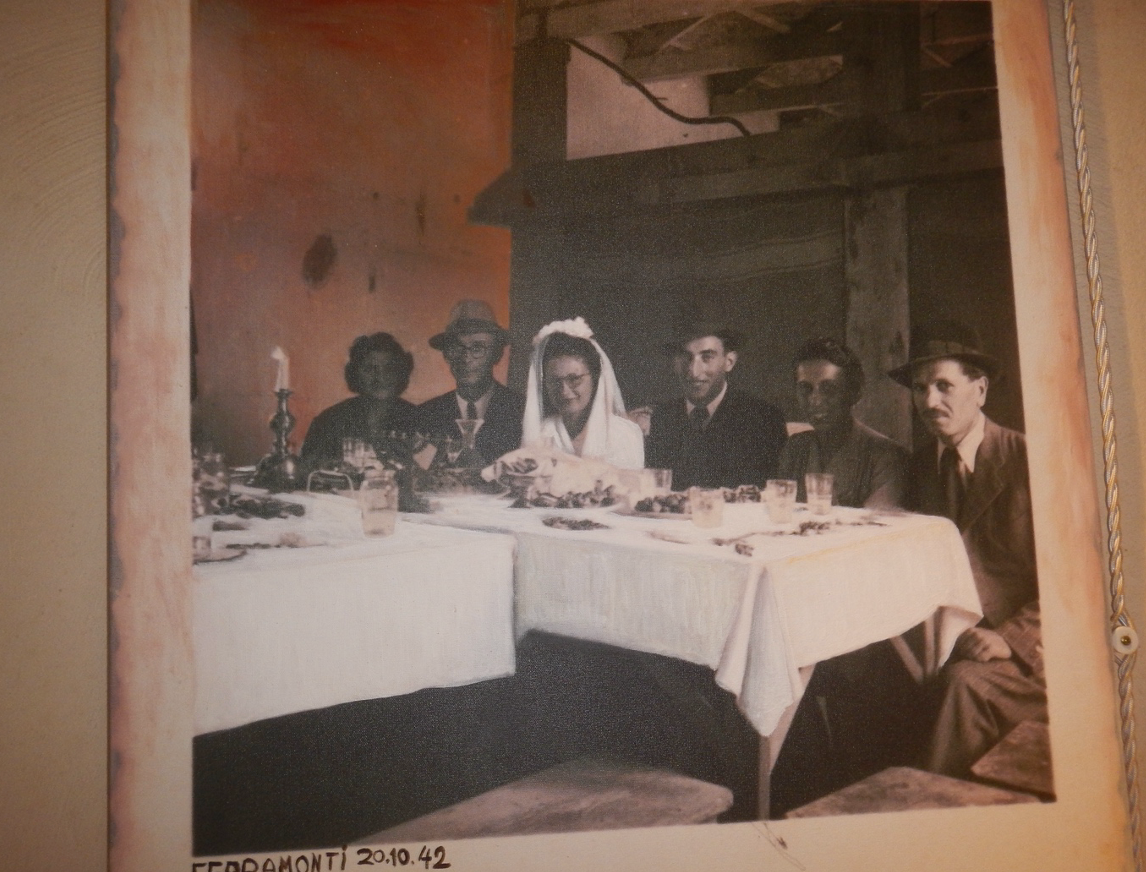
My father prized his little crop of tomatoes and green peppers grown in the short summers of our modest backyard garden in Toronto, a memento mori from an earlier time in his life when he learned to grow them in an Italian refugee camp in southern Italy. It was there that up to 4000 Jewish refugees from Europe were harboured and protected from the dictates of Mussolini and the invading Germans until their liberation by the British Army in 1943.
My father’s Italian sojourn would be the unexpected result of an escape begun three years earlier in Bratislava where he, Stephan (‘Pishta’) Kohn, boarded the ‘Pentcho’, organised by Betar as the last escape boat to Mandate Palestine. The story of how this refitted old paddle steamer with its 400 passengers, later increased to 500, sailed down the Danube to the Black Sea and out through the Dardanelles to the Aegean has been told in a detailed account by the British journalist John Bierman in the book Odyssey: The Last Great Escape from Nazi Dominated Europe (1984).
The perilous five-month journey through enemy territory looked to be a gamble won until the Pentcho’s boiler exploded and it ran aground on Kamilla Nissi a rocky island in the Aegean. Everyone clambered to safety before the boat sank. It was Yom Kippur and two cantors held services. British planes sighted them but offered no help. Five men in a small boat seeking help rowed for days to a convoy of British ships only to be taken to Egypt. The Italians flew overhead and rescued the castaways, bringing them to the isle of Rhodes, occupied by Italy, and a year later transferring them to an internment camp in Ferramonti de Tarsia in southern Italy.
My father’s Ferramonti memories were told to me with a certain fondness that only now I fully understand in the context of Italy’s remarkable rescue efforts, which, despite sending more than 8,500 Jews to Auschwitz-Birkeneau, resulted in 40,000 of its Jews saved. And this does not account for the thousands of Jews of Croatia, Bosnia and Serbia who also were saved due to the Yugoslav Partisans’ co-operation with the Italian people and their army, who provided safe-haven in their Dalmatian territories, such as Split, Sibinek, Trogir, Mostar, and the islands of Brac, Hvar, Korchula and Rab, an extraordinary and complex history investigated by Esther Gitman in When Courage Prevailed: the Rescue and Survival of Jews in the Independent State of Croatia 1941-1945, published 2011.
These places, five of which I have just visited, were often temporary refuges during a time of unpredictable developments, such as, when the Jews of Mostar in Boznia Herzegovina, under Italian rule, lived relatively safely because the Chief of Staff refused to obey Nazi directives to deport Jews which he believed violated Italian principles of equality. Consequently, many Jews (as well as Partisans) fled there from areas under the control of the Ustashe (Croatian collaborators with the Nazis), but when it became increasingly dangerous over a thousand Jews were transferred to the safer island of Rab, where they were dispersed among the peasant population. After Italy’s capitulation to the Allies in September 1943, and the Wehrmacht’s claim of Italy’s former territories including Rab, a supreme struggle to save the Jewish refugees ensued, involving the Italians, the Croatian partisans, Jewish organisations such as the World Jewish Congress, and the American government. The latter was reluctant while Britain refused to help in any way, including to allow them entry to Mandate Palestine.
comments