



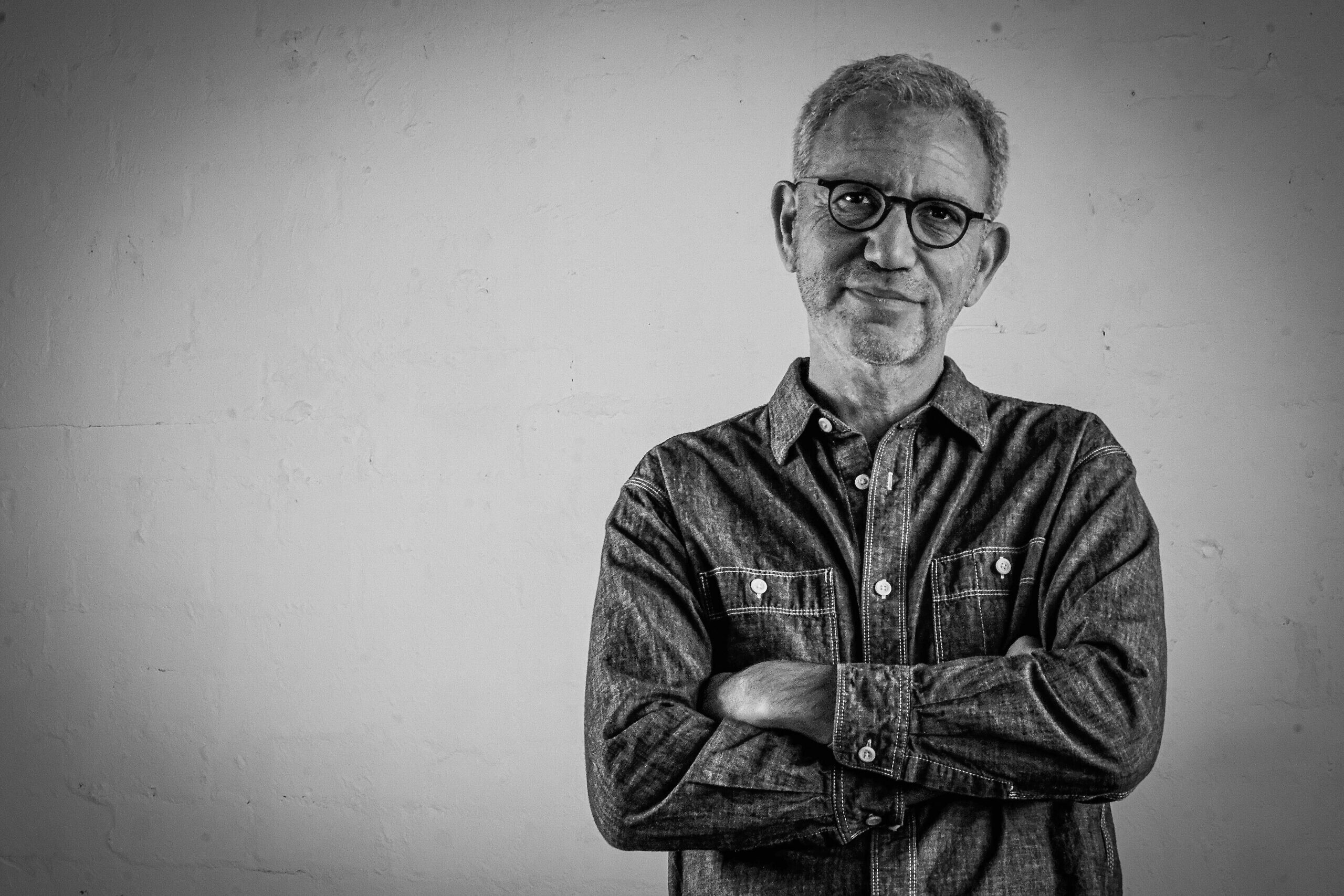
When Danny Ben-Moshe sat down to write his debut novel, he stared at a blank screen for an entire day. The Walkley Award-winning Melbourne documentary filmmaker, someone who has spent two decades shaping stories from cold, hard facts, had suddenly been asked to do something terrifying. Make things up.
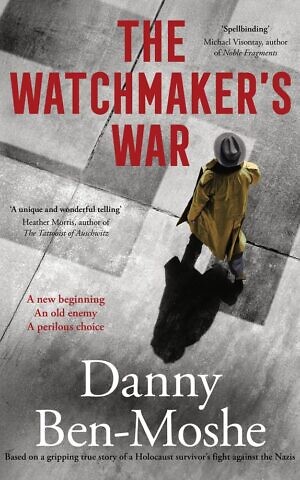
The result, The Watchmaker’s War, is a gripping historical thriller that asks the age-old question: when justice fails, is revenge ever justified?
The book follows Yakov Holtzman, a former Lithuanian resistance partisan, who arrives in Melbourne after the war hoping to leave the forest battlegrounds of Europe behind him. He reunites with his brother, his only surviving relative, and sets up quietly as a watchmaker in 1950s St Kilda. But peace proves elusive. When familiar, murderous faces begin appearing on the streets of his new neighbourhood, Yakov’s partisan instincts take over.
Ben-Moshe didn’t come to the story cold. The novel grew directly out of his 2023 documentary Revenge: Our Dad the Nazi Killer, which exposed the shocking reality that over 600 Nazi war criminals died or disappeared mysteriously on Australian soil. The film aired sparked conversation. Although according to Ben-Moshe, the conversation wasn’t enough.
“I thought someone, a journalist, a politician, would stick up their hand and say: what the hell happened to these 600?” he told The AJN. “There was no interest whatsoever. So perhaps through fiction it’s a way of reaching more people and getting this story known –despite it being a shocking and massive stain on the history of this country.”
That interest in revenge has been with Ben-Moshe long before he picked up his camera. As a teenager he devoured books about post-war revenge acts, and during his university days he wrote a short fiction piece about a revenge killing in England. It was a story he had completely forgotten about until he sat down to write this novel.
“I’d long been fascinated by it,” he recalled. “Which explained why when I came across the story that became the documentary, it resonated with me.”
“There is a notion – I think it’s from a sociologist or anthropologist – that Australia has a culture of forgetting. And I think it’s very, very dangerous to forget what happened here.”
It was actually HarperCollins who approached Ben-Moshe, not the other way around. There was just one snag. They wanted a novel, not a non-fiction account, explaining to Ben-Moshe that often, fiction is a good way to educate readers about truth. More people will read a fiction novel than pick up a non-fiction book. So why not tell a factual story through creative writing?
It was something that, at first, troubled Ben-Moshe.
“I’m kind of basically a non-fiction guy,” he admitted. “It’s what I make, it’s what I consume.”
But after writing the two trial chapters requested by the publisher, the blank screen gave way to something he wasn’t expecting. Creative liberation.
“I was able to draw on years of research from making the documentary, amalgamate characters and scenes, and go to places I was unable to go to because I didn’t have the information,” he said. While in documentary, you write what happened, Ben-Moshe discovered that in fiction, you can write what could have happened.
“There were composite characters. I could play with the timeline. I found it quite liberating from a storytelling point of view,” he said.
The novel is steeped in the texture of mid-century Jewish Melbourne – the grief-soaked streets of St Kilda, the legendary Café Scheherazade on Acland Street (whose owner Avram Zeleznikov Ben-Moshe knew personally), and the Bonegilla Migrant Centre in north-eastern Victoria where, in one of history’s more grotesque ironies, Holocaust survivors and Nazi war criminals found themselves living side by side.
Despite the fictitious nature of the book, Ben-Moshe still heavily relied on reality. He utilised the scholarship of historian Susan Rutland, and parliamentary Hansard records of Australian officials are at times quoted almost verbatim. He said that was because the record of what those officials said and did was damning enough not to require embellishment.
Ben-Moshe makes no bones about where his sympathies lie.
“I’m on the side of the avengers,” he said flatly. “The shame here is in the Western governments, in the Australian government, who allowed Nazis to come into this country, who knew they were here, who did nothing to bring them to justice, and who put them on the ASIO payroll.” And when there was talk about introducing an Australian official who was troubled by the government’s moral failings, Ben-Moshe refused. “There are no Australian non-Jewish heroes in this story, because there were none. I’m not going to create them.”
Writing the Nazis themselves, though, proved its own kind of challenge. Ben-Moshe struggled with the fact that while they were Nazis, they were also people who had families, lives and ambition.
“To me, that was almost an anathema,” he admitted. “But I had to overcome it, because it’s true.”
The book has resonated widely since its release, with readers writing to Ben-Moshe almost daily, many saying they had no idea this history existed.
“I was able to draw on years of research from making the documentary, amalgamate characters and scenes, and go to places I was unable to go to because I didn’t have the information…”
“I don’t think this country is particularly good at scrutinising its history,” he pointed out. “There is a notion – I think it’s from a sociologist or anthropologist – that Australia has a culture of forgetting. And I think it’s very, very dangerous to forget what happened here.”
For Jewish readers in particular, the response has been striking. Many have described it as like reading their own family history, exactly what Ben-Moshe was hoping for. Having grown up with a Yiddish-speaking Lithuanian grandmother and spent the past two decades filming Holocaust survivors across Melbourne, he was determined to give the book an authentic Jewish voice. Not a performance of Jewishness, but the real thing.
“Ninety-nine times out of 100, if I watch or read something Jewish, I say to myself: Jews don’t talk like that, Jews don’t act like that,” he said. “I didn’t want to be culpable of the failures I see in other work.”
The feedback suggests he’s pulled it off. Readers are coming away with a better understanding of Jewish culture, and doing so because they picked up a thriller, not a history textbook. That, he points out, is exactly the point.
There is something bigger at stake here, too. In 2026, when antisemitism is resurgent and the dehumanisation of Jews has become distressingly commonplace, Ben-Moshe sees authentic Jewish storytelling as an act of resistance in its own right.
 “We’ve been dehumanised so much,” he said, “and we’ve been dehumanised because it’s the antithesis of being normalised. If you see Jews with their humanity – they work, they form relationships, they fall in love, they drink, they struggle, they have dreams – then you go: oh right, a lot more people are like us. Because we are. We just have our own distinct culture and religion.”
As for what’s next, when asked by The AJN if he’ll be pursuing fiction a bit more, Ben-Moshe responded instantly in the affirmative, admitting that he has well and truly caught the fiction-writing bug, just as he did the documentary filmmaking bug decades ago.
It seems he’s just getting started.
The Watchmaker’s War is published by HarperCollins, $34.99 rrp
comments