



New artefacts for Sydney Jewish Museum
A SPECIAL ceremony was held last Monday to mark the transition of a collection of wallets, confiscated during the Holocaust, from the International Tracing Service (ITS) into the custodianship of the Sydney Jewish Museum.
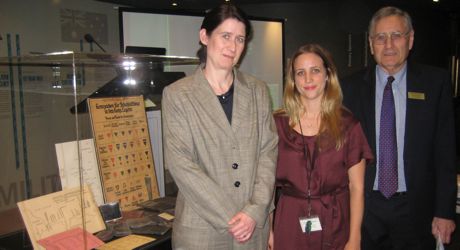
A SPECIAL ceremony was held last Monday to mark the transition of a collection of wallets, confiscated during the Holocaust, from the International Tracing Service (ITS) into the custodianship of the Sydney Jewish Museum.
Based in Bad Arolsen, Germany, the ITS manages archives documenting the fate of Nazi victims, carries out research and supplies information, and maintains a collection of 3392 artefacts.
The head of historical research for the ITS, Dr Susanne Urban, travelled to Australia to present the unidentified wallets to the museum.
Since joining the ITS from Yad Vashem in 2009, she has overseen the identification of most of the artefacts in the organisation’s collection.
“It’s 2900 objects identified [and] connected to a person, connected to a fate, to a prisoner,” she told The AJN.
“If you look at the ITS website, we have launched a huge list of all the identified objects together with the name of the owner, and so we leave them in the ITS in [Bad] Arolsen in case people are applying to get these effects back.”
The wallets, now housed at the Sydney Jewish Museum, comprise part of the remaining, unidentified collection.
“[It’s] like a symbol of the concentration camp system of robbing these prisoners and also like a symbol for the Holocaust,” Urban explained.
“It’s all empty, you have nothing left. So it has three layers of symbolism within these wallets we are now handing over.”
Political prisoners in concentration camps had their belongings taken and stored in an effects chamber, whereas possessions belonging to Jewish and gypsy prisoners were given away or recycled, she said.
“Their possessions were distributed to Germany and handed over to so-called Aryan German people, because within the Nazi system it was not [expected] that Jews or gypsies would survive,” she said.
Sydney Jewish Museum CEO Norman Seligman expressed the museum’s gratitude for the artefacts.
“We value the close cooperative links that we have now established with the ITS in Bad Arolsen, a key centre for Holocaust research and education,” he said.
“When one talks about six million Jews having been murdered during the Holocaust, the number is so huge that people cannot comprehend the scale of the tragedy.
“It is then often easy to forget that all of the six million were individuals with their own name and identity. Having artefacts such as these wallets demonstrates that they belonged to an individual person incarcerated and subsequently murdered.
“[The wallets] also represent one of the last steps in robbing concentration camp prisoners of their dignity and personal effects whether money, or more important than that, probably photographs of family members that they would in all likelihood never see again.”
The wallets will remain in the museum’s collection for an initial loan period of one year.
GARETH NARUNSKY
From left: International Tracing Service head of historical research Dr Susanne Urban, Sydney Jewish Museum curator Shannon Maguire and CEO Norman Seligman with the wallets.
comments