



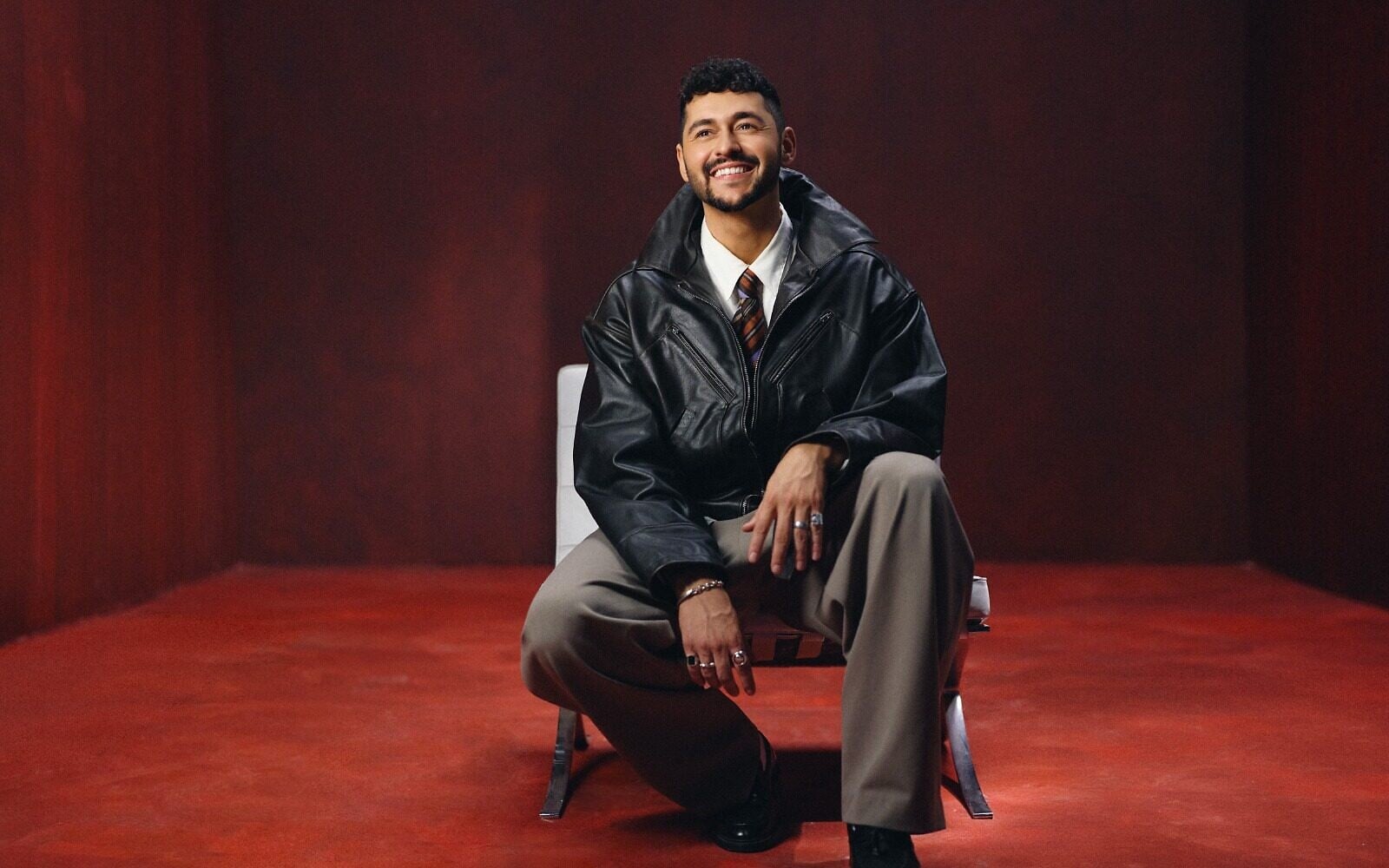
Noam Bettan has been practising to the sounds of booing.
Israel’s Eurovision contestant is reluctant, and largely not allowed, to discuss any of the controversy surrounding Israel’s participation, but he knows he will not be warmly welcomed by everyone at the song competition next week in Vienna.
“I’m surrounded by an incredible team who make sure to shout boos at me during rehearsals, so I’m prepared for it,” Bettan told The Times of Israel during a video interview last month. “I feel happy and proud to represent my country in such a big competition with so many viewers.”
While the biggest critics of Israel at Eurovision — Ireland, Iceland, Spain, Slovenia and the Netherlands — quit this year’s contest in protest over Israel being allowed to participate, their exodus has amplified the anger among some of the competition’s biggest fans.
But Bettan, who will be 10th in the line-up in the first semi-final on Tuesday night with “Michelle”, wants to put all the noise and drama aside.
“I’m very focused on what I have to do,” he said. “I’m not thinking about anything else. I’m focused on this, I’m looking ahead, I’m rehearsing as much as possible. I’m doing everything I can.”
Bettan, 28, was selected earlier this year to represent Israel at the 2026 competition after winning the latest season of “Hakochav Haba” (Rising Star). The native of Ra’anana, who was born to French immigrant parents, won over viewers with his soulful vocals, charming modesty and magnetic stage presence.
Before winning the reality TV contest, Bettan was far from a household name, but he is not a newcomer to the Israeli music industry. In 2018, he placed third on the music TV competition show “Aviv or Eyal”, and subsequently released a number of singles, including “Madame”, “Buba” and “Ahavot Leyom Ehad”.
“I’ve worked very hard for many, many years, more than eight years of hard work, Sisyphean work, with my team who has been with me through thick and thin,” Bettan said. “We learned to stay strong and to lift ourselves up even when things didn’t work.”
Growing up in the “generation of the internet, that wants everything now”, Bettan said he had to learn that “sometimes things take time, and there’s a way to build them”.
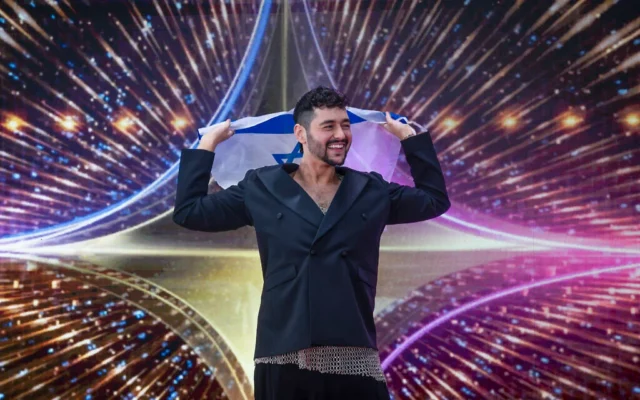
If there is one thing he has learned, he said, it is “don’t give up on your dreams”. Even if people make fun of you or question you, “at a certain point it will take shape and grow, and suddenly people will start to appreciate it … Be who you are, completely, and don’t give up on who you are.”
The singer said his appearance on the “Hakochav Haba” TV show “came at exactly the right time. I felt ready. I’d been on many stages, in a million studios, I’d put out a lot of music … it couldn’t have worked out any better.”
Israel can still participate, for now
Going into the TV show knowing that the top prize was representing Israel at Eurovision, Bettan said, “gave me a huge boost, and I told myself I had to get there”.
Bettan will take to the Eurovision stage next week, representing the country that once again is at the centre of the biggest controversy at the annual song contest. After pushing for the past two years for Israel to be ousted from Eurovision due to the war in Gaza, a number of countries forced a vote on the issue last year among European Broadcasting Union members.
But an overwhelming majority of EBU members voted in favour of adopting a package of reforms to the contest rather than moving ahead with a direct vote on Israel’s participation, clearing the way for the Kan public broadcaster to remain in the competition.

Angry at the result of the vote, Spain, the Netherlands, Ireland, Slovenia and Iceland quit in protest, leaving just 35 countries taking part, the lowest number since 2004.
The adopted reforms, coming after Israel performed exceedingly well in the popular vote in 2024 and 2025, sparking allegations of unfair voting practices, include capping the number of votes per person at 20 instead of 10; reinstating professional juries in the semi-final rounds along with the public vote; “enhanced technical measures” to detect any voter fraud; and “strengthened safeguards against undue external promotion of entries”.
In addition, contestants and all members of the delegations have been asked to “avoid linking political views to their ESC participation” as well as not to use the contest’s platform “as leverage by making political statements or causing controversies”.
Bettan, who is already in Vienna with the Kan delegation, said his focus is entirely on the music and the performance, and reaching listeners around the world.
“I’m here to give love,” he said, when asked about potential protests or provocations. “I understand that I only have control over myself, and what I can bring is who I am, the light I have to give to the world, the colour I have to give to the world, and I’m focused on that, on coming and giving love to other people.”
Will ‘Michelle’ be the belle of the ball?
The young performer will be on stage next week with “Michelle”, a pop-style ballad about ending a toxic relationship that is largely in French, a nod to Bettan’s family roots as well as Eurovision’s affinity for the Romance language, with sections in Hebrew and English. The song was written by Nadav Aharoni, Tslil Klifi and Yuval Raphael, a survivor of the Nova festival massacre on October 7, 2023, who represented Israel at last year’s Eurovision, with touches added by Bettan himself.
“The responses [to the song] have been incredible, honestly beyond my wildest imagination, both online and on the street,” said Bettan. “It’s amazing and I’m so happy that people love the song and are embracing it and me along with it.”
Some in Israel, however, were taken aback by the predominance of French lyrics in a song representing Israel, but Bettan said he believes the song is catchy in any language.
“I think that anything that’s a little bit different takes a moment to digest in every aspect,” he said. “I think we brought something that is a little bit new and it takes a second to accept it, but within a couple of days, people were already showering it with incredible responses.”
Facing a potentially hostile audience and a likely mixed reception, Bettan said the advice he received from Raphael and from 2024 contestant Eden Golan was to enjoy every moment of the experience regardless.
“If there’s one piece of advice that kept coming up again and again, it was to just enjoy the process,” he said. “Enjoy this because it’s a one-time opportunity, you’re not going to be at Eurovision again. So my main goal is to enjoy the journey and give all the love that I can.”
comments