



Norman Finkelstein and the Gravity of Bad Ideas
Finkelstein should be read seriously precisely because he is capable of making propositions many readers will find deeply objectionable sound coherent
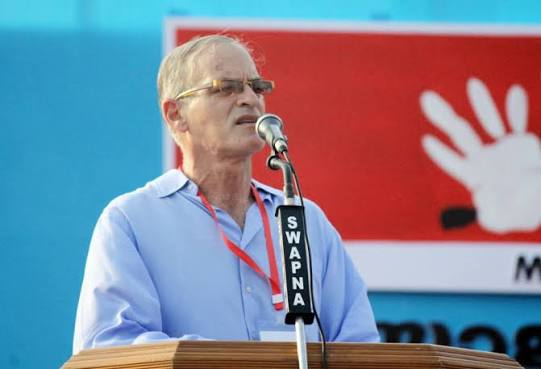
Those who have followed my commentary for a while will know that my reading is nothing if not eclectic. I read people with whom I agree and, perhaps more importantly, people with whom I profoundly disagree—from devotees on the ideological left to zealots on the ideological right, and a bunch in between. Of late, I have pegged my nose and binged particularly heavily on the excesses of the left: Ilan Pappé, Maggie Haberman, Rashid Khalidi. Now Norman Finkelstein.
Finkelstein makes for fascinating reading against the political backdrop of New York in 2026. Democratic socialist Zohran Mamdani is now mayor, having been sworn in on January 1, 2026. Before his political career, Mamdani rapped in a 2017 song, “My love to the Holy Land Five”—a reference to leaders of the Holy Land Foundation who were convicted in the United States of aiding Hamas. During his 2025 mayoral campaign, he also declined to condemn the phrase “globalise the intifada,” before later saying he would discourage its use after discussions with Jewish New Yorkers about what the phrase evoked for them.
Those facts generated significant criticism of Mamdani’s judgment concerning Israel and Islamist extremism. Mamdani, for his part, has condemned antisemitism and argued that his advocacy concerns Palestinian rights rather than hostility toward Jews. The argument has not disappeared since his election. In August 2026, rabbis meeting with him told the mayor that they believed his rhetoric about Israel was making some Jewish New Yorkers feel less safe and, in their assessment, placing them at greater risk. That wider political contest provides an illuminating setting in which to read the hard left, because questions about Israel, Zionism, revolutionary violence and the boundary between explanation and justification have migrated well beyond university seminars..
Which brings us to Norman Finkelstein. He is no intellectual lightweight. Born in New York in 1953 to Jewish Holocaust survivors, he earned his doctorate from Princeton University’s Politics Department in 1987 and has spent decades writing about the Holocaust and the Israeli-Palestinian conflict. Both his parents survived the Warsaw Ghetto. His mother survived Majdanek and two slave-labour camps; his father survived Auschwitz and a death march. Finkelstein has said that, apart from his parents, every member of both sides of his family was exterminated. That is an extraordinary inheritance, and it deserves respect.
Finkelstein is also clever, widely read, combative and formidable in debate. He knows his material, deploys historical references with enormous confidence and possesses the polemicist’s ability to make a complicated moral landscape suddenly appear remarkably simple. That combination matters. The people whose arguments are most worth testing are rarely fools. Finkelstein should be read seriously precisely because he is capable of making propositions many readers will find deeply objectionable sound coherent.
comments